Authors:
Historic Era: Era 3: Revolution and the New Nation (1754-1820s)
Historic Theme:
Subject:
Winter 2026 | Volume 71, Issue 1



Authors:
Historic Era: Era 3: Revolution and the New Nation (1754-1820s)
Historic Theme:
Subject:
Winter 2026 | Volume 71, Issue 1


While we “know” more and more about the American past, too many of our citizens are ignorant of who we are and where we came from.
Winter 2026 | Volume 71, Issue 1
Editor’s Note: Wilfred McClay is a professor of history at Hillsdale College and author of Land of Hope: An Invitation to the Great American Story, a widely used textbook and narrative history of the United States.
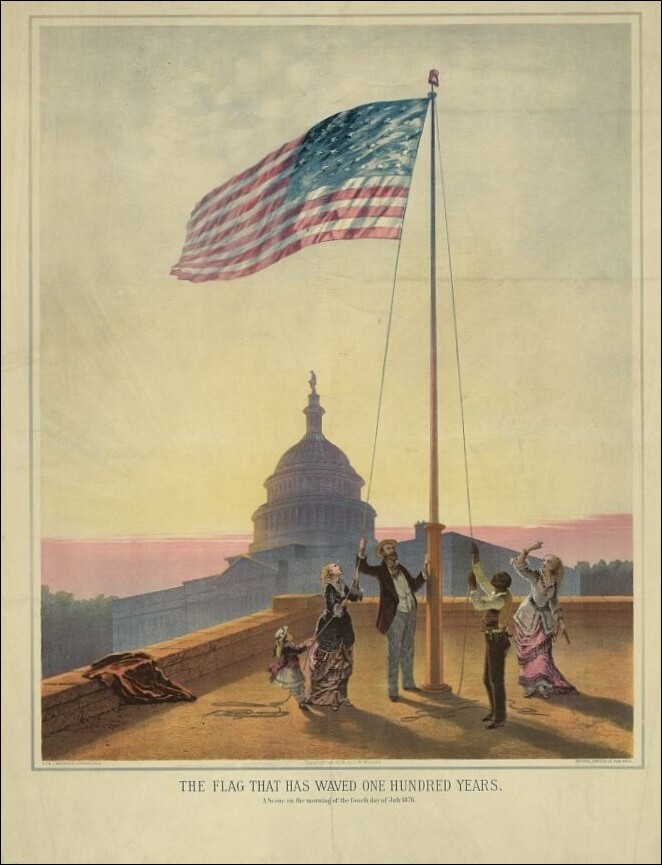
This year we celebrate the 250th anniversary of our nation’s birth, the date on which our free and independent nation was proclaimed to the world by the signing of the Declaration of Independence.
We celebrate the enduring flame of the American Revolution, that fired the imaginations of the brave men and women who fought to make this country possible, against tremendous odds, and who saw to it that it would become a beacon to the world.
That war was already well underway by July of 1776, and had been for more than a year. The American landscape was ringed with campfires and sounds of battle, with the ultimate outcome far from certain. When the Declaration’s signatories pledged their lives, fortunes, and sacred honor to the Patriot cause, they were not speaking rhetorically. The humiliations of failure – and worse – were a real possibility.
The study of history has many uses, but primary among them is the work of memory. No great or enduring human enterprise can be sustained without it. No matter how determined and focused we are, we’re sure to lose our way unless we regularly look back, and reorient ourselves, remembering where and how we began, and why, remembering our deep connection to what came before us, and particularly with those who came before us.
Without those points of reference, we not only forget the succession of historical events, the names and places and stories that form the warp and woof of our common life. In the process, we eventually forget who we are.
A perfect example of what I mean by that rather extraordinary statement – drawn not from American history but from the ancient Near East – continues to this day. It is the Passover Seder, a ritual meal at the heart of Judaism. It involves a retelling, every year, of the story of the miraculous liberation of the Israelites from slavery in ancient Egypt, taken from the Book of Exodus in the Bible. The Seder itself is based on the Biblical verse commanding Jews to retell the story of their Exodus from Egypt: "You shall tell your child on that day, saying, 'It is because of what the LORD did for me when I came out of Egypt.'" (Exodus 13:8)