Story

How We Burned Washington

AH article image

Authors: Andrew Cockburn

Historic Era: Era 4: Expansion and Reform (1801-1861)

Historic Theme:

Subject:

Fall 2026 | Volume 71, Issue 4

In 1814, my ancestor Admiral Cockburn destroyed the Nation’s Capital. He also freed some 6,000 slaves.

Andrew Cockburn

Fall 2026 | Volume 71, Issue 4

Editor’s Note: Andrew Cockburn is the author of over a dozen books, Washington editor of Harper's Magazine, and a Peabody Award-winning filmmaker. He is also a descendant of Admiral Sir George Cockburn, who ordered and led the burning of Washington, D.C during the War of 1812. Cockburn recently published Washington Is Burning: Corruption and Lies in The Age of Trump, in which portions of this essay appeared.
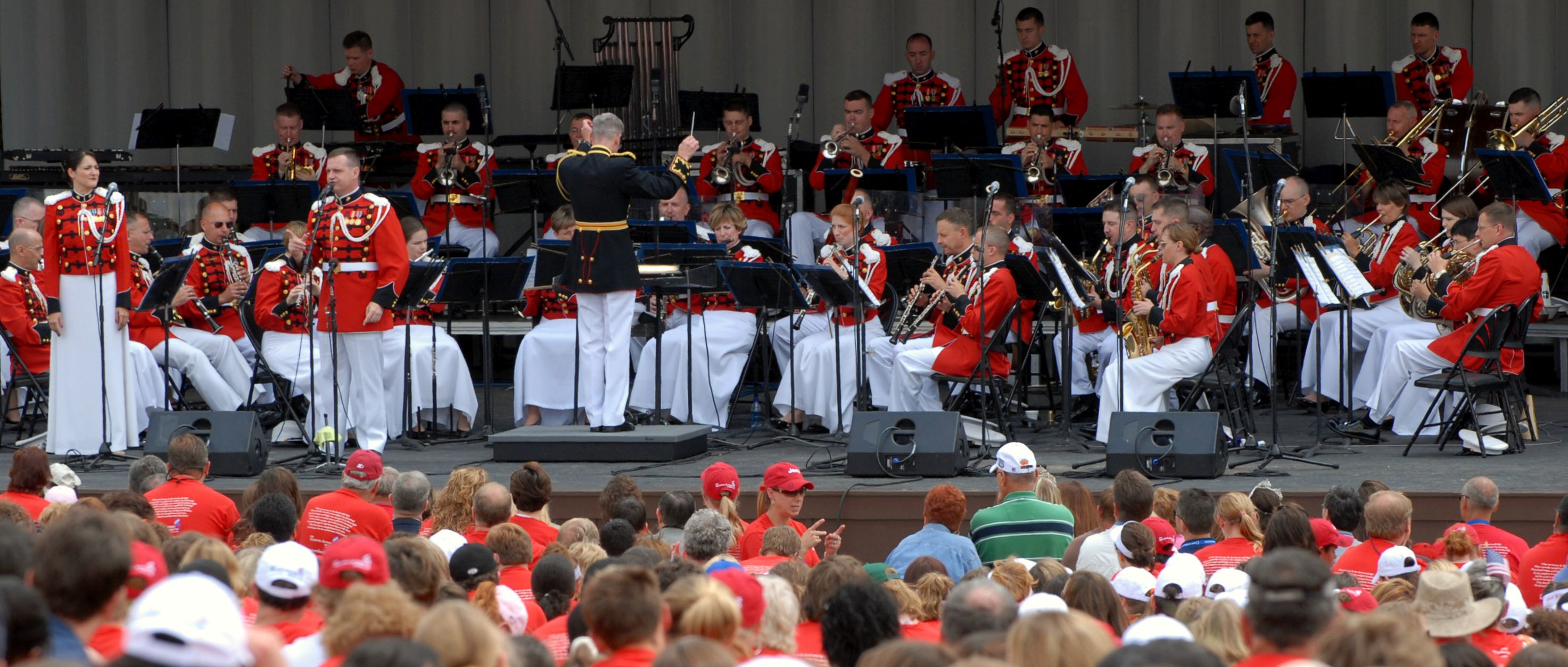
June, 2014, thousands gathered on the National Mall in Washington, DC, to sing The Star-Spangled Banner
Thousands gathered on the National Mall to sing “The Star-Spangled Banner” on the 200th anniversary of its composition by Francs Scott Key. US Army

We rarely sing the third stanza of “The Star Spangled Banner,” in which Francis Scott Key wishes death to escaped slaves and “hirelings” who helped the British invaders.

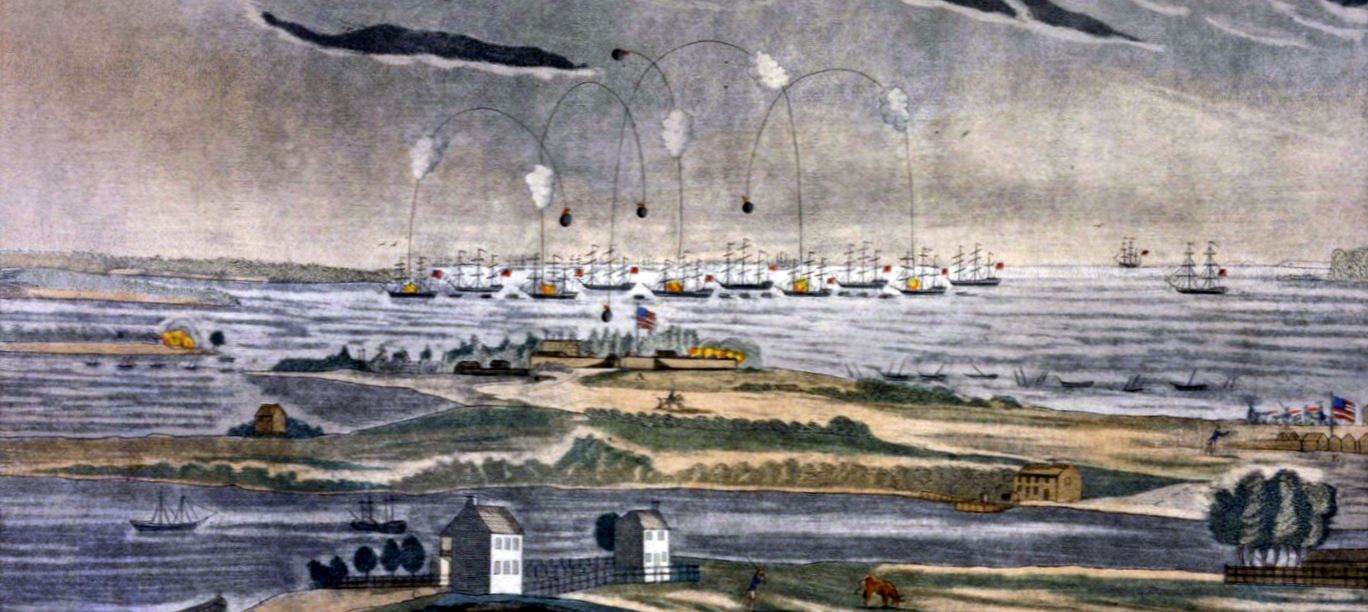
On a sunny Saturday in June, 2014, thousands gathered on the National Mall in Washington, DC, to sing “The Star-Spangled Banner.” The event marked the two-hundredth anniversary of Francis Scott Key’s composition, officially adopted as the national anthem in 1931. As the melody rang out over the grass and along Constitution Avenue, it echoed off neighboring memorials and galleries, including the partly built National Museum of African American History and Culture a block and a half down the street.

Although preceded by a lengthy program of musical performances, the actual words of the anthem got short shrift. As usual, only the familiar opening verse was sung because of various ideological stumbling blocks in subsequent verses – most especially the third, with its fervent hope that

   No refuge could save the hireling and slave
   From the terror of flight, or the gloom of the grave.
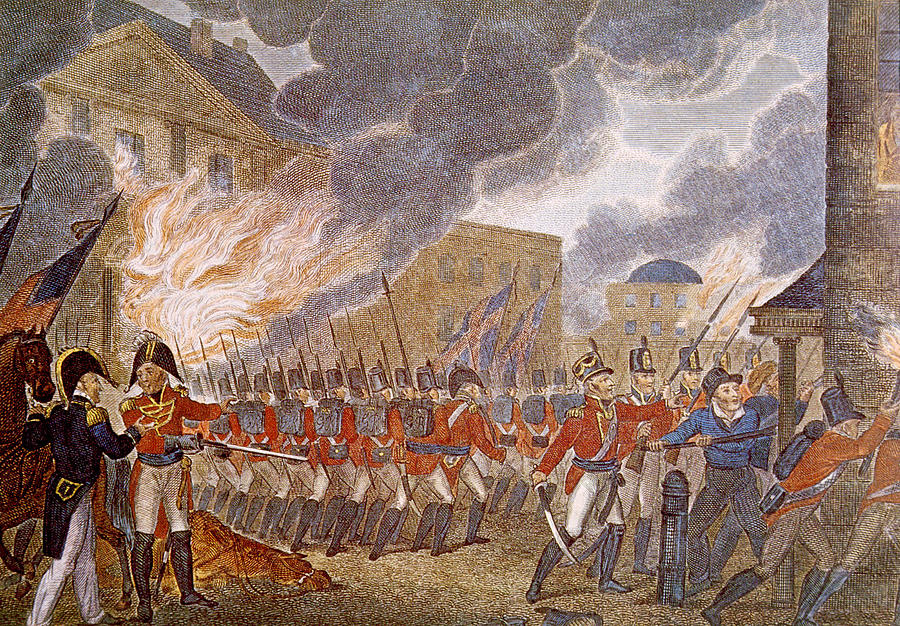
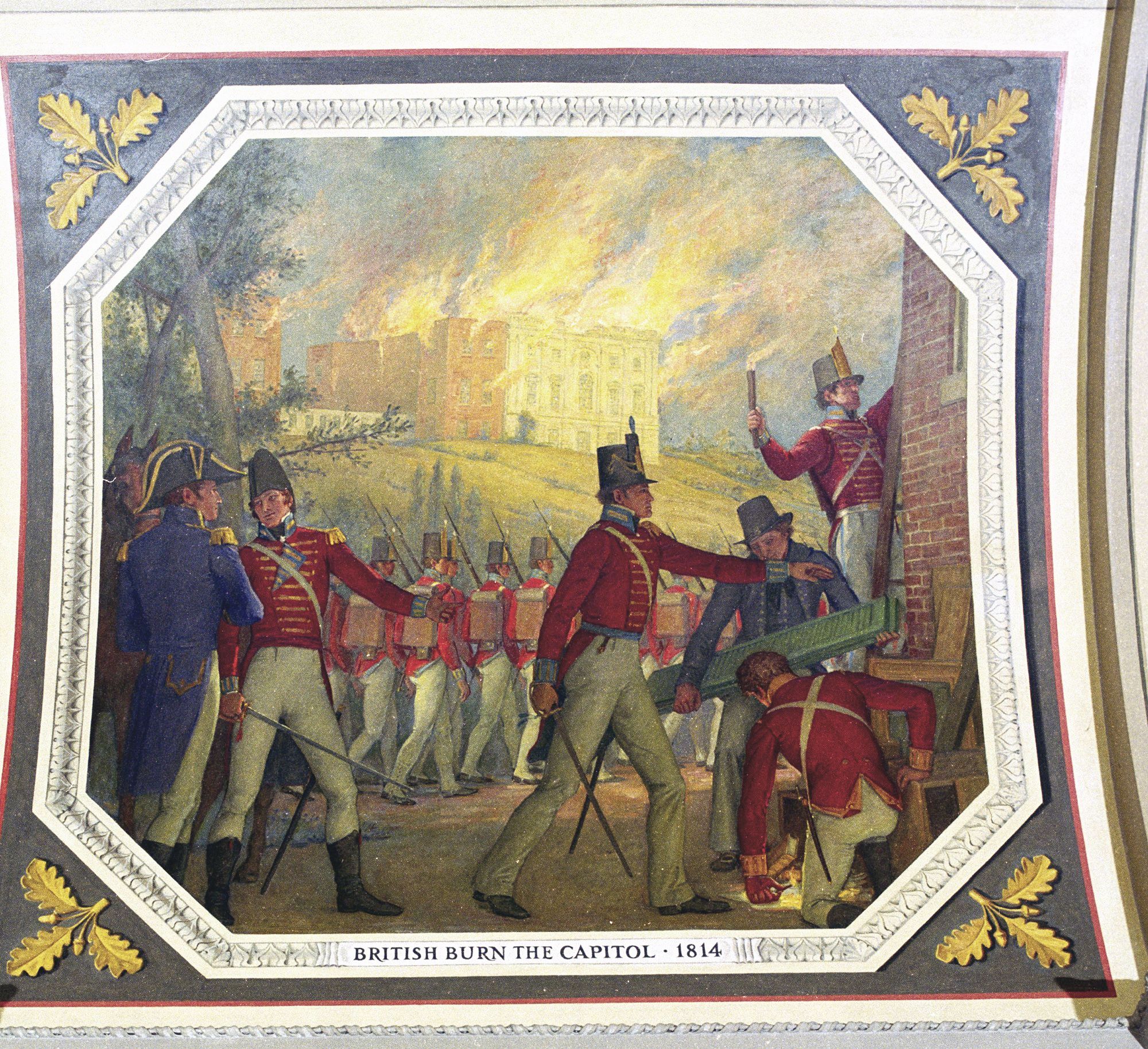
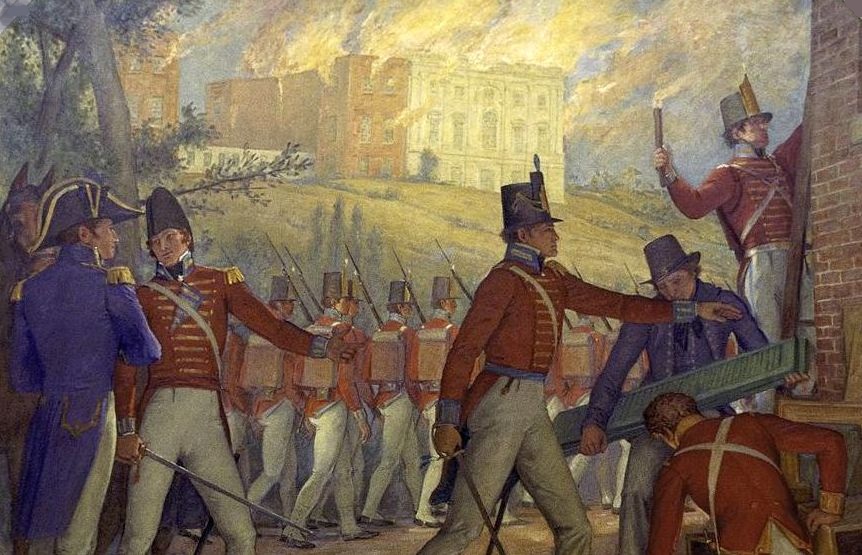
Admiral Cockburn oversaw the British soldiers burning Washington, D.C., on August 24, 1814 during the War of 1812, setting fire to several buildings, including the White House and the US Capitol. 
During the War of 1812, Admiral Cockburn oversaw the burning of buildings in Washington, D.C., including the White House, Capitol, and Treasury buildings. Library of Congress

Admiral Cockburn was ordered to inflict as much damage as possible on the Chesapeake area.

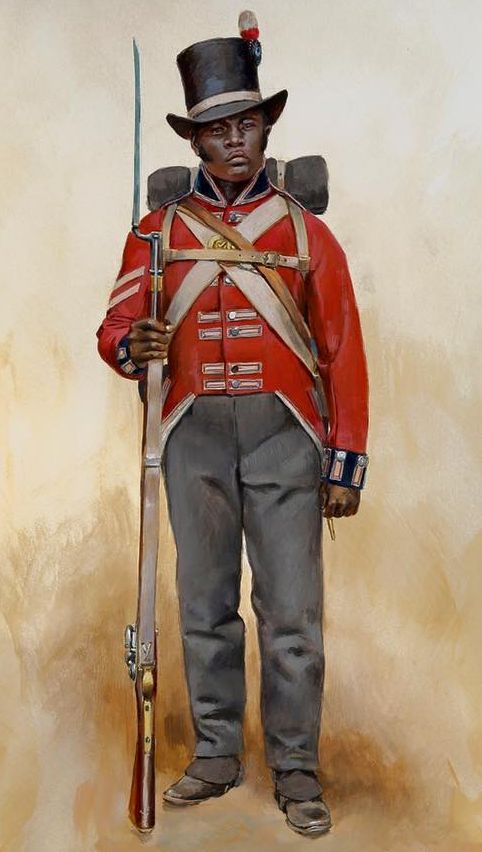
For me, the words always evoke a glow of family pride, because Key’s malign desire that fleeing slaves should find no refuge was directly inspired by the actions of my distinguished relative Admiral Sir George Cockburn of the Royal Navy. Two hundred and twelve years ago this August, he fought his way to the White House at the head of an army partly composed of slaves he had freed, armed, and trained, and torched the place, along with the Capitol and much of official Washington. In the course of a two-year campaign, Cockburn rescued as many as 6,000 slaves, and despite Francis Scott Key’s hopeful verse – not to mention angry demands from the US government – he sailed them away to freedom.
Rear-Admiral_George_Cockburn_(1772-1853),_by_John_James_Halls, Royal Museums Greenwich

Obviously, the admiral qualifies as one of the great emancipators, and I am proud to claim a connection. In a recent conversation with Dr. Lonnie Bunch, Secretary of the Smithsonian who oversaw creation of the African American museum as its founding director, I suggested that he include George Cockburn in a Hall of the Righteous, cheek by jowl with Abraham Lincoln and William Lloyd Garrison. He was nice enough to hear me out, although he made it clear that his intention is not to produce a Black version of the nearby Holocaust Memorial Museum, with its Wall of Rescuers, but something far broader in scope. The real challenge, Bunch told me, is to avoid a “rosy view of the past. Romanticized memory is not history.” 

To maintain a rosy view of the War of 1812, it is best to concentrate on the tattered banner and its mythic survival amid British rockets and bombs. There is less romance in the full story. It was also a war of aggression, launched by President James Madison partly in hopes of conquering Britain’s Canadian colony, thought to be easy prey while the British were distracted by their life-and-death struggle with Napoleon. Not for the last time, expert opinion expected a walkover. “The acquisition of Canada this year, as far as the neighborhood of Quebec, will be a mere matter of marching,” wrote Thomas Jefferson soon after war was declared. A fellow ringleader of the war party, Henry Clay, assured Congress that “the militia of Kentucky are alone [able] to place Montreal and Upper Canada at your feet.”

As with more recent enterprises, things did not go as planned, especially since the military was woefully unprepared and led by incompetent commanders. The Canadian expedition ended in disaster. Fort Detroit surrendered to the British and large portions of Maine and Michigan fell under enemy occupation. By the time the British agreed to call it a day, the bitterly divided United States was war-weary and on the verge of bankruptcy.

My ancestor was probably the most hated man in America.

By then George Cockburn was the most hated man in (white) America, vilified in the press as the “great bandit.” The scion of a Scottish landed family ruined by his speculator father, he had entered the navy at the age of fourteen. From then on, he was almost continually at sea – and, once war with France broke out in 1793, frequently in combat.

This conflict, initially waged against revolutionary France and then against Napoleon, was essentially the first world war, fought across much of the globe and offering plenty of opportunities for a tough, ambitious professional such as Cockburn. At twenty-three, he was already a captain, in command of a 215-man frigate. Horatio Nelson, Britain’s greatest naval hero, would soon praise the young officer’s “zeal, ability, and courage, which shine conspicuous on every occasion which offers.”

The British forces

By 1813, when he first arrived in Chesapeake Bay, Cockburn was forty-one years old and a rear admiral. His mission was straightforward: to inflict as much damage as possible on this economic heartland, thereby dissuading pro-war Democratic-Republicans (as opposed to antiwar Federalists) from their rash attack on the British Empire. “I have no hesitation,” he wrote to a superior officer, “in pronouncing that the whole of the shores and towns within this vast bay, not excepting the capital itself, will be wholly at your mercy, and subject if not to be permanently occupied, certainly to be successively insulted [raided] or destroyed at your pleasure.”

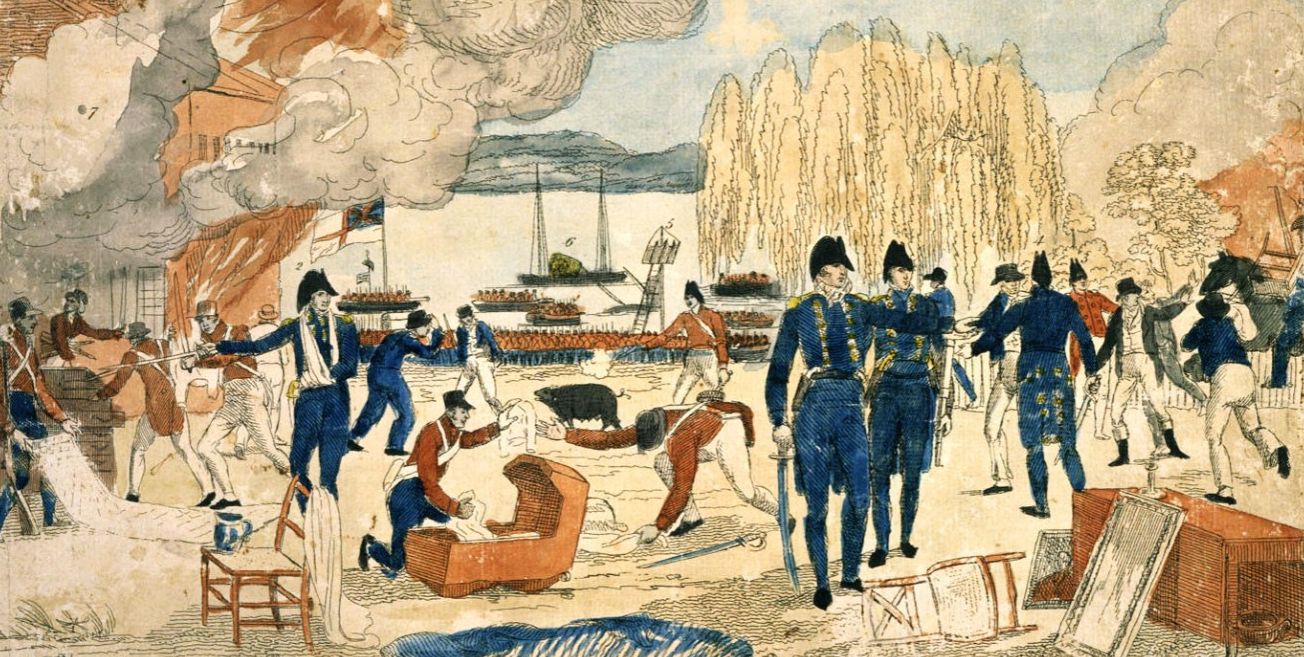
Admiral Cockburn burned and plundered Havre de Grace at the head of the Chesapeake Bay on June 1, 1813. Maryland Center for History and Culture
Cockburn's men burned and plundered the town of Havre de Grace at the head of the Chesapeake Bay on June 1, 1813. Maryland Center for History and Culture

This ruthless scheme, which Cockburn was to follow to the letter, would have been absolutely impossible without first-class intelligence operatives to alert his raiding parties to enemy forces and guide them around the tortuous shoreline. Fortunately, volunteers for such a mission soon appeared: slaves. At first they were single men, eagerly welcomed by the British as the pilots and guides they needed. But the numbers quickly grew as entire families made their way to the ships. At this point the invaders made a crucial decision: they would accept any slave – man, woman, or child – and guarantee they would not be handed back to their owners.

Slaves frequently volunteered to help British raiding parties as pilots and guides.

It was a shrewd assault on the young republic, which at the time was really two nations: a free people, intoxicated by their new democracy, and an enslaved people, ill-fed, clad in rags, and routinely brutalized. In fact, the revolution had in many ways made the lives of enslaved Americans even worse. For example, among the goals of Virginian Founding Fathers such as Jefferson had been the breakup of big landed estates. Whereas in colonial times such estates passed to a single heir (the eldest), they could now be divided equally among siblings. 

This meant that slave families, too, were increasingly broken up. In his pathbreaking history The Internal Enemy: Slavery and War in Virginia, I772-1832, Alan Taylor points out that “the revolution had produced a tragic contradiction by promoting greater equality for white men while weakening the security of black families.” In addition, observes Taylor, “by diffusing slave ownership, the new laws also broadened public support for slavery.” A nascent movement in favor of emancipation that had flickered during the years of the Revolution soon died away.

British raids on the Chesapeake left dozens of towns, plantations, and stores burned, with livestock and freshly harvested tobacco carried away.

In Taylor’s view, family separation was the most onerous of