Authors:
Historic Era:
Historic Theme:
Subject:
Spring 2026 | Volume 71, Issue 2


Authors:
Historic Era:
Historic Theme:
Subject:
Spring 2026 | Volume 71, Issue 2


William Seward's 1868 attempt to acquire the Danish territory was the country's first, but not the last.
Spring 2026 | Volume 71, Issue 2
Editor's Note: Mark Kawar is a first-time author whose recent book, America, but Bigger: Near-Annexations, from Greenland to the Galapagos, explores the history of the United States' territorial ambitions, both realized and unrealized. Here, he recounts the very first attempt by American officials to acquire Greenland, a goal the country would pursue again and again over the following years, including most recently during the presidency of Donald Trump.
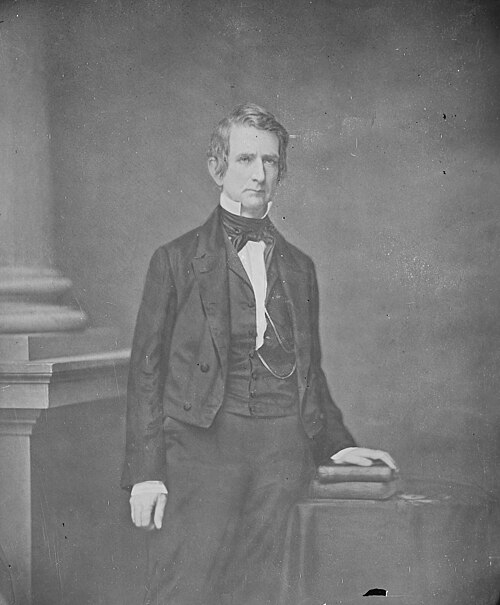
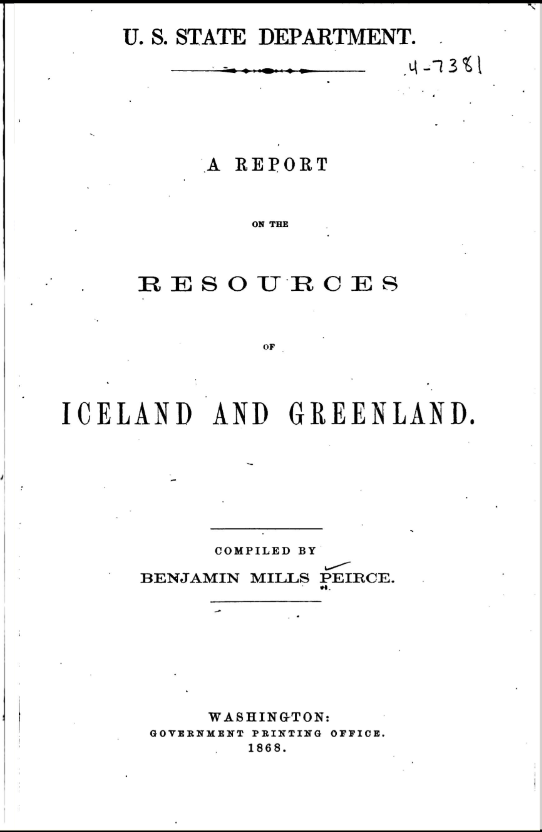
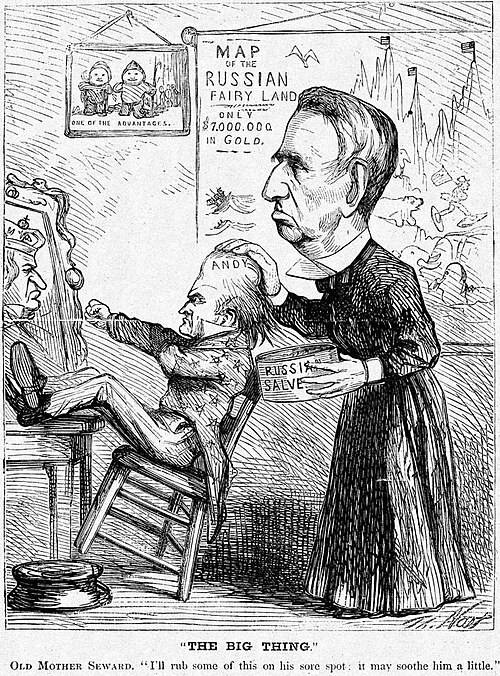
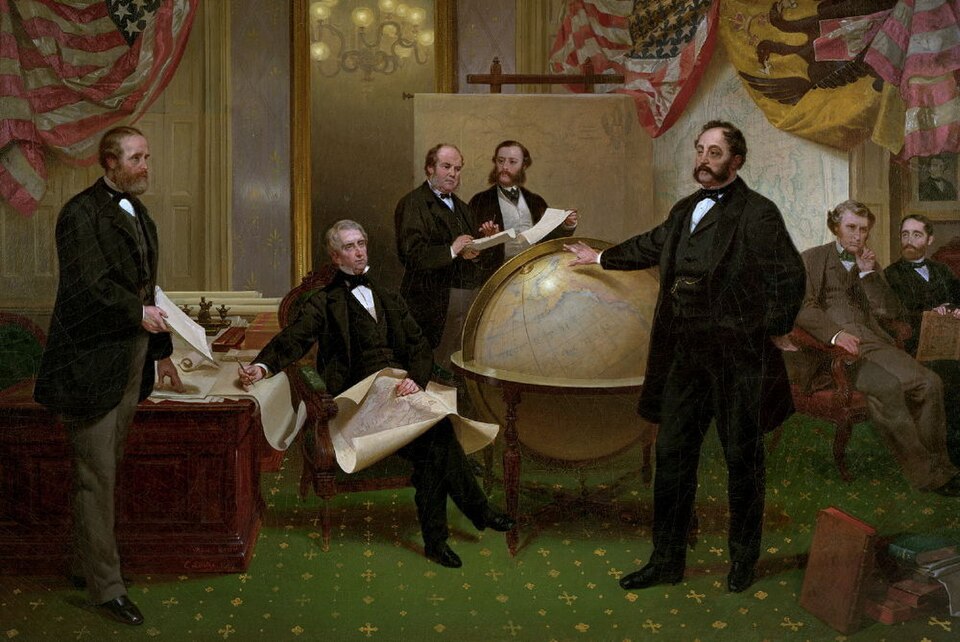
In the 1860s, Secretary of State William Seward had an expansive vision of America’s borders. Over his career, he was involved in multiple annexation attempts, including introducing the Guano Islands Act and plotting to take British Columbia after the Civil War. As a senator in 1853, he predicted that the nation’s borders “shall be extended so that it shall greet the sun when he touches the tropic, and when he sends his glancing rays toward the polar circle, and shall include even distant islands in either ocean.” One of the places in “the polar circle” that Seward had his eye on was Russian Alaska, which he bought in 1867. Two others were Greenland and Iceland.
The rumpled, cigar-chomping Seward was a New Yorker, a former Whig, and an opponent of slavery. He had been considered the favorite for the Republican presidential nomination in 1860 until the meteoric rise of Abraham Lincoln overtook him. Unlike his Democratic Party contemporaries, Seward’s vision of expansionism didn’t involve American sugar plantations in the Caribbean worked by enslaved people. Seward, like many Northerners of his era, sought to make the United States the world’s leading trading nation. He imagined a series of territorial acquisitions, especially ports, to support American commerce. And while Seward wanted America to expand over as much of the world as possible, unlike many of his contemporaries, he sought annexation chiefly through peaceful means.
In 1865, with the end of the Civil War in sight, Seward was no longer worried that territorial expansion would lead to the spread of slavery. So he pursued new lands more vigorously. In 1867, just as he was wrapping up the purchase of Alaska from Russia, he began discussing with Denmark the possibility of buying the Danish West Indies. The Danes had settled the sugar-growing islands as a commercial investment, and they were open to selling the islands for a profit.
While Seward and Denmark were negotiating the purchase, one of Seward’s political allies, Robert Walker of Mississippi, suggested expanding the deal. America should buy not only the Caribbean islands but