Authors:
Historic Era: Era 10: Contemporary United States (1968 to the present)
Historic Theme:
Subject:
Fall 2026 | Volume 71, Issue 4


Authors:
Historic Era: Era 10: Contemporary United States (1968 to the present)
Historic Theme:
Subject:
Fall 2026 | Volume 71, Issue 4


Some observers see ambiguity in the 22nd Amendment.
Fall 2026 | Volume 71, Issue 4

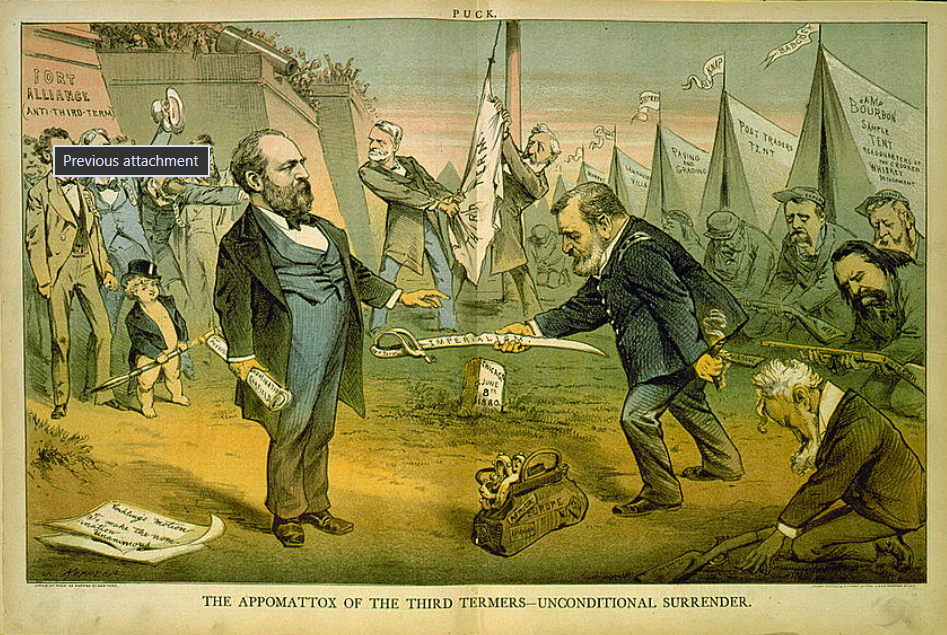
As the 80th Congress convened in January 1947, Republicans took control of the House and the Senate for the first time since 1933. In the intervening years, they had watched in dismay as President Franklin D. Roosevelt, a Democrat, had been elected to a third term and then a fourth. They vowed to prevent any future president from doing the same.
On January 3, 1947, Rep. Earl C. Michener (R-Mich.) introduced a constitutional amendment to bar a third term for any president who had already “served” two terms. By March 21, 1947, both houses had adopted the amendment, but only after it had been modified to specify that no person shall be “elected” president more than twice. This provision – the 22nd Amendment – went to the states for ratification and became law in 1951.
Republicans had rushed this amendment through Congress with what one senator later called an “indecent lack of debate,” and the measure had taken fewer than three months to move from introduction to adoption. In this hurried atmosphere, legislators showed little interest in the nuances in the changes made to the amendment’s wording.
Now, more than a half-century later, the amendment’s loose language threatens to become an issue in the 2028 presidential campaign. President Donald Trump and his supporters have floated the idea of a third term. The theory is that Trump could run for vice president. If his ticket won, the newly elected president would resign upon taking office, and Trump would automatically ascend to the presidency.
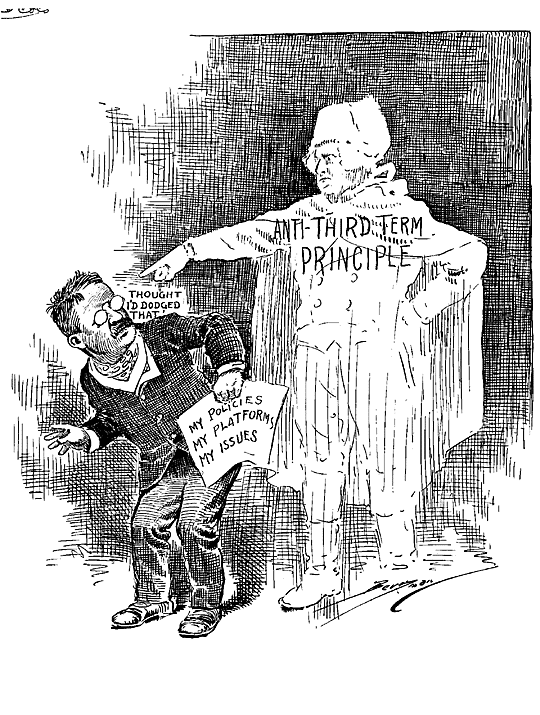
Even the president’s most ardent supporters concede this idea is unorthodox and Trump himself has admitted it might be “too cute” for voters to accept. Its legality is open to serious question, but its supporters insist it passes muster. They argue that the 22nd Amendment bars a person from being elected president more than twice but not from otherwise serving a third term, such as via elevation from the vice presidency. This development, strange as it may be, is but the latest chapter in the recurring debate over presidential tenure, a contentious discussion that dates to the earliest days of the republic.
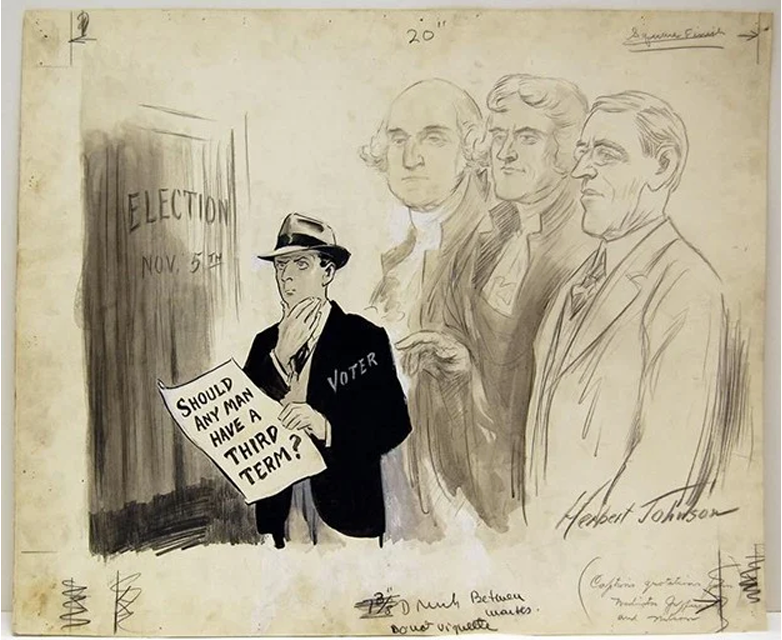
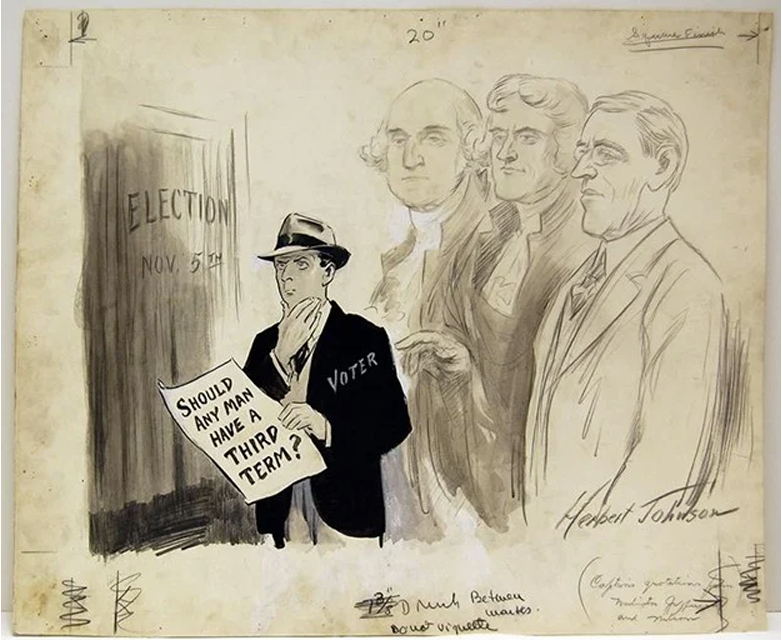
As enacted, the Constitution did not limit the number of terms a president could serve or be elected to. Nevertheless, a tradition soon developed that no chief executive would seek a third term. This practice began in 1796, when the still-popular George Washington retired after his second term. Twelve years later, Thomas Jefferson, the next two-term president, did the same, saying he wanted to follow “the sound precedent set by an illustrious predecessor.”
Both men saw a two-term limit, at least an unofficial one, as sound policy. “(I)n an office of so