Authors:
Historic Era:
Historic Theme:
Subject:
Summer 2026 | Volume 71, Issue 3


Authors: Charles McGrath
Historic Era:
Historic Theme:
Subject:
Summer 2026 | Volume 71, Issue 3


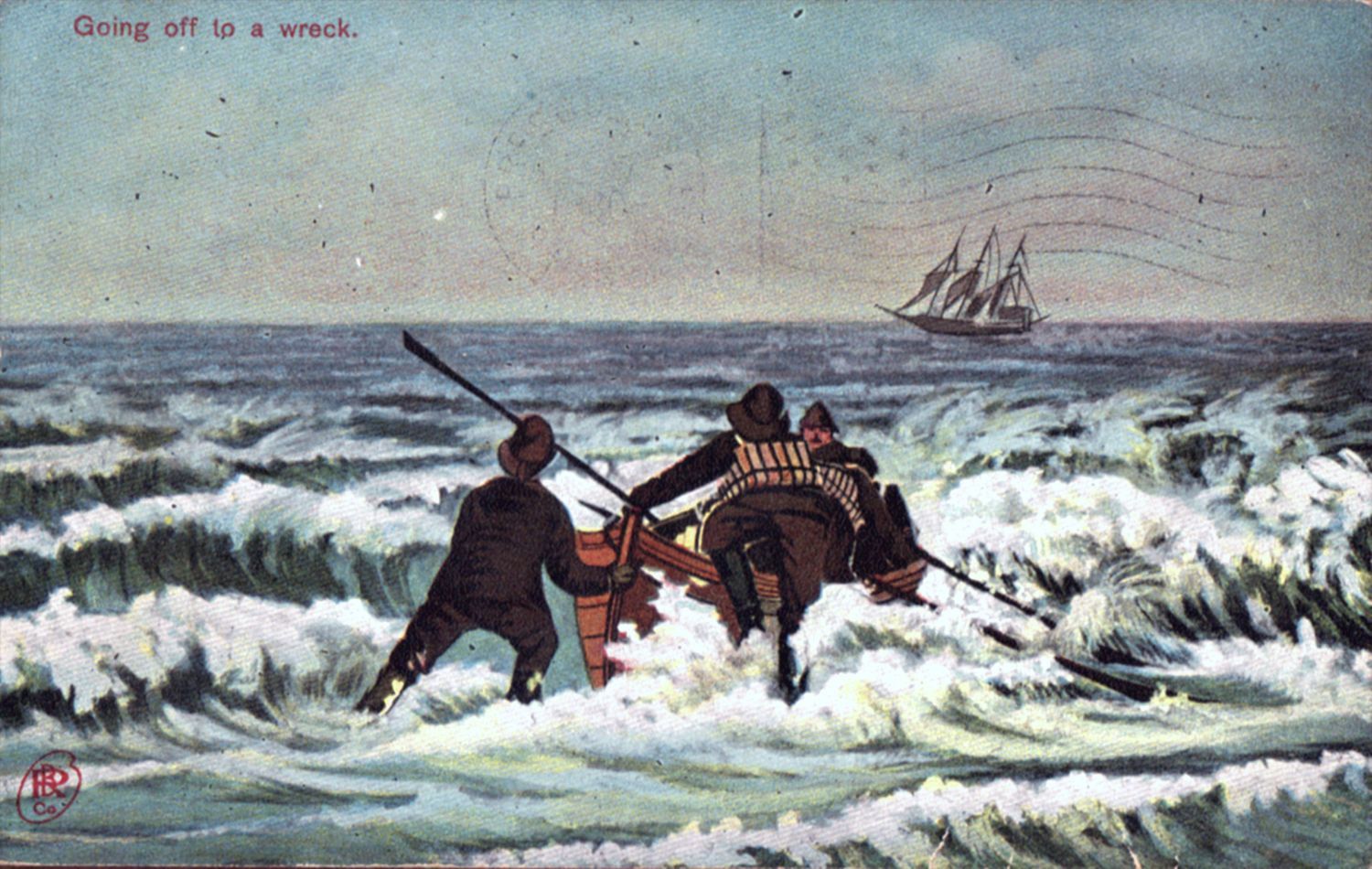
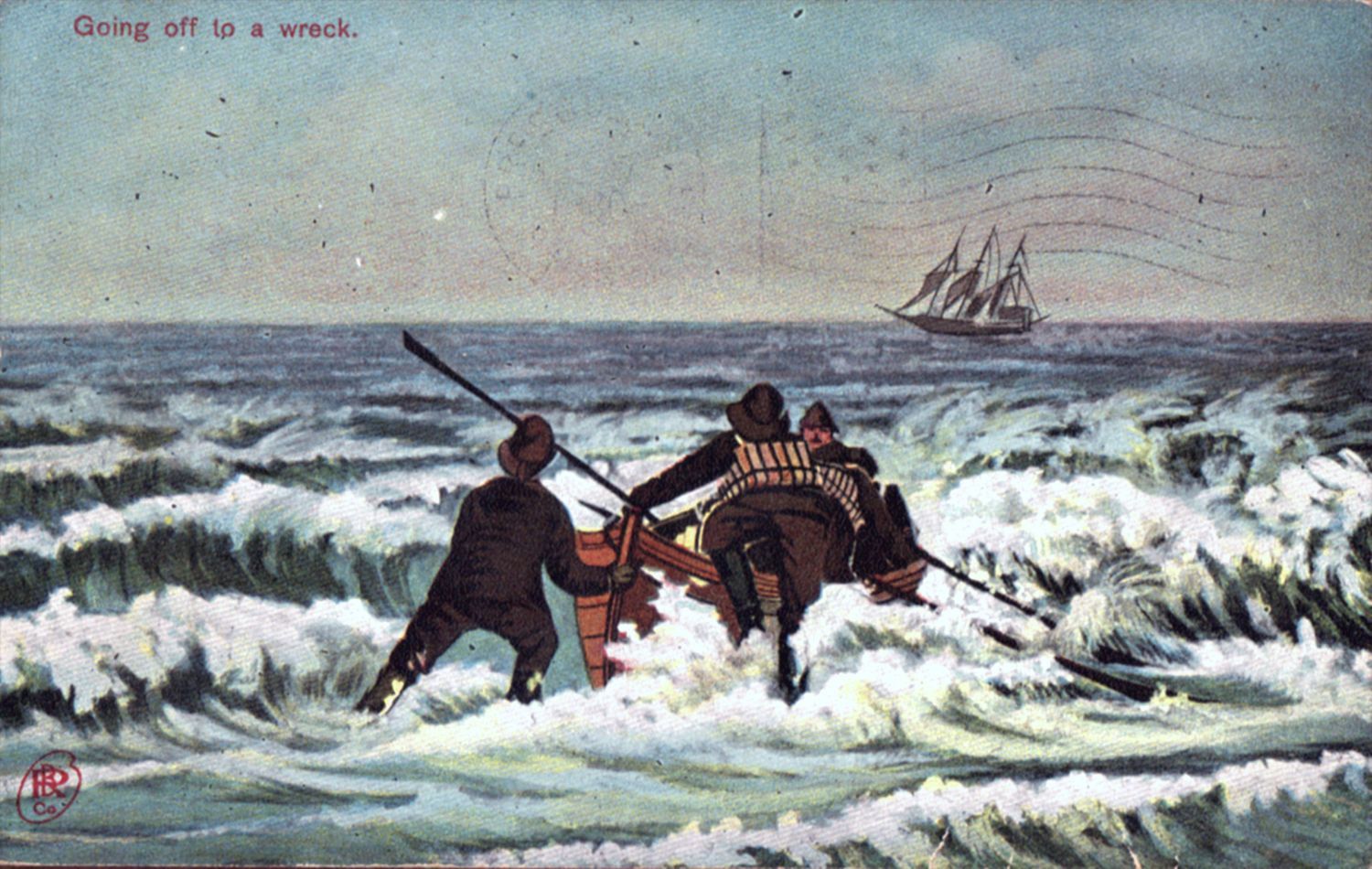
The Humane Society and later the U.S. Life-Saving Service rescued thousands of shipwreck victims operating from lifesaving stations throughout the New England coast and beyond.
Summer 2026 | Volume 71, Issue 3
Editor’s Note: Charles McGrath is the former editor of the New York Times Book Review and deputy editor of The New Yorker. He has written several books including a fascinating history of life saving stations, Shipwreck!: Horseneck Point Lifesaving Station & South Coast Rescuers, in which portions of this essay appeared.
For as long as people have been sailing around Massachusetts, there have been shipwrecks. The state’s South Coast is famous for them. Until the Cape Cod Canal was finished, in 1914, the combined waterways of Buzzards Bay, Vineyard Sound, and Nantucket Sound were among the most heavily traveled in the world. In the year 1870 alone, the lighthouse keeper on Gay Head counted 26,469 ships passing by his station on the way in and out of the sound. People on Cuttyhunk reported seeing as many as a hundred ships sail by that island in a single afternoon.
These waters weren’t just busy, they were hazardous, known for treacherous reefs, shifting sands, confusing currents, nor’easters in the winter, hurricanes in the summer. With so much traffic, wrecks were almost inevitable. They were commonplace. A fact of life. And death, too often.
Even now, in the age of radar, Loran, and GPS, wrecks occasionally happen. In 1992, for example, the Queen Elizabeth 2, traveling at night and trying to make up for lost time, struck a reef off Cuttyhunk and tore a 70-foot gash in her side. Nobody drowned, but the passengers had to be ferried to New Bedford before making their way to New York by train from Providence. A worse disaster took place in April 2003, when a tank barge owned by Bouchard Oil Company passed by the wrong
In the age of sail, wrecks were harder to avoid. Charts then were often inaccurate, and aids to navigation — what few there were, such as lighthouses, buoys, and channel markers — were famously unreliable. In bad weather, and sometimes even in good weather, sailing ships were not easily maneuverable, and there was always the danger of fetching up on a lee shore. Most mariners back then did not know how to swim and many wrecks were deadly.
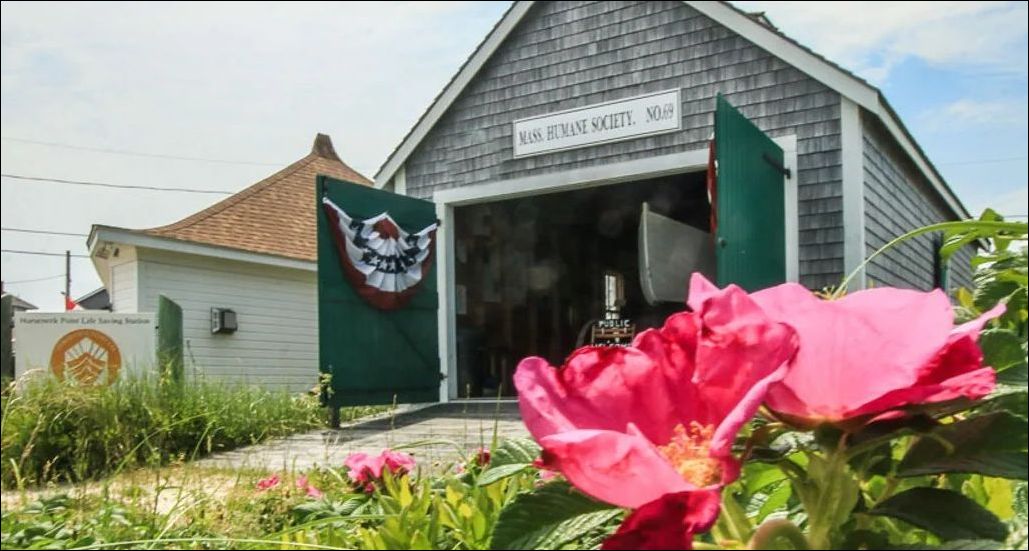
The odds of surviving a wreck off the shores of Massachusetts got much better in the nineteenth century, when an organization called the Massachusetts Humane Society began establishing lifesaving stations along the coast: sheds housing a lifeboat that could be launched through the surf and rowed out to a stricken vessel.
See more dramatic images of
America's Life Saving Stations
in our slideshow in this issue
One of these stations was built in Westport in 1888 on a dangerous section of Buzzards Bayand still stands, one of the last of its kind. The Horseneck Point Life-Saving Station was saved and restored by the Westport Fishermen’s Association in 2009. Today, it's managed by the Buzzards Bay Coalition and interprets the history of the stations and their crew.
In 1848, the United States Life-Saving Service (USLSS) was formed by the Federal Government. In 1915 it was merged with the U.S. Revenue Cutter Service, which had been established in 1790 by Alexander Hamilton, to become the U.S. Coast Guard. The USLSS soon began building similar stations — not just in Massachusetts, but up and down the eastern seaboard and along the Great Lakes.
The unofficial motto of the USLSS was, “You have to go out, but you don’t have to come back.” In their time, the lifesavers and the crew of the Humane Society boats, rowing out in the most tempestuous weather, were hailed as heroes — as famous and highly regarded as professional athletes today. In group photographs, with their thick mustaches, steady gaze, and proud, unsmiling expressions, they remind us a little of old-time ballplayers.
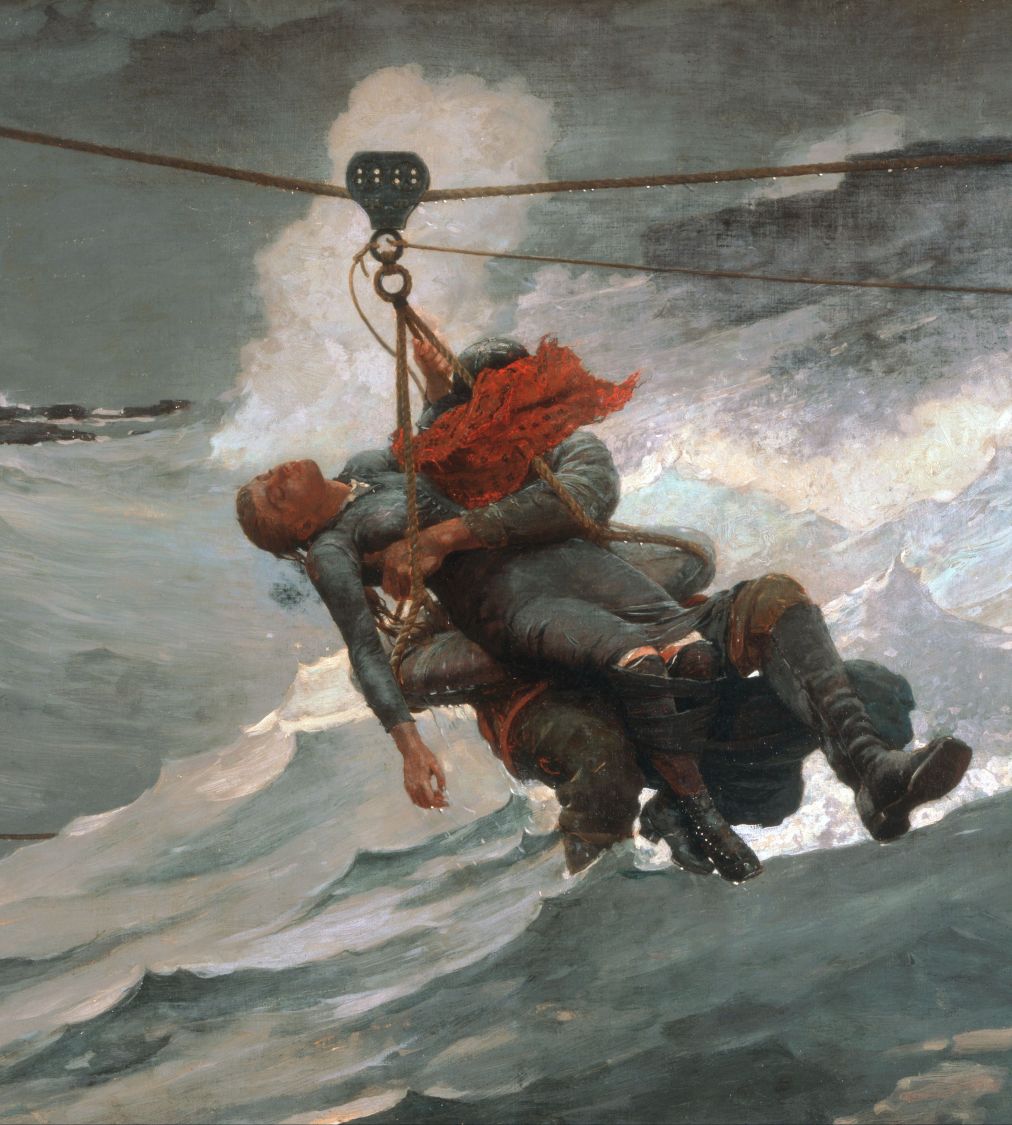
Walt Whitman wrote a poem about the lifesavers (“Wild, wild the storm, and the sea high running...”). And they’re the subject of one of Winslow
The society was founded in 1786 at a meeting at The Bunch of Grapes, a tavern in Boston, and was the brainchild of Dr. Henry Moyes, a blind Scottish physician who had come to this country on a lecture tour, expounding on topics like “heat,” “air,” and “vegetable substances.” Dr. Moyes was also interested in resuscitation, or what he called, “the restoration of the apparently drowned.” That evening at The Bunch of Grapes, he reminded his audience that there was an organization in England, the British Royal Humane Society, dedicated to that purpose and suggested that Bostonians might want to form something similar.
The idea was agreed to, and James Bowdoin, then the governor of Massachusetts, became the society’s first president. His fellow-trustees were all Boston Brahmins or civic leaders. The original members included Paul Revere, Samuel Adams, John Hancock, and two founders of the Harvard Medical School. There were some fussbudgets and nitpickers among them, but mostly they were high-minded, philanthropic, and motivated by an almost religious sense of purpose.
The society’s initial program was the awarding of medals and, in some cases, financial rewards, called “premiums,” to people who had rescued others. The first of these prizes, twenty-eight shillings, went in 1786 to a man named Andrew Sloane for saving a boy who fell through the ice on a mill pond. The first medal, a gold one, was awarded in 1789 to Lieutenant Scott, a British officer who jumped off the stern of his ship, Leopard, to save a young boy drowning in Boston Harbor. Eventually three categories of award were established — gold, silver, and a certificate based on the degree of heroism displayed by the rescuer. The medals, roughly the size of a silver dollar, typically had inscriptions written for the occasion. The back of the medal sometimes listed the names of the officers of the society and sometimes showed
A history of the Humane Society, published for its centennial in 1876, lists all the medals and premiums awarded to date, and the list goes on, almost monotonously, for pages and pages. People are rescued from shipwrecks and capsizings, from falling into cisterns or through the ice (as a grandmother and grandson did in 1815 while trying to cross the frozen Acushnet River between New Bedford and Fairhaven). There are deranged or suicidal people who are saved after jumping off bridges. Lots of “lads” are saved after falling off wharves or just venturing out too far over their heads. There was even a gold medal and $20 reward presented in 1820 to Horatio Sprague, an American living on Gibraltar who had paid $1,200 for the freedom of five American merchants kidnapped at sea and held for ransom by nomads in Morocco. And of course, there were people who tried to scam the system by faking drowning and pretending to be rescued.
In time the society’s activities extended to efforts like providing swimming lessons to Boston schoolchildren and building a bathhouse on the bank of the Charles River in Cambridge because so many Harvard students were drowning there. In keeping with Dr. Moyes’s interest, the society also published pamphlets recommending ways to “reanimate” the apparently drowned. These included tickling the nostrils with a feather and what sounds like an early version of CPR:
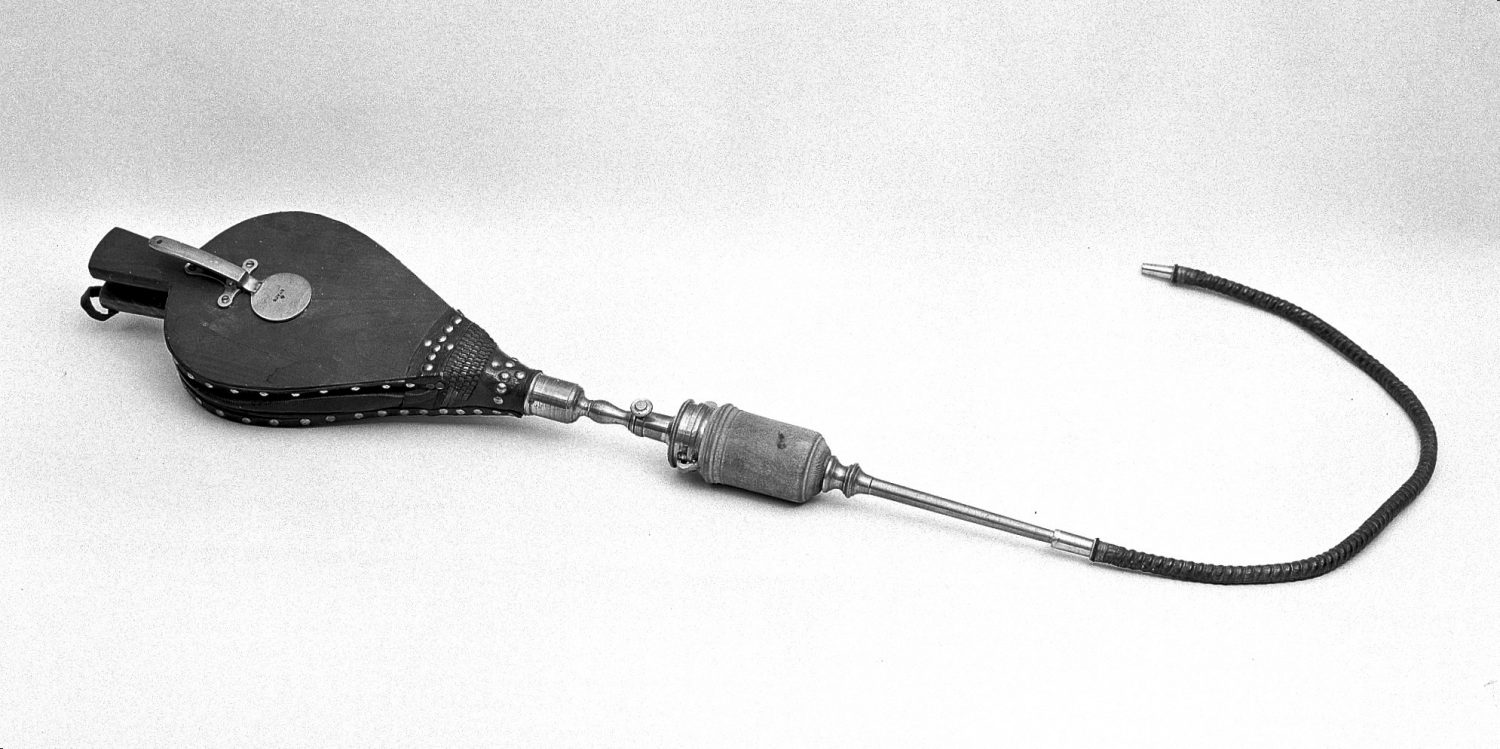
Another method, described with particular enthusiasm and with great confidence in its efficacy, involved blowing tobacco smoke up the victim’s rectum. There was even a device, called the fumigator, that had been invented for this purpose, though if one was not available the society suggested that an ordinary pipe would suffice. All you had to do was cover the bowl with a handkerchief and blow into the pipe backwards, forcing the smoke out through the stem. A poem written in 1796 describes the process this way:
The next step in the evolution of the Massachusetts Humane Society took place in 1787, after a particularly tragic wreck in December, when a ship from Damariscotta, Maine, carrying 13 passengers, broke up on the rocks off Lovells Island, near the entrance to Boston Harbor. Because the channel there is narrow, the passengers were able to swim to shore, but overnight, stranded on the island, they all froze to death. Two of the victims were a young, engaged couple from Maine who had been traveling to Boston to buy furniture for their intended new home. They died, or so it was said, clinging to each other on top of a boulder that quickly became known as Lovers Rock.
Their sad fate occasioned a lot of news coverage, not to mention an out-pouring of misty-eyed poetry and prompted the Humane Society to begin building what were called Houses of Refuge — wooden huts painted red for visibility and stocked with blankets, food, matches, a wood stove, kindling, and firewood. The first of these huts was built at Lovells, and others were soon added at Scituate, Hull, and along some beaches on Cape Cod. (In those days the Cape, as we know from reading Thoreau, was practically wilderness.) By 1806, there were 18 huts along the coast and on Nantucket (where there were three) and Martha’s Vineyard.
These huts were only a partial success. Some of them really did serve their intended purpose — as shelters for shipwrecked mariners who could somehow make their way to shore. Others were vandalized (including the one at Lovells, almost as soon as it went up) or else had their provisions stolen or eaten by mice. Maintenance proved difficult because the huts were in remote places and often no one was around to keep an eye on them. Not infrequently, some poor sailor or sailors would struggle ashore only to find a hut that was empty or falling down. In the Humane Society’s correspondence there is a lot of grumbling about the kind of people who would “plunder” such “humble but hallowed abodes.” Next to depredation of this sort, one preacher said, “common robbery is righteousness.”
See more dramatic images of
America's Life Saving Stations
in our slideshow in this issue
The society never entirely gave up on the huts, but in 1803 the members began thinking about ways not merely to shelter shipwrecked seamen but to go out and rescue them. In June of that year, the assistant minister of Trinity Church in Boston preached a sermon
“Would it not be advisable,” he asked, “to procure a model of this boat?” The society thought it could improve on the British model by adapting the lines of the American whaleboat, and it commissioned a Nantucket man named William Raymond to design one. George Lawley & Son, a venerable Boston shipbuilding firm, built the boat, and in 1807 it was housed in its own little building — a sort of beachfront garage-at Cohasset. This was the first Massachusetts lifesaving station — and, for that matter, the first American one.
The Cohasset boat never actually took part in a rescue — in part because, after passage of the Embargo Act of 1807, American merchant shipping was curtailed, which meant fewer wrecks — and the Humane Society gradually drifted away from lifesaving and got into the business of building and endowing hospitals, including Massachusetts General and Boston Lying-In.
What changed the society’s focus back to sea rescue was the famous “triple hurricane” of December 1839, when three successive snowstorms swept across New England, ripping off roofs, toppling steeples, flooding cities, washing away wharves and piers. “The whole shore of Massachusetts was strewn with wrecks and dead bodies,” the historian Sydney Perley wrote in 1891, “and the harbors of Newburyport, Salem, Marblehead, Boston, Cohasset, Plymouth and Cape Cod were almost literally filled with disabled vessels.”
The loss of life was so great that it prompted the then president of the society, Benjamin Rush, to rededicate the organization to its original purpose of rescuing people at sea, and when it turned out that the society, overinvested in other projects, lacked the money to build new boats, he successfully appealed to the Commonwealth for funds. In 1841 the society built 11 new boats and stations, and by 1845 there were seven more.
Around the same time, William A. Newell, a Congressman from New Jersey, began lobbying the federal government to create a similar system for the rest of the country. In August 1848, he delivered an impassioned speech to Congress in which he noted that in the previous nine years no fewer than 338 ships had wrecked off the shores of New York and
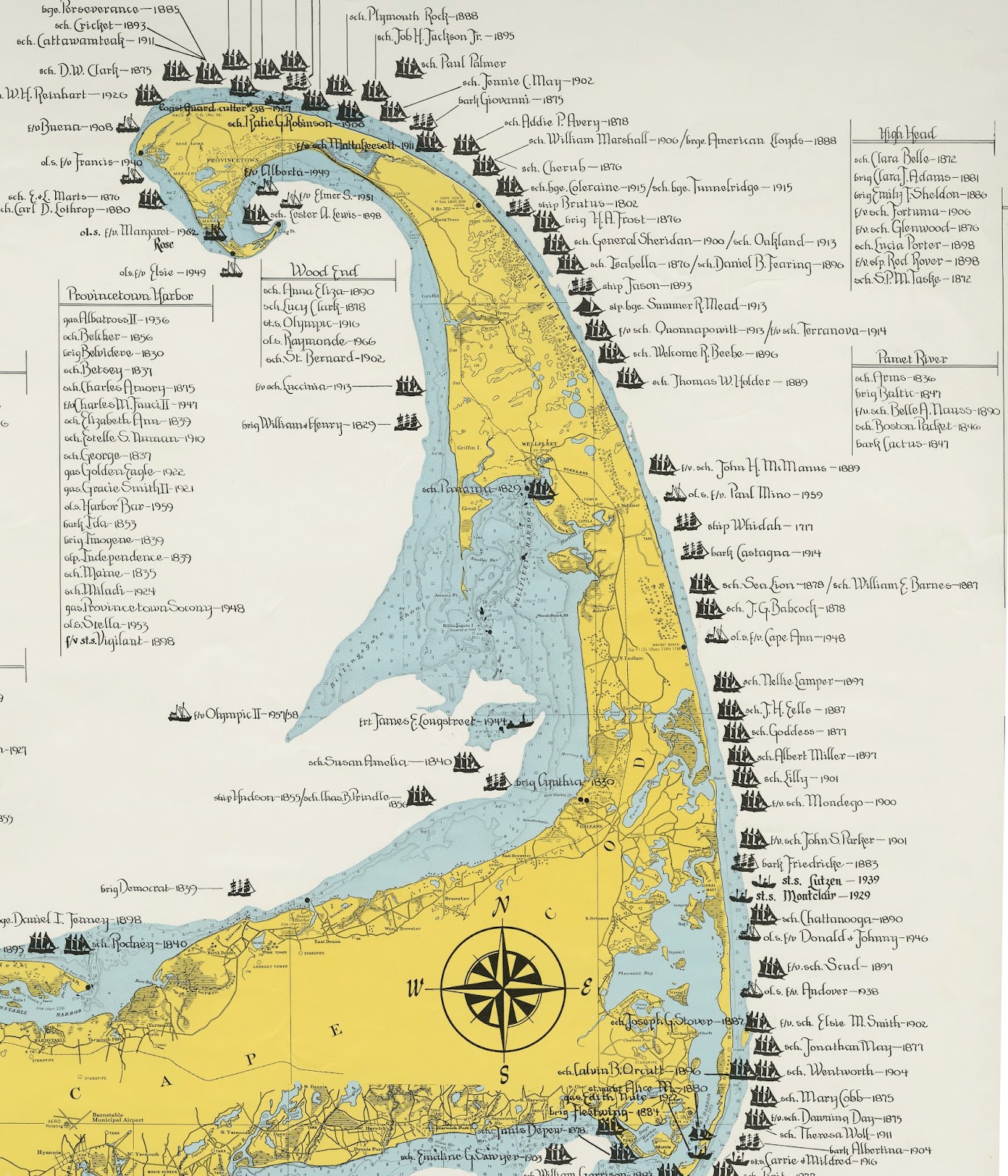
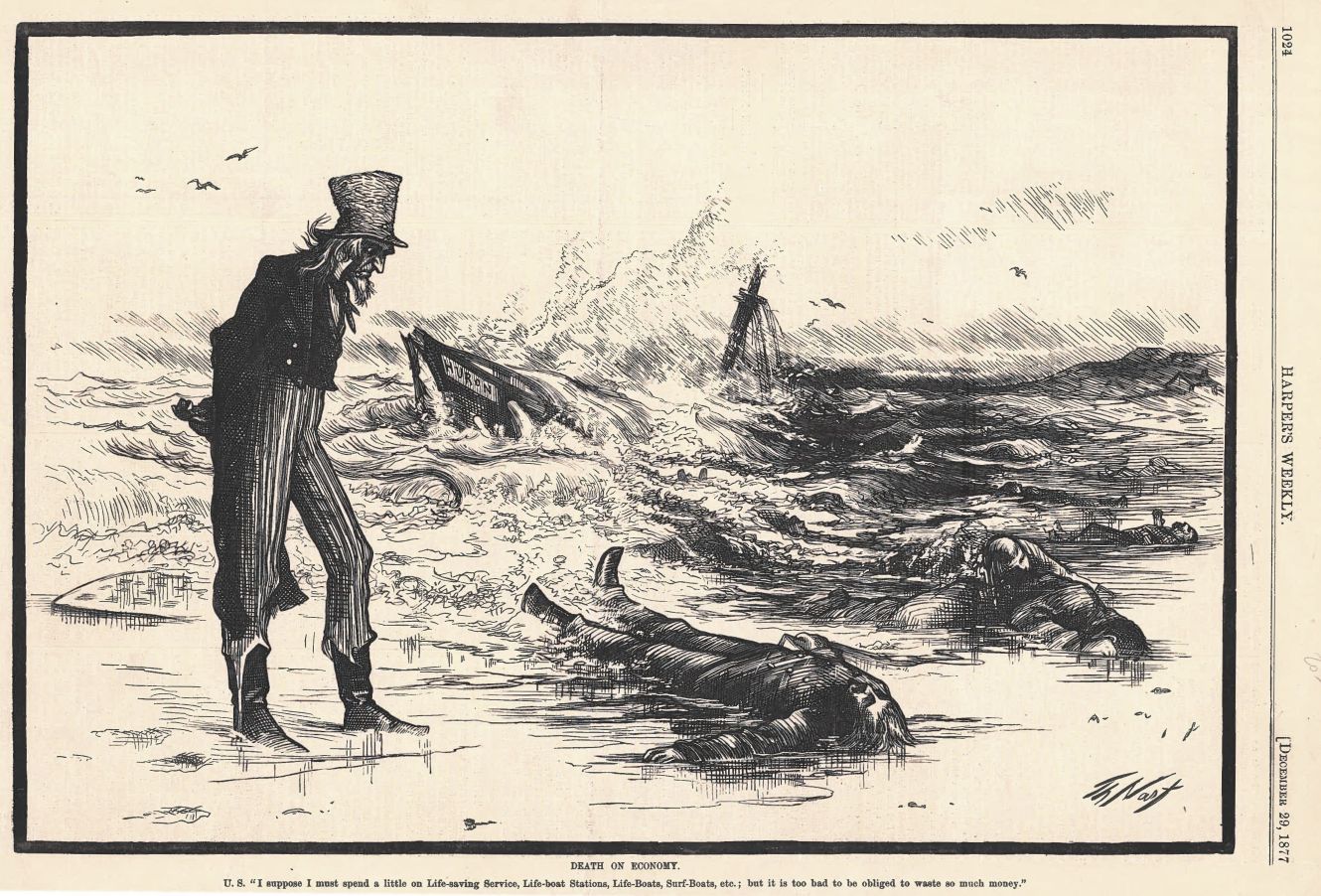
This was ostensibly the beginning of the USLSS, though it took decades for the service to properly organize itself. In the beginning it was a sinkhole of bribery and corruption. The keepers got $200 a year, but the crews were unpaid and, in many cases, unskilled. The stations were neglected and often vandalized. Supplies were stolen or unaccounted for. And the boats, often borrowed for private use, were seldom looked after and fell into disrepair. One Jersey town was found to be using its boat alternately as a trough for mixing mortar and as a tub for scalding hogs.
During the Civil War, no one paid much attention to the lifesaving stations, and it wasn’t until 1870, when another deadly storm struck the East Coast, that people began calling for the government to exercise more oversight. A subsequent report found that “many of the houses were much dilapidated, many being so far gone as to be worthless… The apparatus was rusty for want of care, and some of it ruined by the depredations of vermin and malicious persons.” Some keepers, it concluded, were too old; others just incompetent, chosen because of political connections or because they had paid bribes.
The person responsible for fixing all this was Sumner Kimball, an immensely capable administrator who had worked in the US Treasury during the Lincoln Administration. He took over the USLSS in February in 1871 and made reforming it his life’s work. He set standards, created rules and regulations, tore down or restored old stations, and built new ones in places where he thought they might be most useful.
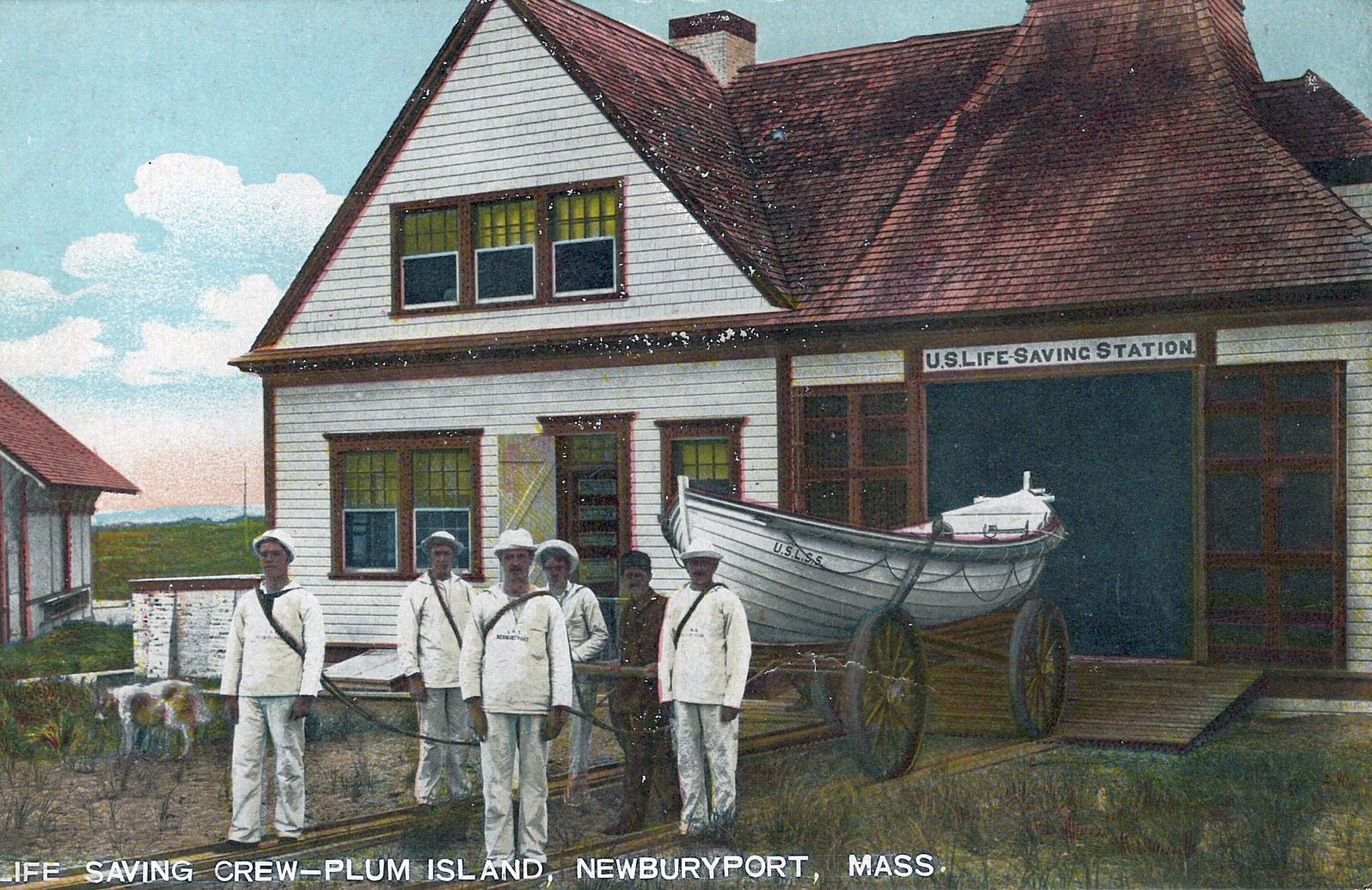
Most important of all, he arranged for the crews to be paid. (By 1902, a keeper made $900 a year, and the surfmen $780 a year.) These payments were the main difference between the USLSS and the Massachusetts Humane Society, whose members — young, hardy, seafaring men — otherwise came from very similar backgrounds. The former were professionals, and the latter volunteers.
The Humane Society crews, like volunteer firemen today, lived at home and responded to emergencies on a case-by-case basis, while the men of the USLSS bunked at their station and worked full-time — or for ten months of the year, anyway. (They had the summer off when there was less likelihood of a wreck.) Kimball was careful not to over-militarize the USLSS. He didn’t even require the crews to
Their schedule was nevertheless strictly regimented. Mondays were for putting the station in order-sweeping, cleaning, polishing. On Tuesdays, the crew would practice launching the boat and bringing it back to the beach. (Launching had to be timed exactly right so that a wave wouldn’t crash the boat back onto the sand, and the crews rehearsed over and over.) Wednesday was signal practice, using Morse code and wig-wag flags. On Thursdays, the crews did rescue drills, and on Fridays, they practiced first aid and resuscitation. Saturday was a washing day; Sunday was a day of rest.
The crews also patrolled the beach, night and day, no matter what the weather. The worse the weather, in fact, the more vigilant they were. Typically, the stations were about five miles apart, with a little hut or shelter called “the halfway house” in between. There were three watches, with two crewmen on each, setting off in opposite directions and walking along the shore until they got to the halfway house, where they exchanged “checks” — little metal badges stamped with a number — with the crewman from the next station down the line. (On his next watch each would get his own check back.)
The watchmen carried lanterns and several red, waterproof Coston flares, which could be lighted in case of a wreck or as a warning to a ship running too close to shore. The flares were the invention of a Baltimorean named Martha Coston, who, though untrained in chemistry, spent close to a decade trying to perfect a formula left by her late husband. During the Civil War she supplied the flares to the Union Navy.
Unfortunately, perhaps because she was a woman, it took years for her to get paid. The equipment used by both services — the USLSS and the Mass. Humane Society — was similar. The lifeboats were not standardized but pretty much alike. Most of the Humane Society boats continued to be built by Lawley & Son, though a few were constructed by William Eddy, a Marblehead boatbuilder who claimed to have come up with a design that was lighter and stronger. They ranged in length from roughly 24 to 30 feet, were steered with a long oar, and were double-ended, reducing the chance of broaching on the return trip.
Coming back through the surf was often more dangerous than going out. Almost all the boats were clinker-built, or lapstraked, with the lower edge of each plank overlapping the top edge of the plank below. (The planks were cedar, which was both strong and lightweight, and the frames were white oak.) This kind of construction is very sturdy and somewhat reduces the main liability of wooden boats — their tendency to leak when
Oddly, one boat not built this way is the most famous of all the lifeboats and one of the few still remaining: Nantasket, now on display at the lifesaving museum in Hull, Massachusetts. It’s so big that it carried a crew of 12, including two hailers, and it is carvel-planked. The sides are smooth, that is, with no overlapping. How that crew got around the shrinking and swelling problem remains a mystery, though the two hailers surely helped. It’s also possible that the boat was in the water so much for practice and drills that it never had a chance to dry out.
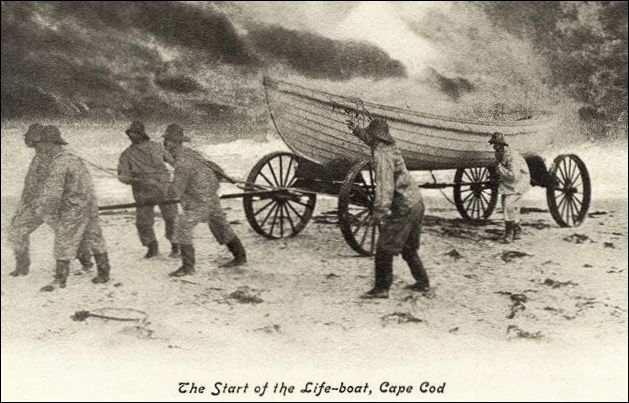
Inside the stations, the lifeboats rested on spoke-wheeled carriages, and for launching they were hauled down to the water’s edge by the crew or sometimes by a horse or two. In stormy weather, with the wind screeching and waves breaking over their legs, horses didn’t much enjoy this work, and sometimes bags had to be put over their heads before they could be persuaded to move.
A famous exception was the unfortunately named “Nigger,” a horse owned by the USLSS station at Race Point in Provincetown. Apparently, he could anticipate bad weather, which made him more alert. He never minded being led out, even at night. Eventually he became so famous that visitors used to drop by just to pet and admire him.
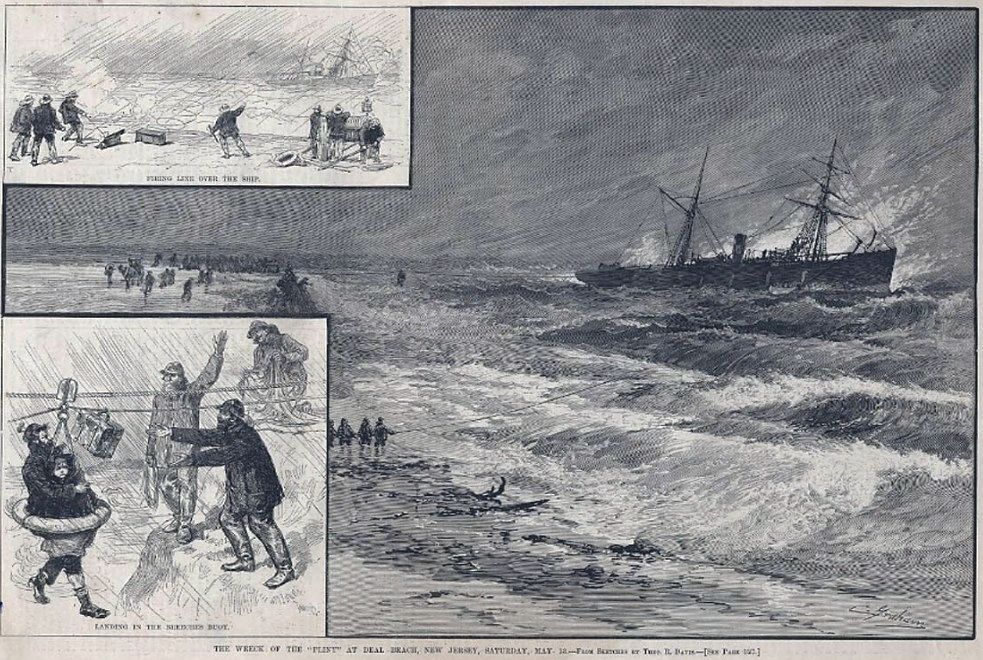
By the mid-nineteenth century, both services were experimenting with another way to rescue people at sea — by shooting a line out to a wrecked or stranded vessel. At the end of this line was a block and tackle and a tally board, a wooden plaque with instructions, in both French and English, for fastening the block high up on a mast and using it to pull aboard a sturdy hawser. Meanwhile the crew on the beach would quickly erect a sturdy, ten-foot-tall X-shaped support, called a crotch, and anchor it in the sand. When the near end of the hawser was passed over the top, it created a kind of zip-line that could be used to ferry sailors to shore.
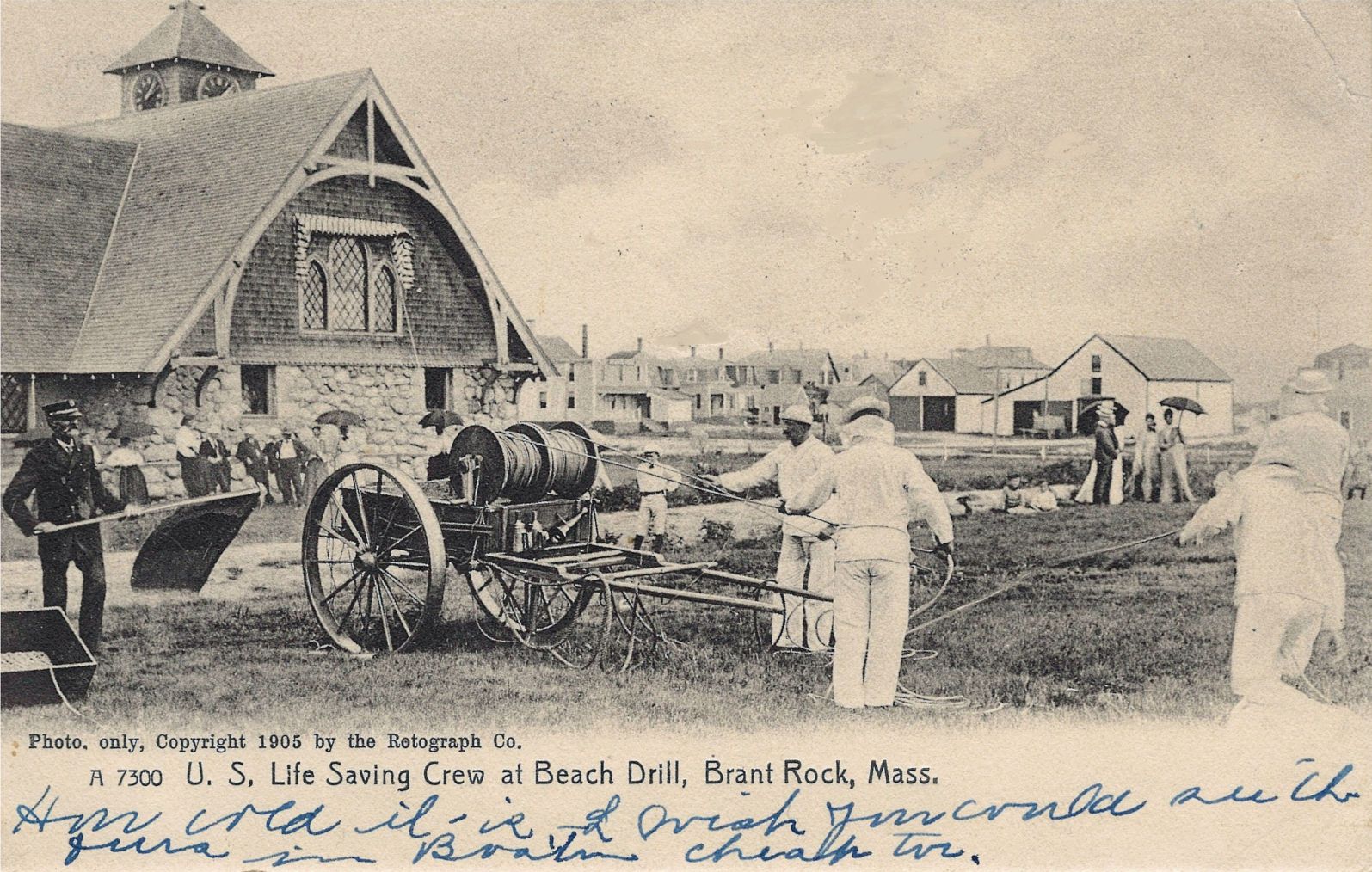
For this purpose some USLSS stations preferred to use something called the “Francis life-car,” a metal-sheathed contraption that looked like a small submarine. The advantage of the life-car was that it could hold up to four people at a time, but it was also heavy, cumbersome, expensive, and made passengers feel claustrophobic. Most crews preferred the lighter, faster, and much simpler breeches buoy: a life ring with a pair of sturdy canvas shorts attached. You stepped into the
The challenge of the breeches buoy was getting a line out to the ship in the first place. When the three-masted schooner T B. Witherspoon wrecked off Nantucket in the winter of 1886, for example, the gale was so strong the USLSS crew had trouble launching a line, and when they finally succeeded, the hawser was iced over and the shipboard crew was unable to haul it onboard. By the time a line was at last secured, most of the crew had died.
When Edward Ufford, a young Baptist minister in Westwood, Mass., read of the disaster, he was so moved that he sat down and wrote the great Gospel hymn “Throw out the Lifeline,” which is still sung today:
At the time there were three main ways of propelling a line: the Cunningham rocket, the Hunt gun, and the Lyle gun. The rocket had by far the greatest range-as much as a thousand yards — but it had to be launched at a steep angle, making it more likely to be blown off course, and, because it could be used only once, it was expensive. Its inventor, Patrick Cunningham, was one of the more colorful characters in the annals of Massachusetts lifesaving. Known as “Wild” Cunningham, he was an Irish immigrant who settled in New Bedford, where he briefly worked as a cobbler. During the Civil War he joined the Union Navy and developed an interest in engineering and explosives.
Cunningham’s designs for a rocket that could be used with a breeches buoy and for a powerful gun for use in whaling eventually made him a wealthy man. His last invention, though, a 17-foot torpedo he created for the Navy in 1892, was a failure: too inaccurate, the Navy said. Cunningham took it home and stored it in his workshop until October, 1896.
That was an election year, and William McKinley, the Republican candidate, came to New Bedford for a rally. Cunningham, an ardent Democrat, was offended by all the hoopla and decided to create some excitement of his own. He loaded the torpedo onto a wagon and climbed on top of it, like the Slim Pickens character straddling the bomb in Dr. Strangelove. His son dragged him off, but Cunningham, who had probably been drinking,
The Lyle gun and the Hunt gun were both small cannons, in effect, and fired a reusable projectile. Their respective inventors appear to have been much less excitable than Cunningham. About Edward Hunt, all we know is that he lived in Weymouth and was rewarded for his efforts with a medal from the Humane Society. David Lyle was an Army captain and a graduate of both West Point and MIT. When Sumner Kimball asked him to design a better line-throwing apparatus, Lyle spent a couple of years experimenting at Sandy Hook, New Jersey, before coming up with a small gun made of brass. In 1875, at the Surfside station on Nantucket, Kimball convened a two-day trial of all three mechanisms: the rocket and the two cannons.
Kimball himself was there to watch, and so were Cunningham, Hunt, and Lyle. Projectiles trailing lifelines were fired over and over to determine which method was the longest, most accurate, and most reliable, and in the end the Lyle gun was deemed the best. It was officially adopted by the USLSS and subsequently by the Coast Guard, where it remained in use until the 1960s.
The Humane Society chose to stay with the Hunt gun — out of loyalty perhaps, or because it didn’t want to invest in new equipment. Both services became so adept with their apparatus that they could fire a shot, erect the crotch, and bring home a breeches buoy in less than five minutes, and over time it became clear that this technology was hard to improve upon. In 1878, for example, the USLSS rejected something called Aiken’s Flying Cannon, which called for the gun itself, and not the projectile, to be fired at the ship. Nor, apparently, was the lifesaving service interested in a proposal made by one Dr. Fred Riehl of San Francisco to use enormous kites to fly stranded mariners to shore.