Authors:
Historic Era:
Historic Theme:
Subject:
Fall 2026 | Volume 71, Issue 4


Authors:
Historic Era:
Historic Theme:
Subject:
Fall 2026 | Volume 71, Issue 4


Derided when it is remembered at all, the Articles of Confederation was nevertheless an important, if halting, step toward an enduring republic.
Fall 2026 | Volume 71, Issue 4
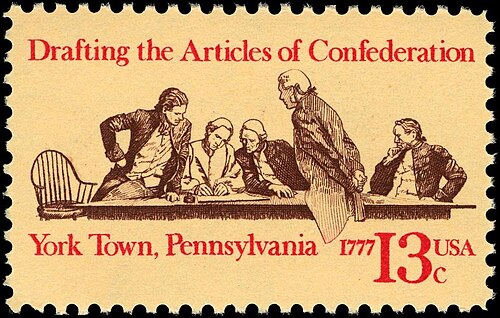
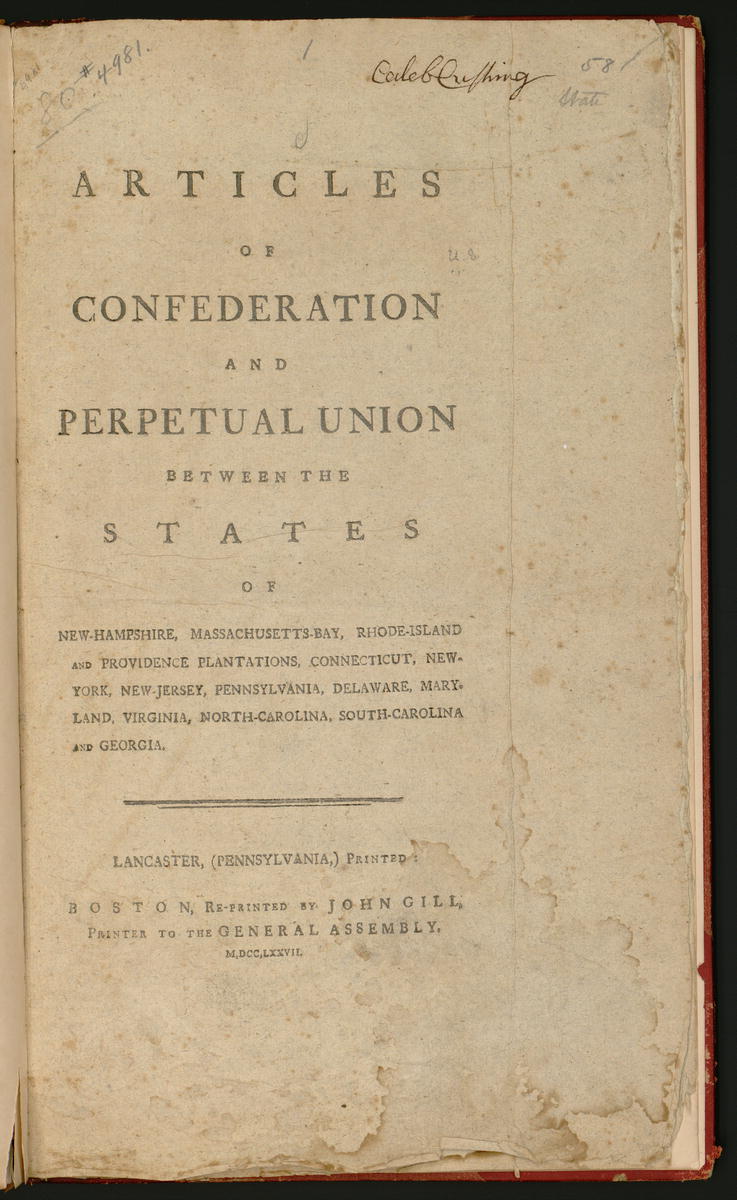
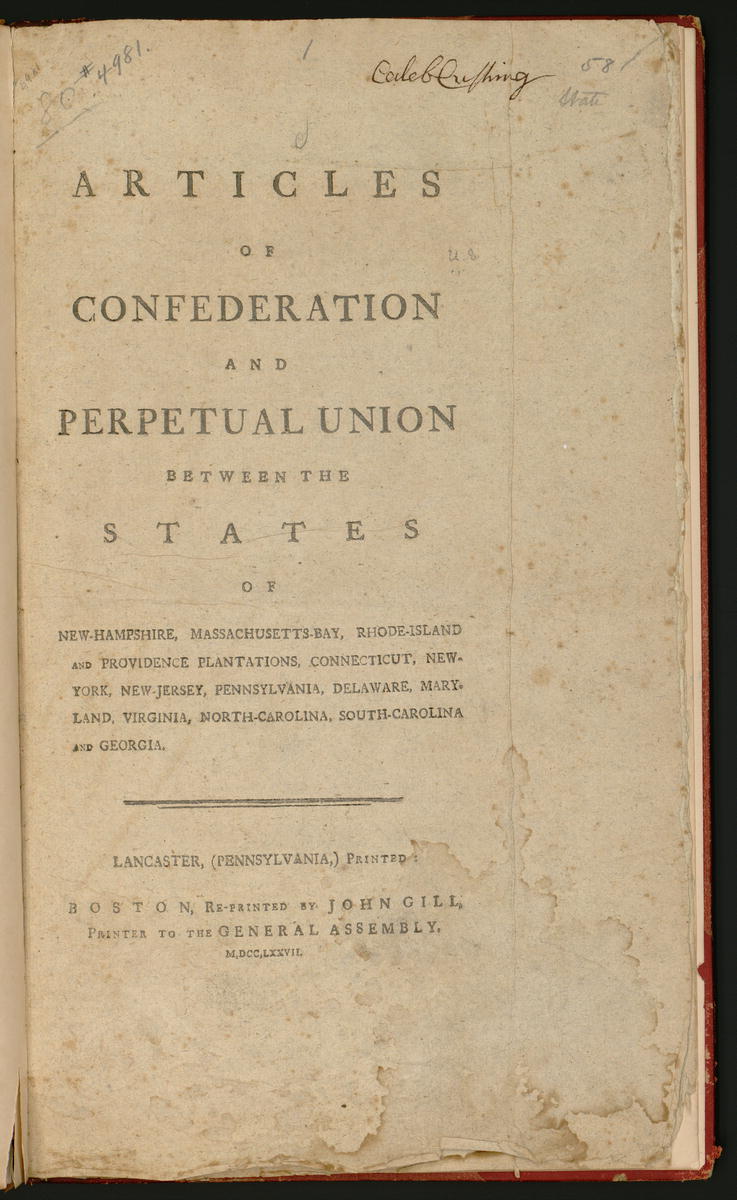
In June 1776, while Thomas Jefferson was writing the Declaration of Independence, a committee of the Continental Congress began work on another document. Thirteen delegates, most of whom had just two years’ experience in continental politics, were charged with an unprecedented task: They had to invent a brand-new government for a brand-new nation. On November 15, 1777, Congress approved the finished product and sent it to the states for ratification. Called the Articles of Confederation and Perpetual Union, the charter was the brainchild of many of the same minds that would go on to author the Constitution, but it is rarely mentioned in the same breath. After its ratification, the weak, inefficient system it created would last only seven and a half years before the nation’s fathers scrapped it and started over. Derided when it is remembered at all, the Articles was nevertheless an important, if halting, step toward an enduring republic. The earliest formal bond of “perpetual union” between the erstwhile colonies, it announced from its first lines that “The name of this Confederacy shall be the United States of America.”
The American Revolution took the opposite of the usual pattern of rebellion. “In Europe, in Asia, in Africa, we have seen it stir one people after another: they grow proud of their traditions, of their language, of their identity, and they strike for independence,” wrote the historian Edmund Morgan. “In our case it was the other way round: we struck for independence and were thereby stirred into nationality; our nation was the child, not the father, of our revolution.” American society in the early years of the war was largely provincial, defined by family ties and local industries. Distinct customs, religions, industries, and heritage divided the residents of different colonies. One South Carolina militia leader believed that from Massachusetts to Georgia, “manners and modes of thinking of the inhabitants differ . . . nearly as much as in different nations of Europe.” Years of struggle against the crown had begun to weld the colonies together, though, and their shared political beliefs and outrage evolved, slowly, into a sense of union.
After Lexington and Concord, they knew they must join forces to defeat Britain. But what would their partnership be? A new nation, or merely a defensive alliance of 13 sovereign states? The question survived eight years of war unanswered. The Declaration of Independence called the colonists “one people,” but it also defined the colonies as “Free and Independent States.” Even after the Articles of Confederation was ratified, Congress was not an authentic national government in any conventional sense—it couldn’t make laws or compel the states to carry out its resolutions—but America’s instincts towards federalism whispered