Authors:
Historic Era: Era 3: Revolution and the New Nation (1754-1820s)
Historic Theme:
Subject:
November/December 2026 | Volume 71, Issue 5


Authors: Chase Brush
Historic Era: Era 3: Revolution and the New Nation (1754-1820s)
Historic Theme:
Subject:
November/December 2026 | Volume 71, Issue 5


The Battle of Brooklyn has been called a "fiasco" that might have ended America's campaign for independence had it not been for the heroism of a handful of courageous men. Today, a historic stone farmhouse celebrates their defeat.
November/December 2026 | Volume 71, Issue 5
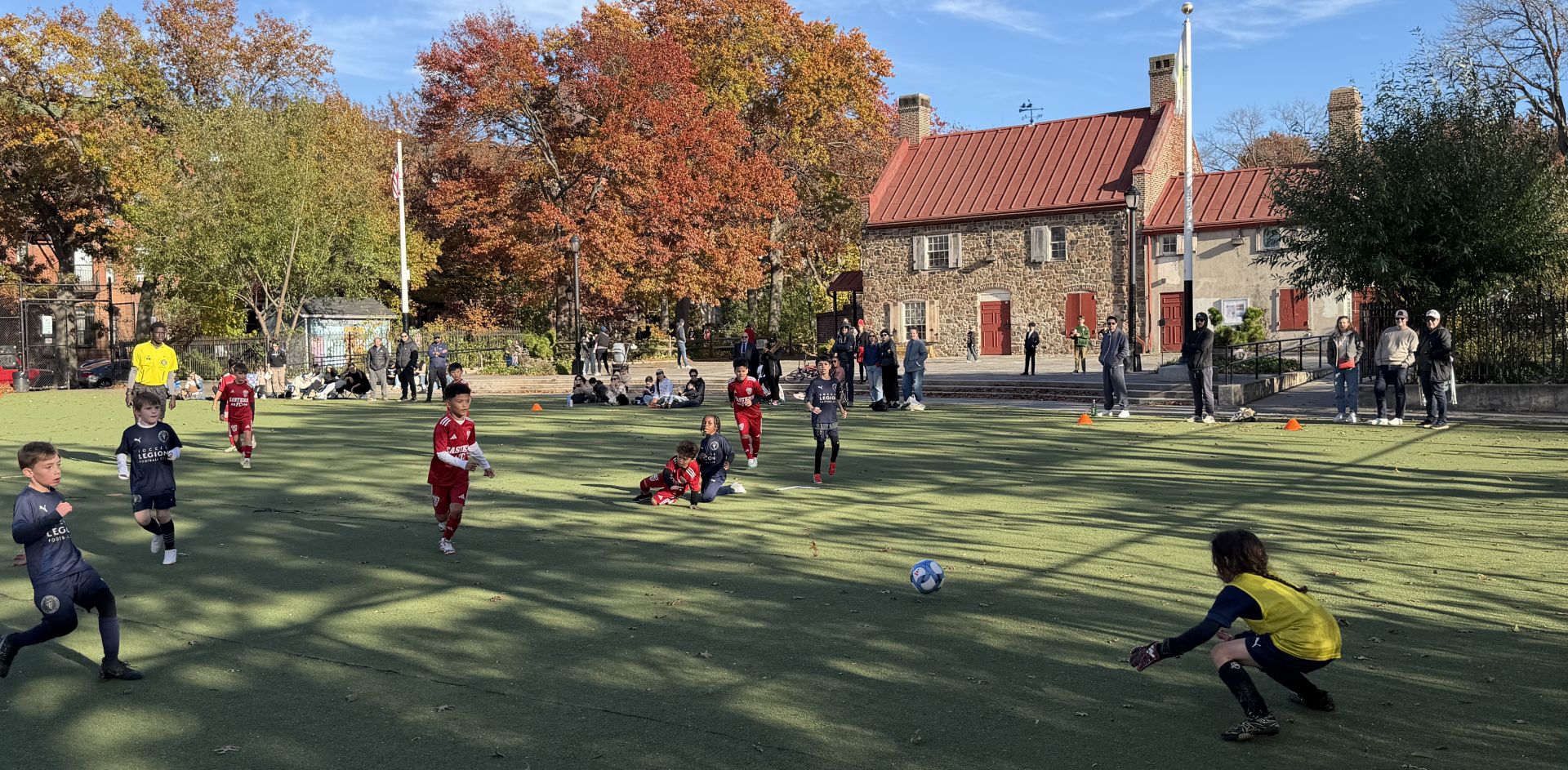
At first glance, Washington Park, a roughly one-square-block green space in the Park Slope neighborhood of South Brooklyn, does not seem so different from many of the hundreds of other parks strewn throughout New York City's most populous borough. Surrounded by Gilded Age brownstones and steel highrises, the park serves as a gathering place for the wider community, attracting visitors of all ages and backgrounds. On a typical summer afternoon, children can be found frolicking across the playground, while teenagers on scooters and skateboards zip along concrete ramps in the skatepark nearby. There is a turf field for soccer and baseball games, a dog run, and a picnic area where neighbors gather to eat and converse. The park’s visitors, naturally, reflect the diversity of the city itself: black, white, Latino, Asian, a heaping helping of the melting pot that is New York.
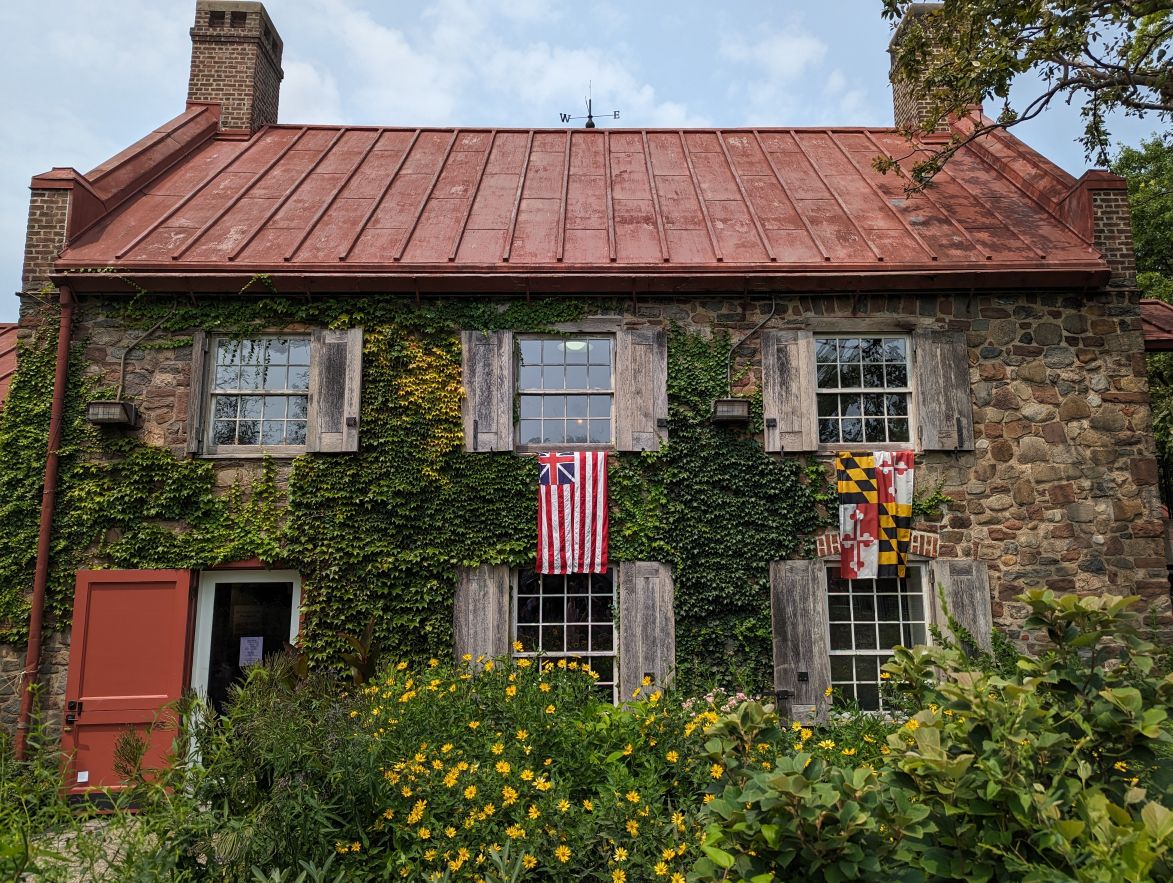
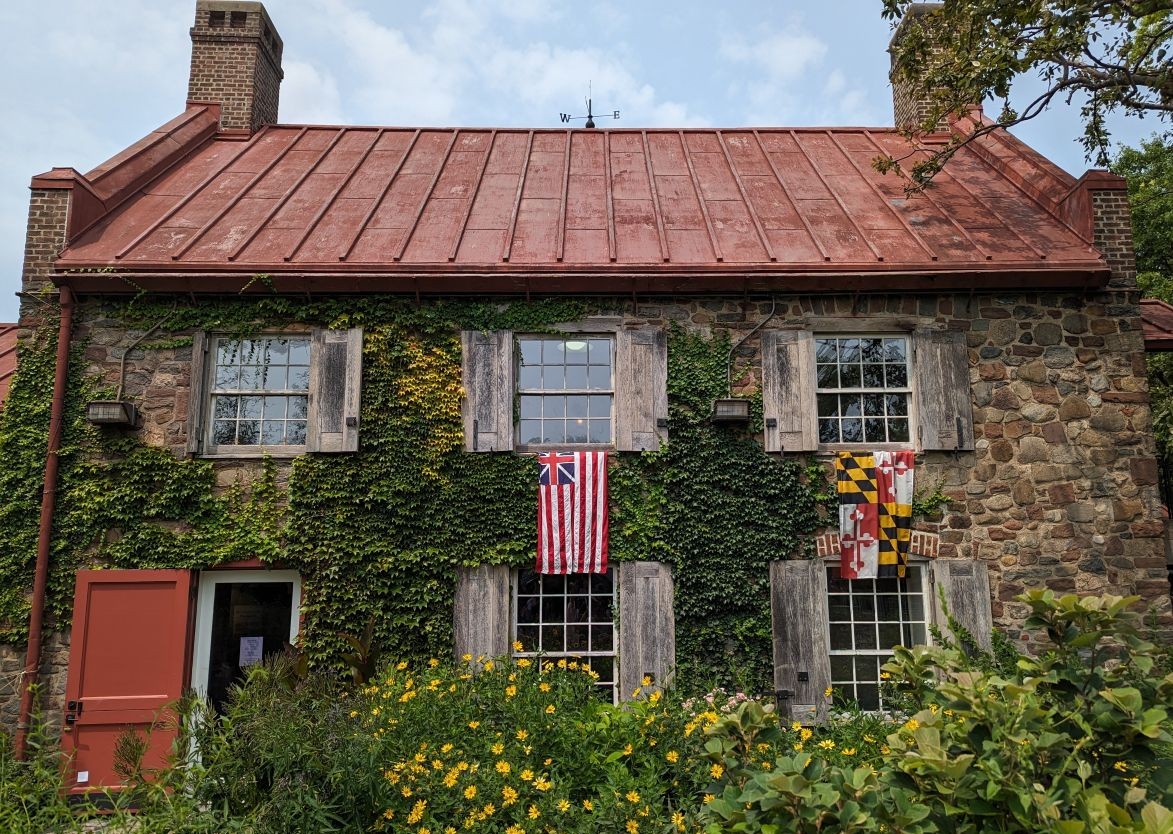
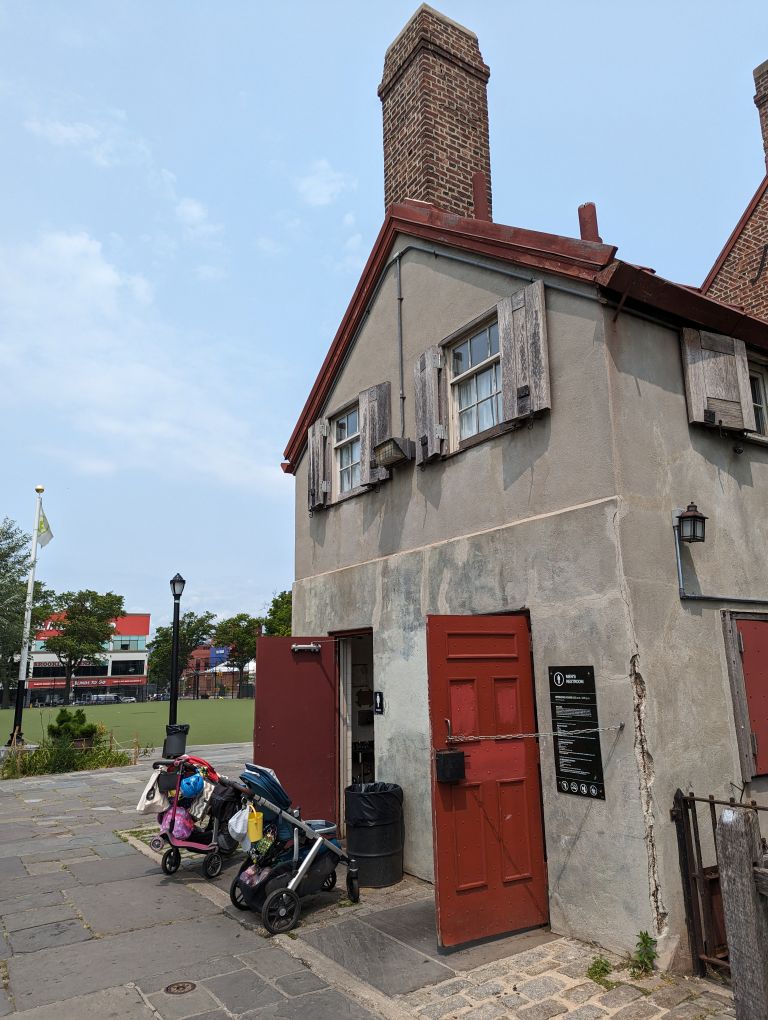
And yet amid this portrait of contemporary urban life, it's easy to overlook one of the park's defining—and most historic—features. Standing between the turf field and a community garden is an old stone house, unassuming in size yet distinct in design from the nearby buildings, with rough stone walls, weathered wooden shutters, and a sloping tin roof. Despite its seemingly historic nature, many who frequent the park mistake the structure for a utility building, or know only that it houses the nearest public bathrooms. Upon closer scrutiny, the most out-of-place detail may be the flag that often hangs from the second-story window—a flag flying the colors not of Brooklyn or New York but of Maryland, a state some 200 miles away.
This is, literally, The Old Stone House, though the name hardly begins to describe the true age of the site nor its importance in the long history of Brooklyn, New York City, or even in the founding history of the country. Two and a half centuries ago, it was at this former Dutch farmstead where a group of Maryland regulars made their dramatic last stand against an overwhelming British opponent, just a month and a half after the U.S. became an independent nation with the signing of the Declaration of Independence. Many of these soldiers perished. But their sacrifice bought the rest of the army, including its leader, General George Washington, just enough time to retreat to Manhattan and escape British capture. In that sense, the defeat was a kind of victory for the young country, summed up in a quote from the local historian and preservationist Charles Higgins: “The Declaration was signed in ink in Philadelphia, but it was sealed in blood in Brooklyn.”
All this can sound like ancient history to a 21st-century New Yorker, and understandably few people who visit the park today realize that they are standing on what was once a blood-soaked battlefield, not to mention a place where, had things gone differently in that last week of August in 1776, they might not be standing at all. A longtime Brooklyn resident, I hadn't known it either until I stumbled upon the house myself one summer afternoon and was surprised to find a small museum inside, featuring displays on the history of early Brooklyn and its role in the American Revolution. The building itself, now listed on the National Register of Historic Places, is a reconstruction of the original Vechte-Cortelyou house, a Dutch farmstead built near the property in the late 1600s. Though usually pretty inconspicuous, anyone within earshot of the house might also have learned about it this August, when the air was filled with the sounds of war as hundreds of redcoats and colonials descended on the park to reenact the battle on its 250th anniversary. “People initially come for the events and the gardens, but they also absorb and become engaged with the history,” says Kim Maier, the executive director of the Old Stone House & Washington Park, a historic conservancy organization that is part of the city’s Historic House Trust. “And the 250th anniversary has led to even more awareness of and appreciation for that history.” In a city as fast-moving and forward-looking as New York, perhaps this lack of immediate interest in the Revolution is unsurprising. New Yorkers are not exactly the types to be overly precious about their history; this is, after all, the City of Dreams, a place of new beginnings and fresh starts where for hundreds of years immigrants and idealists have traveled to escape the past, not relive it. When it comes to the Revolution, that may explain why the city’s urban landscape seems devoid of historical landmarks and monuments—at least compared with other founding-era cities such as Philadelphia or Boston, where it’s hard to walk down the sidewalk without tripping over a memorial plaque to some long-gone event or figure. At the same time, if there is any borough associated with the war in New York, it is probably Manhattan, once called the “cockpit of the Revolution” alongside neighboring New Jersey for its concentration of 18th-century rebel activity. Fraunces Tavern, where Washington gave his farewell address in 1785; Federal Hall, where colonists protested the Stamp Act Congress in 1765;
See also: “Tearing Down the King,” by Robert G Parkinson in this issue Yet as visitors to the Old Stone House are quick to learn, Manhattan wasn’t the only place, and arguably not even the most important place, within the modern-day boundaries of New York where the Revolution played out. Before the battles of Harlem Heights or Fort Washington, American patriots first encountered the British army across the river, in western Long Island, an area of rolling hills, farmsteads, and saltwater marshland then known as Kings County. Today, of course, Kings County remains, but in name only: Brooklyn, independently the country’s fourth largest city as well as New York’s most populous borough, is now a thriving urban metropolis home to 2.6 million people—equal to the population of all thirteen colonies combined in 1776. If the Revolution feels like an afterthought in Manhattan, it may not be an exaggeration to say that in Brooklyn it is hardly more than distant memory. To a certain breed of Revolutionary War historian and preservationist, this loss of memory surrounding one of the great conflicts of American history is a national tragedy on par with the outcome of the battle itself. The Battle of Long Island—or the Battle of Brooklyn, as it is now known—has been called a “fiasco” and a “disaster,” a flailing attempt by an inexperienced Continental army to defend itself against a professional European force during which Washington and his military commanders not only failed, but were “made to look like fools,” in the words of David McCullough. Nearly a quarter of Washington’s men were killed or captured in the fighting, dealing the army a demoralizing blow that would reverberate over the course of the following weeks and months as they were chased out of Manhattan and across New Jersey. In that way, the engagement accomplished precisely the opposite of what was intended: it turned one of the colonies’ most strategic cities over to the British, which would occupy it for the next seven years of the war. But the Battle of Brooklyn is also remembered for its larger symbolic significance. Lexington and Concord may have heard the first shots that kicked off the Revolution, but Brooklyn heard the first shots fired in defense of a newly founded nation, coming just weeks
Perhaps most of all, the Battle of Brooklyn highlighted the courage of the fledgling Continental Army, proving that, even when faced with seemingly impossible odds, America’s campaign for independence would not end without a fight. If not for the heroism of groups like the Maryland 400 enabling Washington’s miraculous escape from Brooklyn that night, the “first battle fought by the first modern democracy," in the words of historian John Gallagher, may very well have been its last. How such a consequential moment in America’s campaign for independence was allowed to be forgotten—and how its memory might be revived—is a question that many historians are still asking today, including at the Old Stone House. Part of the reason is that the battle was indeed a crushing tactical defeat, which makes it a little awkward to place in a heroic narrative about an underdog army triumphing over a tyrannical oppressor. Another reason may be that the Battle of Brooklyn did not, originally, make reference to Brooklyn, since the borough didn’t technically exist at the time; the British and early histories of the conflict called it the Battle of Long Island, a “misnomer for what contemporary writing and tradition always call the Battle of Brooklyn,” as Martha Bockée Flint wrote in 1895. Even the battle’s Wikipedia page today refers to it as the Battle of Long Island, obscuring the fact that virtually all the fighting took place in the modern-day boundaries of Brooklyn, from Park Slope and Gowanus to Brooklyn Heights and Cobble Hill. A final, perhaps related reason is that the level of transformation Brooklyn has experienced in the ensuing years has all but erased the physical environment in which the battle took place. Unlike other major Revolutionary War sites, such as Valley Forge or Yorktown,
This exception is the Old Stone House, which is not only one of the most visible memorials to the battle today but also the only place that tells the story in its entirety, from the British landing on Long Island to the Maryland 400’s final stand outside the house itself. Built in 1933 using stones from the original Vechte farmhouse, the current structure features a colonial design that, while not a perfect historical reproduction, does help to set the mood. Inside, walking around the quiet space, one can follow the battle through exhibition panels, audio guides, and even a small diorama of the house and the surrounding battlefield, with miniatures of the soldiers of the Maryland 400 and their British opponents. All of this, Maier notes, allows visitors to engage with the battle and its history in a way that a static memorial does not. “The challenge for any public history organization is really how to be relevant,” Maier said. “So we have to think about how we can relate this history to people today.” One of the specific advantages of an interpretive space like a museum over a static memorial is the strange ironies and contradictions that arise when different aspects of history are presented in juxtaposition. The Revolution, for example, was pitched as a war of liberty against tyranny, one that would determine “whether Americans are to be, Freeman, or Slaves,” as George Washington is quoted as saying on one of the displays in the Old Stone House. And yet it’s also true that colonial Brooklyn was built on the dispossession of groups who were not European and who did not stand to benefit much from an American victory. One of
Among those early Dutch settlers was Claes Arentson Vechte, who arrived in Long Island from the Netherlands in 1660. In one corner of the museum, Claes’ silhouette sits at the base of a family tree spanning five generations, its branches growing increasingly broad with kin as it extends upward. Claes and his wife Lummetje established a farm near Gowanus Creek, an oyster-rich tidal estuary that once served as a vital resource for both the Dutch and Lenape; in the 19th century the creek became an industrial canal and superfund site, and today it is the focus of a multimillion-dollar redevelopment project after a controversial 2021 rezoning. Despite the British capture of New Amsterdam in 1664, the Vechtes managed to prosper through the decades, and in 1699 Claes’ son, Henderick, commissioned a farmhouse to be built on the property, one of the first stone structures in the area. Curiously, the Vechte family tree also includes a few silhouettes that stand apart from the rest, on brown backgrounds with simple nicknames like “Little Tom,” “Mink,” and “Gin.” These were the Vechtes’ slaves, who were responsible for much of the farming and harvesting that made up the family livelihood. In fact, slavery in colonial Brooklyn was so common—practiced by roughly 60 percent of white families—that by the late 1700s Kings County was home to the highest concentration of enslaved people anywhere north of the Mason-Dixon line. This was still true in 1776, when the drums of war reached the Vechte house; and yet it was the British, not the Americans, who represented the best hope for freedom for Brooklyn's slaves. Below Washington’s quote is one from Lord Dunmore, the British Royal Governor of Virginia, who in 1775 declared “all indentured servants, Negroes, or others (appertaining to Rebels) free…” Such contradictions were also apparent among the political leanings of New York colonists on the eve of battle. In Manhattan, working-class patriots had begun agitating against British rule as early as 1770, when a radical faction of the Sons of Liberty clashed with British troops over tax protests in what became known as the Battle of Golden Hill; by 1776 they had become so vociferous that New York’s Royal Governor, William
The prospect of liberating New York from the “tyrannical usurpation” of Congress must have been especially tempting to the British after earlier events that year, when the royal army tried and failed to stop a more unruly New England populace from kicking off the first stage of their revolutionary insurgency. And yet as other displays in the museum note, liberation wasn’t the only motive for a New York invasion. As America’s largest port city located at the mouth of one of its most important waterways, New York was considered on both sides of the war as “a kind of key to the whole continent,” as John Adams had described it. For the British, New York Harbor was one of the few ports in the colonies large and deep enough to hold its growing fleet of warships; it also offered direct access to the Hudson, allowing control of the route to Canada. Congress understood New York’s strategic value as well, which is why Washington moved his headquarters to Manhattan in April following his success in Boston and immediately began fortifying the city. “It is of the utmost importance to prevent the enemy from possessing themselves of the City of New York and the North [Hudson] River, which would give them Command of the Country,” he wrote from Cambridge earlier that year. One museum map at the Old Stone House depicts the original locations of the fortifications Washington had ordered built in Brooklyn ahead of the battle, running in a line from what is now Gowanus to Fort Greene Park. Most have since been destroyed, either by the British during the war or by urban development in the decades after. A few, however, are still marked by memorials, or identifiable in their names on Google Maps. Cobble Hill Fort, from which Washington watched the British landing on
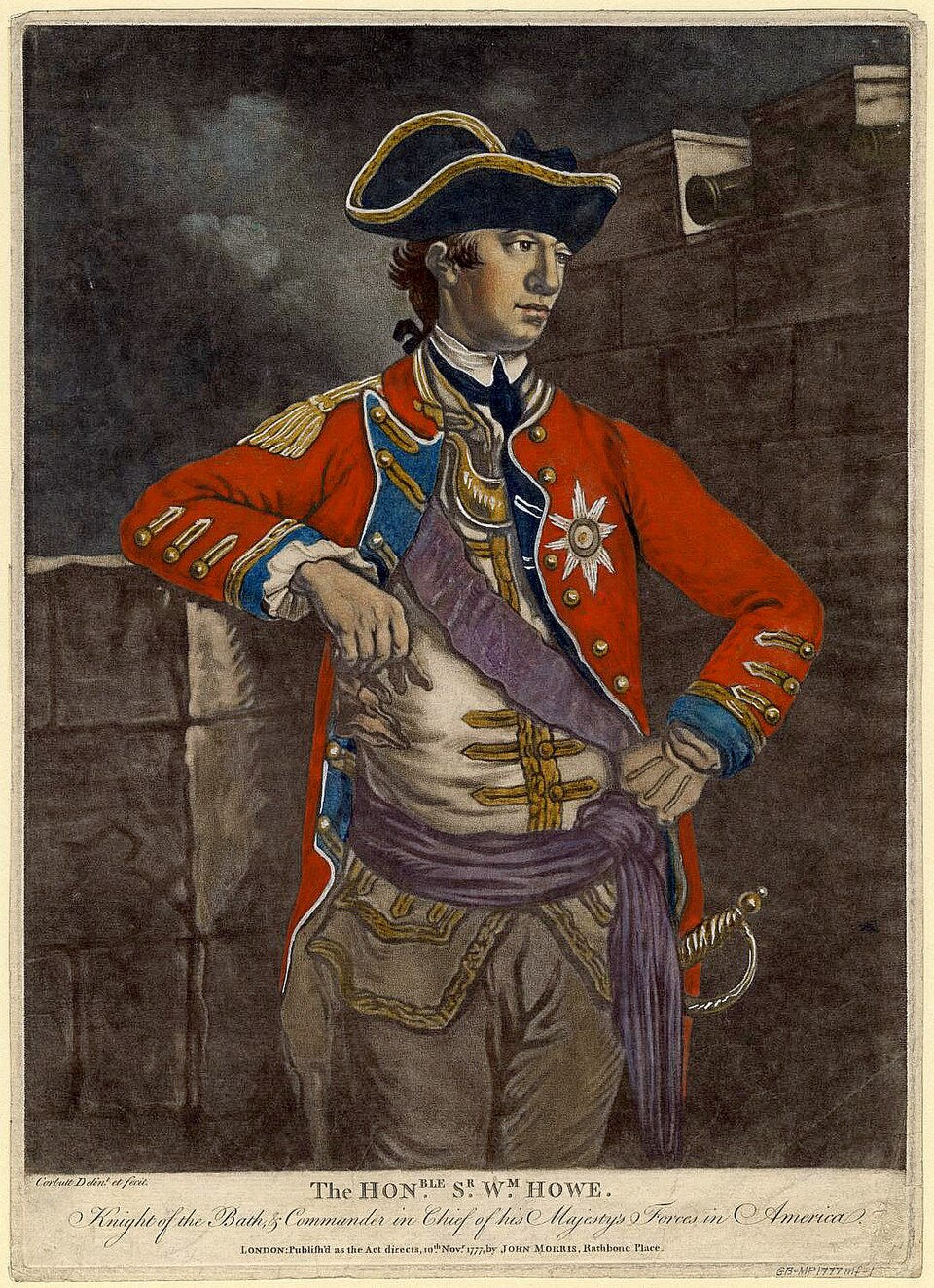
These defenses would be essential in the ensuing battle, particularly as it became clear that the colonists would find themselves considerably outnumbered in the field. New York's harbor is now crisscrossed by tugboats and ferries and other recreational watercraft, but in July of 1776 it was so full of British warships that to one observer it looked as if “all of London was afloat.” Aboard those 400 ships were some 32,000 well-armed and well-trained Redcoats, together representing the “largest and best-equipped expeditionary force the British had ever mounted, carried on board the largest armada North America had ever seen,” according to John Gallagher. Washington had expected a similar if not greater number of soldiers, but in the end only 20,000 militia men showed up, many of them poorly trained and armed. The sheer size of the British army was one reason Howe chose to invade Brooklyn over Manhattan, where the island’s crowded urban quarters made for difficult fighting and provisioning; only Long Island, with its farmsteads and forests and wide-open fields, offered the space and resources to accommodate so many armed men. “On this fertile Island the army could subsist without any support from England,” said one British soldier at the time. Today, of course, Brooklyn is no longer fertile in farms and livestock, but it is fertile in restaurants and bodegas. Up the street from one of these—the King Deli & Grill 7 on 941 4th Avenue in Sunset Park—is a Revolutionary War Heritage Trail sign marking the spot where Americans and British troops first exchanged fire on the night of August 26. The sign now stands along a service road outside a Greenwood Cemetery maintenance yard, but in 1776 it was the site of the Red Lion Inn, a colonial tavern where American pickets from Pennsylvania stumbled upon two British soldiers foraging for watermelons in a nearby garden. The pickets fired upon the soldiers, who were quickly reinforced by a column of British that had marched up from Gravesend
This is what the Old Stone House exhibit describes as the official start of the Battle of Brooklyn, which would rage across western Long Island over the course of the next morning as Howe’s force of some 20,000 redcoats continually overwhelmed the outnumbered colonials. Historians posit several reasons for the ultimate outcome of the battle, but one major blunder was that Washington had failed to anticipate Howe’s landing on Long Island and so had initially sent less than half of his men there, the majority of them stationed behind the defenses at Brooklyn Heights. This left much of north Brooklyn unguarded, including a pass to the east in what is now East New York— a vulnerability which Howe, who had landed on Long Island to crowds of cheering supporters, had quickly discovered via Loyalist intelligence networks. By sending a third of his army through Jamaica Pass, Howe and his commanders were able to flank the rebels, using two other columns to encircle their line of fortifications and drive them to the redoubts of Brooklyn Heights along the East River. Of course, historians also point out that the odds were never really in the colonists’ favor. In addition to being outnumbered, Washington’s army was also significantly out-equipped and outclassed by the British, whose ranks included not only some of England’s best-trained and most experienced regulars but also fierce Hessian mercenaries and Scottish Highlanders. Washington’s army, by contrast, consisted of a patchwork of militias hailing from eight different states and 13 governmental bodies, each with its own training, equipment, uniforms, and terms of service. Some of these “citizen” soldiers, such as those belonging to regiments like the Marylanders and the Delawares, boasted full uniforms and matching arms, but the vast majority sported only basic hunting shirts and personal firearms— “should the trooper be lucky enough to even own his own rifle,” as Gallagher notes. Still, what many of these units lacked in equipment or training they made up for with something less tangible, though no less consequential: courage. That would
A handy walking guide provided by the Old Stone House can help intrepid visitors find other memorials to this common courage in the surrounding borough. As the fighting on Battle Hill raged, Hessians began attacking the colonials further north, near an opening in the Prospect Range now referred to as Battle Pass. Under the command of General John Sullivan, rebels engaged the Hessians in bloody close-quarters combat, sometimes fighting with their hands and the butts of their rifles; they were eventually surrounded, and Sullivan himself was captured. Today, the landscape of Battle Pass is part of Prospect Park, New York’s second-largest green space, and a few modest plaques commemorate the fallen, including one featuring a bronze eagle—stolen and replaced twice over the years—that marks the place where colonials felled a huge white oak to obstruct the advance of the British. In fact, the area of Battle Pass within Prospect Park is itself a kind of memorial: when construction of the park in the 1850s turned up musket balls and the remains of fallen soldiers, city commissioners, including designer Frederick Law Olmsted, declared that grounds would be left untouched, “to be carefully preserved and distinctly marked for the venerations of future generations.” That bravery and sometimes cunning ingenuity carried through to the very end of the battle, ultimately allowing the army to skirt what
And yet among the many instances of bravery and courage that have been recorded in the 250 years since the Battle of Brooklyn, there is one that remains paramount, one enduring moment which, in serving to redeem an otherwise painful loss, has risen to the level of myth and legend. Most wars inevitably produce myths of selfless heroism and sacrifice, the Revolution included, but these stories carry a special kind of weight when the conflict they are meant to commemorate ended not in victory but defeat. Such is the case with the claim that every man fought to the death at the Battle of the Alamo, during Custer’s “Last Stand” at the Battle of Little Bighorn, or, traveling much further back in history, at Thermopylae with the Spartan 300. And such is the case with the Maryland 400, the “immortal” heroes of the Battle of Brooklyn. Perhaps the clearest sign of the mythic nature of the Maryland 400 is that there were likely not, in fact, 400 of them. That name only emerged many years later, when historians and local supporters, watching the memory of the war fade in fast-changing Brooklyn, sought to commemorate the battle for a new generation of Americans. In 1895, the Maryland Society of the Sons of the Revolution printed a brochure to help raise funds for the construction of a monument to the battle in Prospect Park, featuring a
In reality, historians estimate that only around 250 Maryland soldiers were present at the Old Stone House during that last stand, and the number who actually perished in the skirmish is still up for debate. At the Old Stone House today, where curators have apparently chosen to avoid perpetuating the myth by mostly leaving out references to the “400,” one display cites the record of Maryland commander William Smallwood, who listed 256 men from his regiment “killed and missing” after the battle. And yet historians note that that number likely refers to the losses for Smallwood’s 1st Maryland regiment as a whole, which consisted of some 900 men, and not necessarily the 250 men at the Old Stone House. Instead, many who were thought to have been killed in the skirmish likely escaped, bringing the number down significantly. “The facts are that more than 800 Marylanders fought heroically in the battle— not just 400,” wrote William J. Parry, a professor of archaeology at Hunter College. “There is no basis for singling out any group of 400 soldiers as ‘Immortals.’” Whatever the exact number, less disputed about the Marylander myth is the critical role the group played in one of the most pivotal moments of the battle. As part of the 1st Maryland Regiment, the Maryland 400 had joined the Continental Army just weeks before the Battle of Brooklyn under the brigade of Lord Stirling. The regiment was considered one of the army’s best trained and equipped, enjoying matching uniforms and rifles with bayonets, a rarity on the Continental side; their sharp appearance led other soldiers to mockingly call them dandies or “macaronies.” But the Marylanders were not cowards and, despite having never before seen battle, they soon proved themselves in the field— so much so that Washington would come to refer to them as his dependable “old line,” giving the state of Maryland its nickname. That old line dependability was first put to the test on the morning of August 27, when the Maryland regiment under Stirling was sent to defend the route along the Old Gowanus Road, on the western side of the theatre of battle. Against them were 5,000 redcoats under General James Grant, who was later to be reinforced by some 2,000 marines. The Marylanders, alongside Colonel John Haslet’s similarly well-trained and disciplined 1st Delaware Regiment, fought off the British advance for four hours with “determined countenance,” and for a moment it appeared as if the line might hold. “For the batteries began to play and mowed them down like grass when they retreated, and our army cried out, ‘The day is our own!’” recalled Colonel Samuel Atlee. By noon, however, this optimism imploded as the regiments found themselves surrounded. Unknown to Stirling, the British had broken through to the east, overrunning the American defenses at Battle Hill and Battle Pass, and were now advancing south down the Gowanus Road. Reaching the Old Stone House, they set up cannon inside and around the property. The only escape route for the rebels lay to the west, across the swampy marshland surrounding Gowanus Creek. Stirling ordered his men to retreat across the creek, but he kept one group back to hold off the British: the Maryland 400. Many histories of the battle have since attempted to capture the chaos and the bravery of these final moments, but they are perhaps best described by Stirling himself in a quote on the wall of the Old Stone House Museum: “[W]hen I found that General Howe with the Main Body [of] the Army was between me and Our Lines, and saw that [the] only Chance of Escapeing… was to pass the Creek near the Yellow Mills… I found it Absolutely Necessary to Attack a Body of Troops Commanded by Lord Cornwallis posted at the House near the Upper Mills; this I Instantly did, with about half of Smallwood’s 1st, ordering all the other troops to make the best of their way thro’ the Creek.” Turning his sights on the British, Stirling wrote that “we Continued the Attack a Considerable time,” the men “haveing been rallied and the Attack renewed five or Six Several times.” In the end, Stirling himself was cut off from his troops and, rather than turn his sword over to the British, broke through the enemy lines to “Surrender my self to General De Heister Commander in Cheif of the Hessians.” Washington, watching the carnage from a nearby bluff, reportedly exclaimed: “Good God, what
Washington’s words, as if echoing through time, still adorn the 27-foot Stanford White memorial column that stands in Prospect Park today. Opposite that quote is one that exhorts the Maryland 400 for having “saved the American Army.” Like the 400 figure itself, this too may be a slight exaggeration: while their sacrifice did allow many to escape the enemy’s grasp and reach Brooklyn Heights, historians note that Washington’s miraculous retreat was also made possible by poor weather on the night of August 29, which, just as it helped delay the British advance and conceal the Continental’s boats during the crossing, also prevented British ships, including the HMS Roebuck, from traveling up the East River to intercept them. And yet the Maryland 400 nevertheless came to play a central part in the battle’s evolving narrative, which figures like Abigail Adams sought immediately to reframe in a positive light, wishing in a letter to her husband, “May we learn by Defeat the power of becoming invincible.” This, then, is the enduring impact of the Maryland 400: as a symbol that has helped preserve the memory of the Battle of Brooklyn for future generations. The Battle of Brooklyn was a difficult loss to process for Washington and the young Continental Army, and that processing was complicated by the fact that New York fell into the hands of the British, whose memory of the conflict—especially among African American subjects who found their freedom under the crown—necessarily differed from that of the losers. The victors had erected few monuments to the battle, and by the time Washington and his army returned triumphant in 1783, there was little desire to celebrate what was still remembered as a painful defeat. It was only later, as New York’s economy and population boomed in the 19th and early 20th centuries, that a new generation of patriotic Americans began looking for ways to commemorate the Revolution, the Battle of Brooklyn included. The Maryland 400 became a focal point of that commemoration; several histories written about the battle at the turn of the century, including those by Henry Stiles and Thomas W. Field, singled out the heroic sacrifice of the Maryland regiment, as did many memorials erected afterward, including the Stanford White monument. One problem that these commemorative efforts faced was that Brooklyn, though it wouldn’t be incorporated as a borough of New York City until 1898, had already changed significantly since the battle. The rolling hills and farmsteads of rural Long Island had given way to the factories and gridded streets of a rapidly urbanizing
In fact, the final resting place of the Maryland 400 eventually became another part of the group’s legend. Several theories have been proposed over the years as to what became of the remains of the men who fell during the skirmish, one of which claims that their bodies were interred in burial trenches a few blocks from the Old Stone House. A bronze plaque was rumoured to have been erected near the site in 1895 with the words “Ye Burial Place of ye 250 Maryland soldiers who fell in ye combat at ye Cortelyou House in ye Battle of Long Island,” while today a New York Heritage Trail marker dedicated to 256 “Maryland Heroes” hangs outside the nearby American Legion Post #1636 near the corner of Third Avenue. After my visit to the Old Stone House, I stopped by the Post and heard various rumors about the true location of the grave, including the schoolyard of the nearby PS 118 or beneath the basement of a former paint factory down the street. One patron, a veteran of the Vietnam War, told me that the mass grave was in a vacant lot next door, and that neighbors had even petitioned the city to preserve it with a “Maryland Green” historic site. “The city wanted to build a preschool there a few years back,” the man said. “But if the soldiers were really buried there, they need to be protected. So we can remember them, like we remember all the soldiers through history who gave their lives for this country.” And yet the truth is that the Maryland 400’s final resting place remains unknown, just as their exact number remains unknown. Several archeological digs have been conducted around the area over the years, including one by city officials in the lot next to the Post, but none have turned up evidence of human remains. More likely, historians believe that the bodies of the Marylanders were buried in shallow graves where they fell, a fate no different than the hundreds of other Continentals who were killed on the
As for The Old Stone House, this too is a kind of memorial to the Maryland 400, though it took a much longer path to become that than other monuments erected after the Battle of Brooklyn. Following the war, the Vechte family sold the farmhouse to Jacques Cortelyou, whose descendants in turn sold the property to a wealthy railroad developer in 1852. The property became Washington Park in 1883—earlier it had been imagined on a 1867 city map as “Stirling Square”—and for many years its lawns hosted the Brooklyn Baseball Club, later known as the Brooklyn Dodgers, which used the house as its headquarters. In the early 1900s, during New York City’s urban renewal movement, a wealthy Brooklyn businessman named Charles M. Higgins proposed creating a “Battle Park” or “Battlefield Park” on the land, but the New York City Public Parks Department ultimately chose to create a playground and green space for the public. But they did resurrect the house, which had been razed in the late 1800s, and after serving various purposes over the years and enduring a period of neglect, it was reimagined in the 1990s as a historical interpretive center with the help of local preservationists working together as part of an organization called the First Battle Revival Alliance. Today, the Old Stone House flies the Maryland flag in honor of the group’s sacrifice. And yet the mission of the house is as much about serving the Brooklyn community of today as it is about honoring its Revolutionary history. In addition to the museum, which is open to the public year-round, the Old Stone House & Washington Park Conservancy also hosts history-based school programs, performances by artists and local theater groups, concerts by local jazz and rock bands, and gardening and environmental workshops. In this way, Maier says, visitors are allowed to discover and explore the house and its history “on their own terms,” which is especially important in a neighborhood so culturally and politically diverse. “People are attracted to the house for many different reasons, from the classic history lover who reveres the Revolution to local members of the Democratic Socialists of America, who also meet here because they believe in the core ideal of our country,” Maier says. “And so our real goal is to create points of common interest, and a space to connect.” In that sense, the Old Stone House represents a different way of commemorating the Battle of Brooklyn than many of the memorials that have been erected in its wake. After all, the meaning of a memorial depends for its recognition in some part on the shared memory and culture of a community observing it; a monument dedicated to “Our Maryland 400” means little to someone who doesn’t know who the Maryland 400 were, or why we should care about them today. Such meaning becomes particularly difficult to communicate in a place like Brooklyn, where decades of immigration and social change have resulted in a more diverse and diffuse collective memory. At the Old Stone House, then, the history of the Battle of Brooklyn is also a history of how to best remember the past in a constantly changing America. For many visitors to the Old Stone House, this also involves discovering a connection between their own family history in Brooklyn and the founding era. When I first visited the house a few summers ago, I met a father who was visiting the museum with his eight-year-old son. The father told me that, despite having lived in downtown Brooklyn for 48 years, he hadn’t known about the house until his son begged to visit after taking a field trip there for school. Born to a Puerto Rican mother who arrived in New York in the 70s speaking no English, and whose first job was at a Jewish-run textile factory in Dumbo, the father could remember his mother taking him with her to work as a child, back when downtown Brooklyn was still largely working class. Discovering the house, he said, was a reminder of how much transformation his own family had experienced in Brooklyn over the years. “And when I look at Dumbo now, it’s all co-ops and the high-rises and expensive buildings,” he said. “But then I come here, and I see this old house. And I think about how much the city has changed, and how it’s home now to so many kinds of people, whether black, white, or Latino. So I think it’s great to be able to come here, especially for the kids, and see that we’ve really come a long way.” There is one other memorial to the Battle of Brooklyn that is worth
alt="old stone house" data-entity-type="file" data-entity-uuid="619b3ca1-9379-4887-a8d0-8a944d2af47a" height="365" src="https://www.americanheritage.com/sites/default/files/inline-images/oshBOBmarcgoldbergphotography-525.jpg" width="426" loading="lazy">
As visitors to the Old Stone House are quick to learn, Manhattan wasn’t the only place, and arguably not even the most important place, within the modern-day boundaries of New York where the Revolution played out.
and Bowling Green, where a rowdy crowd of patriots toppled a lead statue of King George III, beheaded it, and melted the body down into musket balls following a public reading of the Declaration in July 1776—these sites all still exist today, though fully appreciating them amid towering skyscrapers and the racket of rush-hour traffic requires some imagination.
 after delegates to the Continental Congress in Philadelphia declared themselves free of British rule. While much attention has been paid to bloodier battles like Bunker Hill and Saratoga, it’s easy to forget that the Battle of Brooklyn, in terms of sheer numbers committed, was the largest single engagement of the entire war, with 32,000 British troops to Washington’s 20,000 Continentals; in fact, if you include the eventual deaths of captured rebels on British warships in the months and years after the battle, it also becomes one of the highest in terms of casualties. And while Washington, in his first military assignment since his success in Boston earlier that year, may have proved “ineffective and inept” as a leader, his failure still produced important lessons that would aid in the war effort going forward, chief among them convincing Congress of the need for a standing army.
Lexington and Concord may have heard the first shots that kicked off the Revolution, but Brooklyn heard the first shots fired in defense of a newly founded nation.
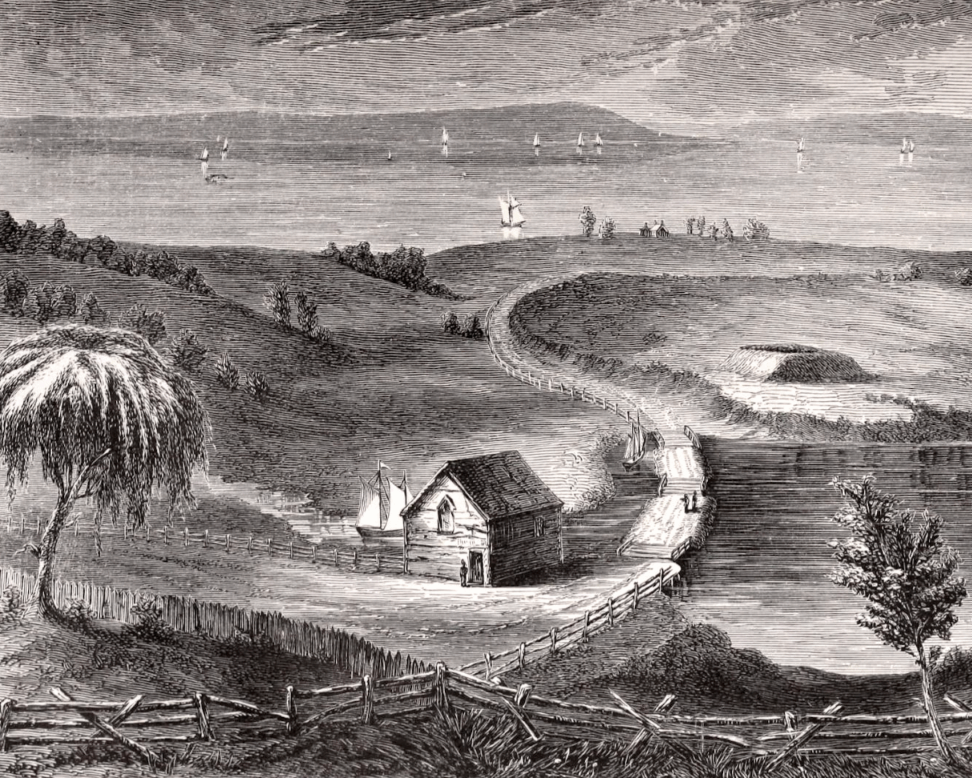 only the tiniest fragments of the battlefield remain, making it difficult for contemporary visitors to get a sense of what it was like to fight there. Battle Hill and Battle Pass, two locations of some of the bloodiest combat of the day, are now hidden within the confines of Greenwood Cemetery and Prospect Park; Fort Stirling, where Washington made his last-ditch decision to retreat to Manhattan, is now buried beneath the million-dollar brownstones of Brooklyn Heights. Many of these places are listed in a larger network of historic sites and markers in New York state called the Revolutionary War Heritage Trail, and yet their physical locations still remain scattered throughout the borough, in busy neighborhoods and on noisy street corners that bear virtually zero resemblance to the Brooklyn of old.
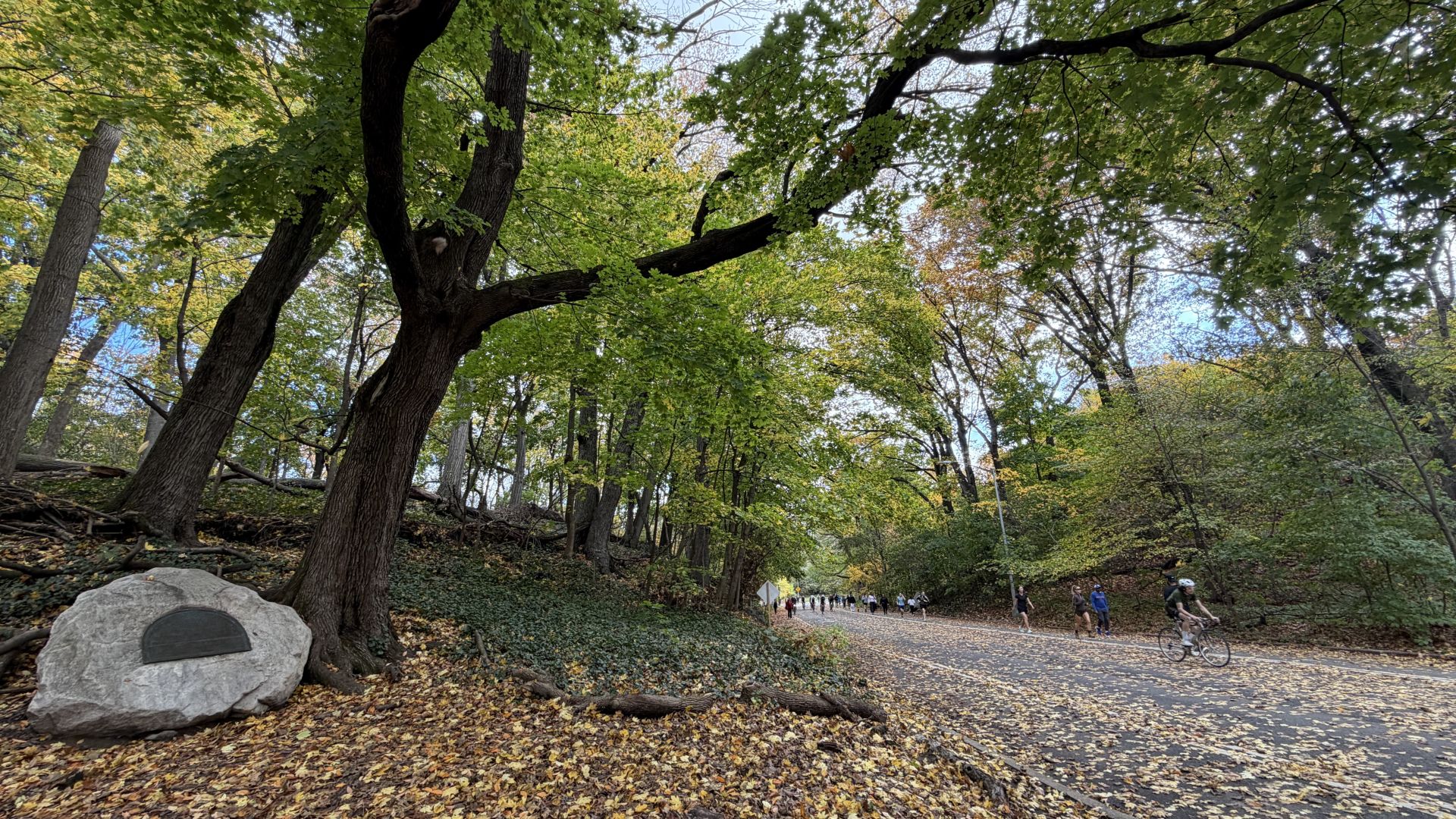 “The challenge for any public history organization is really how to be relevant,” Maier said. “So we have to think about how we can relate this history to people today.”
these was the Lenape, the indigenous inhabitants of Long Island who were forced to sell their homelands to Dutch settlers after a series of conflicts in the 1640s called Kieft’s War, named after the director of the Dutch West India Company. The Lenape settlement of Marechkawick, near the modern-day Brooklyn Navy Yard, became the Dutch village Breukelen, meaning marshland.
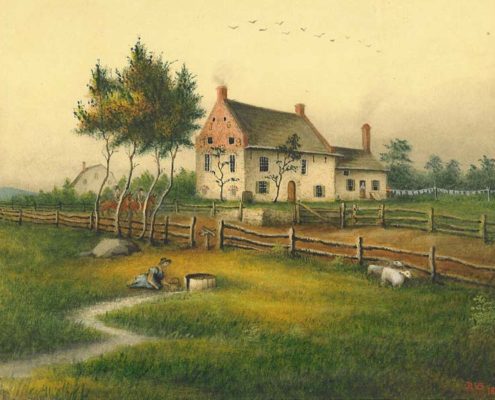 Slavery in colonial Brooklyn was so common— practiced by roughly 60 percent of white families— that by the late 1700s Kings County was home to the highest concentration of enslaved people anywhere north of the Mason-Dixon line.
Tryon, was forced to abandon the island and carry on his duties aboard a British merchant ship in the New York harbor. And yet many of Manhattan’s wealthy elite remained aligned with the crown, to the point that the British would use their Tory support to justify invasion. “I am of the opinion that there are more loyal subjects in this province than in all the other parts of America together,” Tryon wrote to Lord George Germaine some months before the battle. “They only wait for the protection of the King's troops to throw off the tyrannical usurpation of the Congress.” Temperatures were cooler across the river, however, and many Dutch farmers remained either tentatively supportive of the British or otherwise ambivalent. It’s unclear where the Vechtes stood, but one captain of the Royal Marines wrote to General William Howe that Dutch subjects appeared ready to “swallow the Oaths of Allegiance to the King, & Congress Alternately, with as much ease as your Lordship does poached Eggs.”
 August 22, is still marked by a bronze plaque hanging from the outside of the South Brooklyn Savings Bank at 130 Court Street, now a Trader Joe's. Fort Box, named after Major Daniel Box, is commemorated with a war memorial in upscale Carroll Gardens, a neighborhood named after Charles Carroll, a wealthy planter and politician who helped finance the 1st Maryland Regiment. The most famous of these might be Fort Greene, built under the supervision of Revolutionary War hero Nathaniel Greene, which was later enshrined with the creation of popular Fort Greene Park.
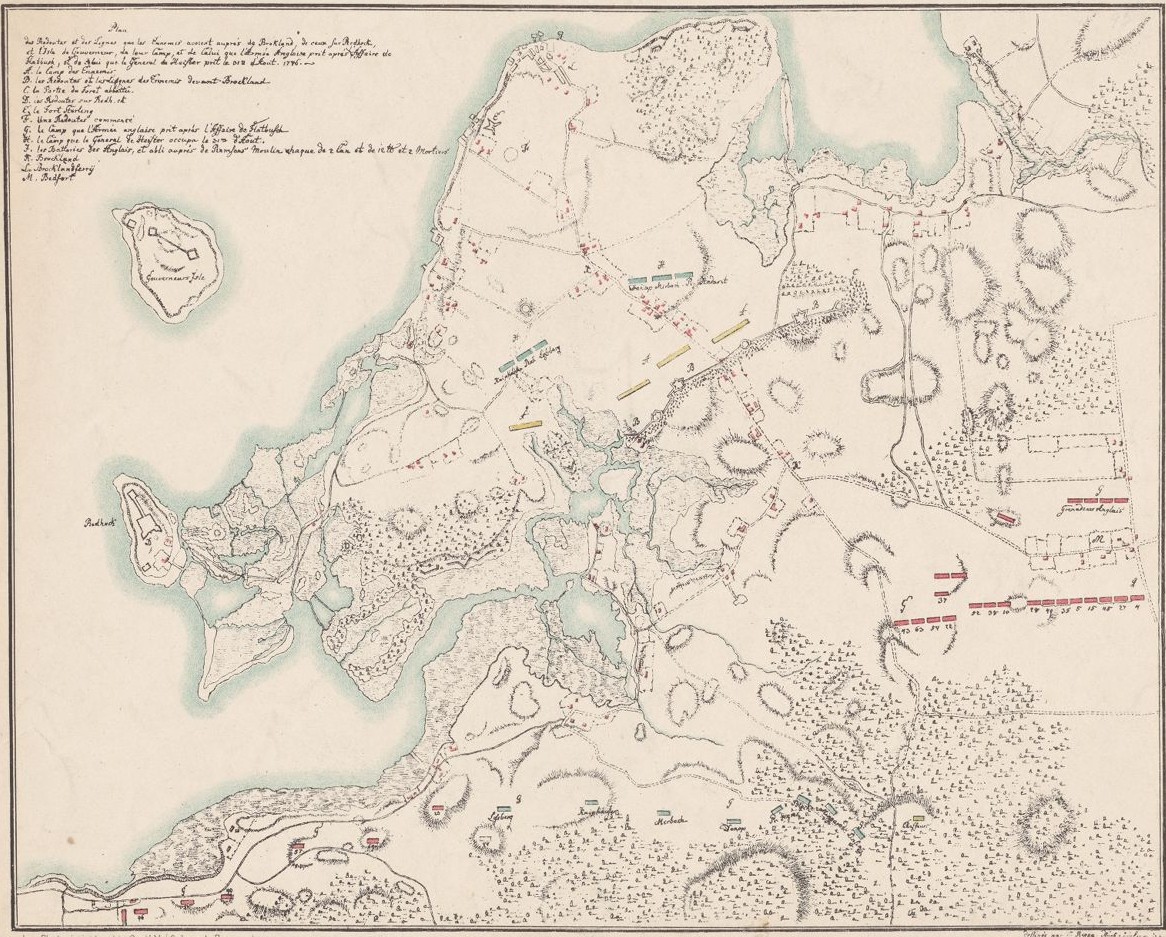 As America’s largest port city located at the mouth of one of its most important waterways, New York was considered by both sides as “a kind of key to the whole continent,” as John Adams had described it.
Bay, now near the Vernazzano Bridge, where Howe’s army first landed several days before. The inn was demolished sometime in the early 1900s; the only other Revolutionary War marker there today is a stone plaque dedicated to the 1st Delaware Regiment, many of whose members died in the ensuing firefight.
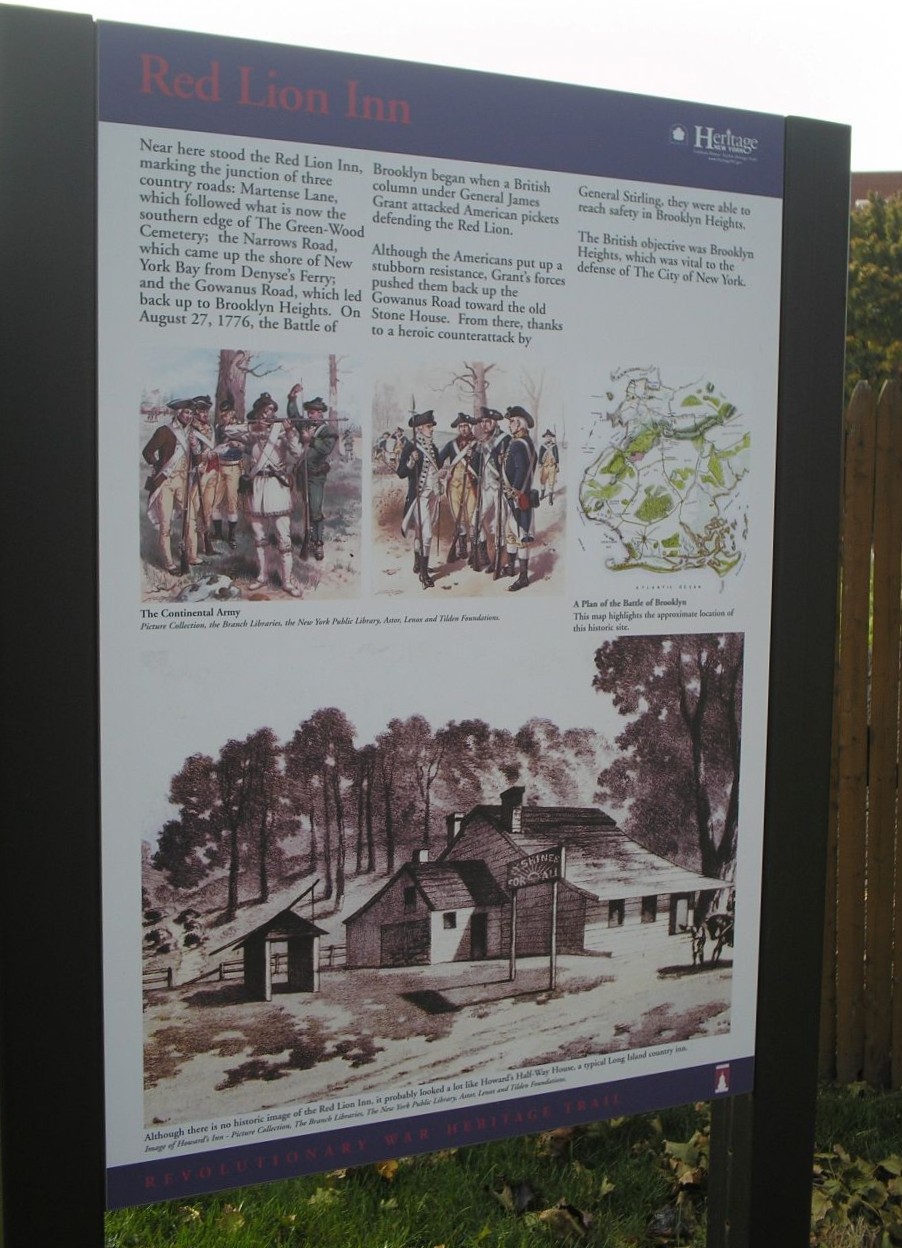
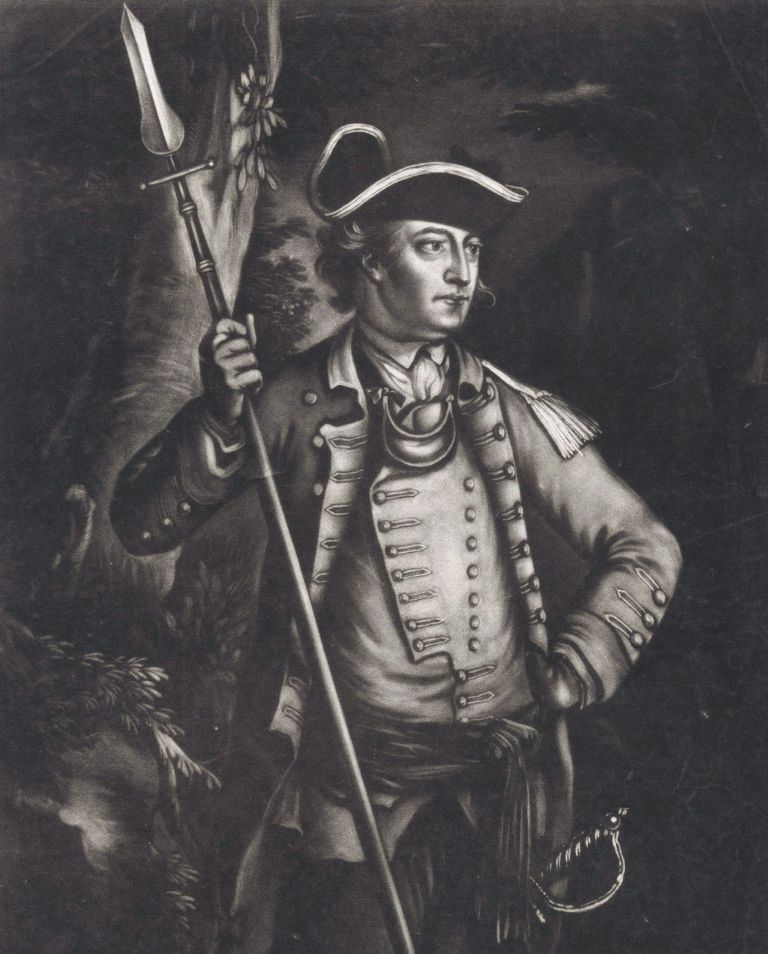 become the redeeming theme of the Battle of Brooklyn, during which many of Washington’s regiments managed to put up a fight long enough to escape capture or, if not, at least inflict considerable damage on the enemy first. It’s also a theme emphasized in histories written after the battle, as well as in the monuments and landmarks erected in its wake. At the top of Greenwood Cemetery, above the markers to the Delaware regiment and the Red Lion Inn, is a plaque dedicated to the 300 men of Huntington's 17th Continental Regiment, who in the moments following those first shots on August 27 stormed up a nearby ridge and held it against 2,000 British soldiers. The fighting on Battle Hill, as it came to be called, was in fact the bloodiest of the day, even more so than what would occur afterward at the Old Stone House; though over half the unit would end up captured, in just a few hours Huntington’s men managed to inflict more damage on the British than they would suffer in the rest of the battle. Colonel Joseph Reed, one of Washington's aides-de-camp, is quoted on the memorial plaque saying that the men of the 17th, though greatly outnumbered, “behaved as to command the admiration of all who beheld the engagement.”
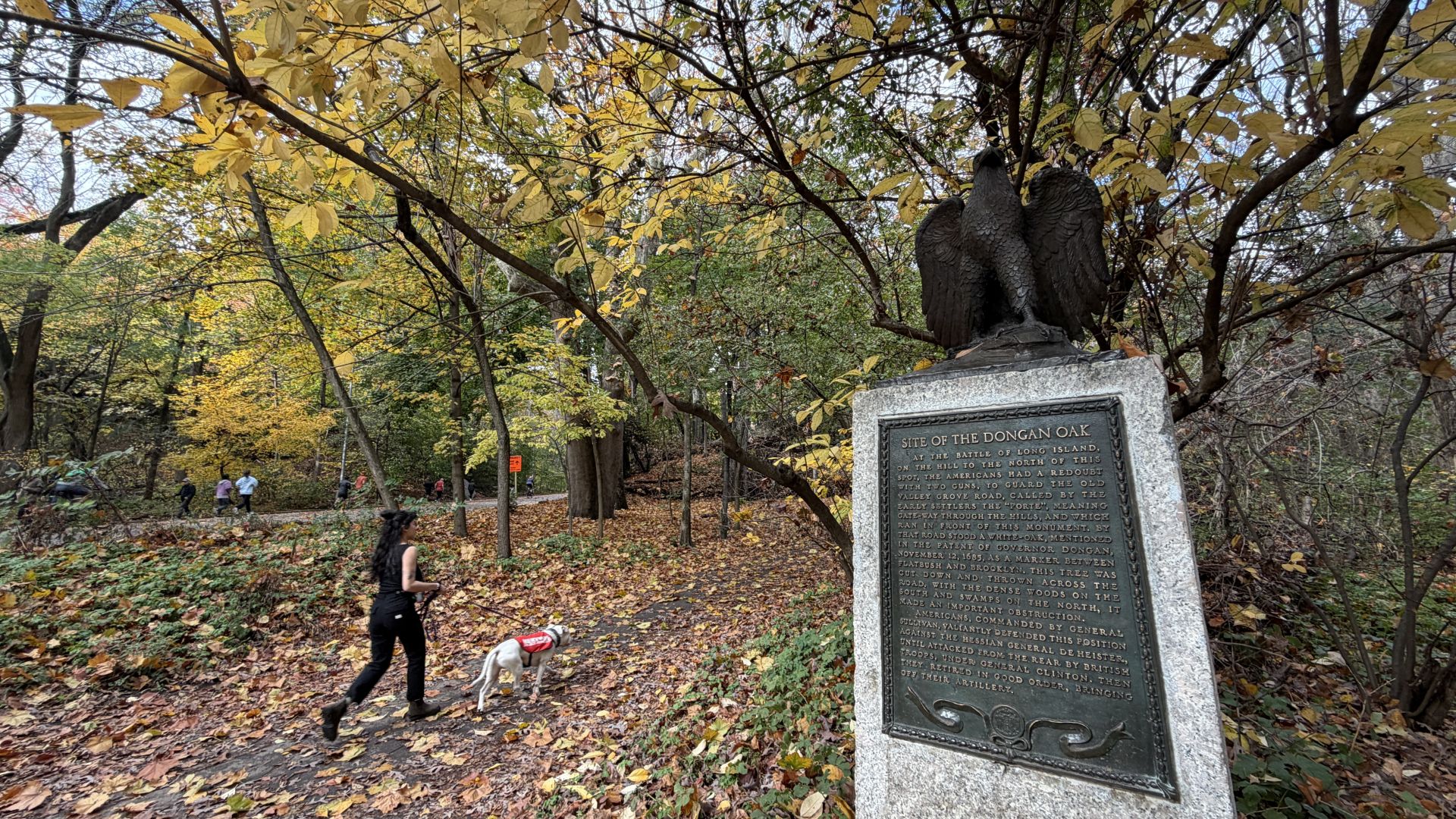 A handy walking guide provided by the Old Stone House can help intrepid visitors find other memorials to this common courage in the surrounding borough.
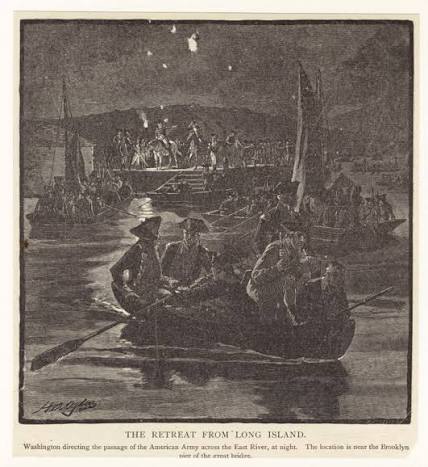
otherwise would have been certain defeat. By the evening of August 27, much of Washington's force had been pushed to the redoubts of Fort Stirling, a fortified battery along the bluffs of the East River, in what is now the Brooklyn Heights neighborhood. Washington himself had watched much of the battle from that location, until he found himself and what remained of his army surrounded, with the river to their backs and the British army bearing down at their front. Night fell, followed by heavy rains that delayed the British advance; in the meantime Washington and his commanders hatched a plan to withdraw the army to Manhattan, using flat-bottom sloops to ferry men and supplies across the river and the onsetting fog to conceal their movements. The daring nighttime crossing—led, not for the last time, by John Glover and his Marblehead fishermen—ensured the survival of Washington and his remaining 9,000 men and has been called by historians a “military phenomenon unequaled even in most peacetime practice.” Many years later, Brooklyn Heights became the country’s first commuter suburb, and today a simple plaque at the entrance of the Brooklyn Heights promenade recognizes the former site of the “Four Chimneys” meeting house where Washington and his war council made the final decision to retreat.
 12-foot polished granite Corinthian pillar to be dedicated to “Our Maryland 400.” It’s unclear where this number came from— inflated to include men from other regiments, maybe, and to echo the Spartan 300 legend—but the name stuck, and it soon began appearing in other variations on monuments and in history books about the battle, including as "Maryland's Noble 400” and the “immortal Maryland 400.”
In reality, historians estimate that only around 250 Maryland soldiers were present at the Old Stone House during that last stand, and the number who actually perished in the skirmish is still up for debate.
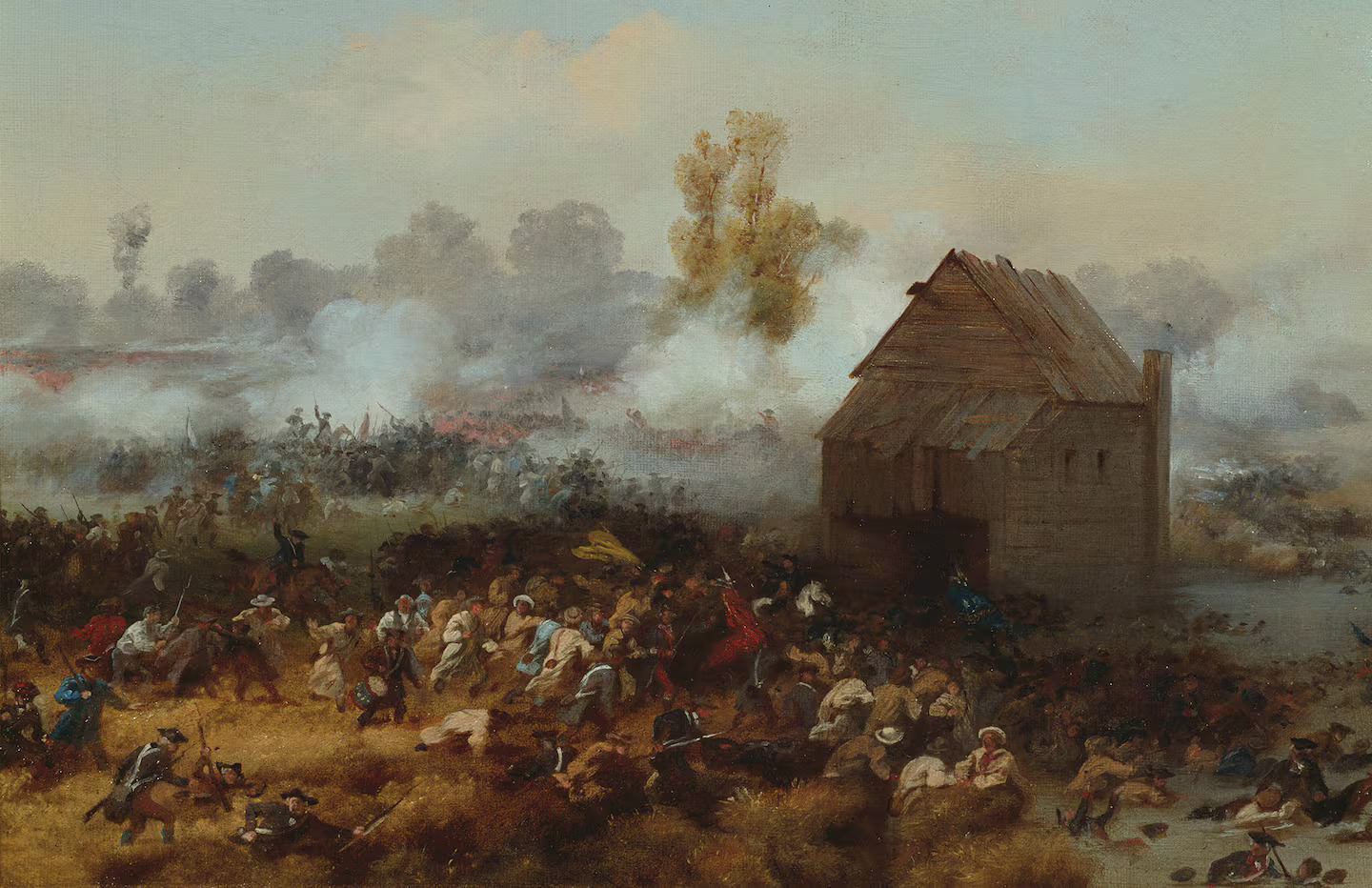
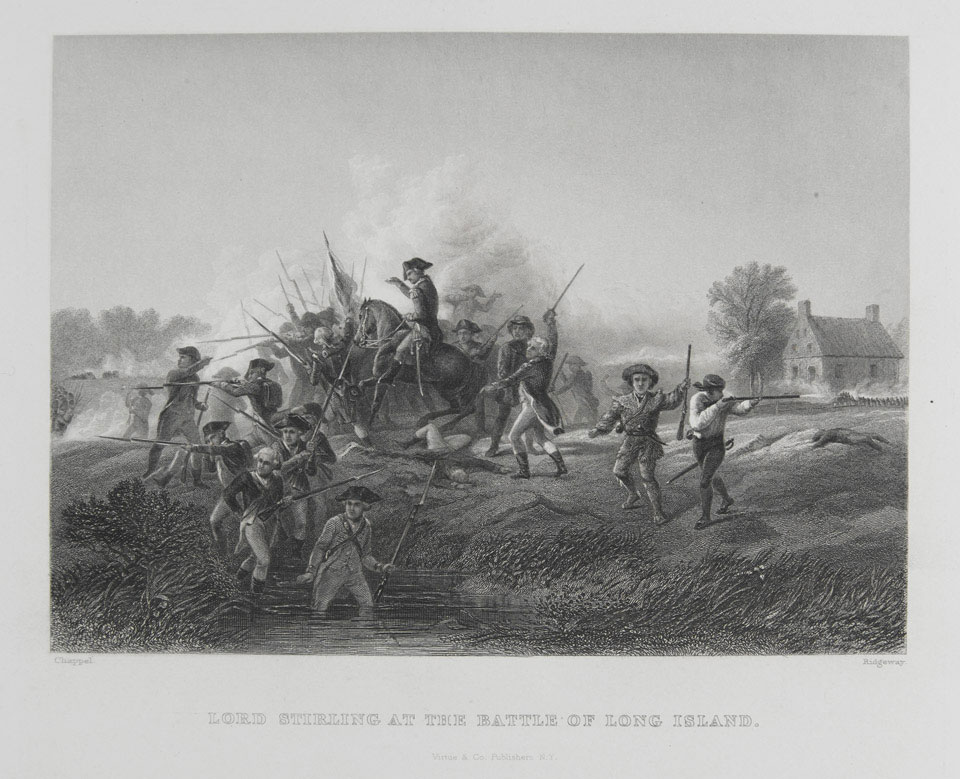 one of Washington's most trusted generals. New York Public Library
This, then, is the enduring impact of the Maryland 400: as a symbol that has helped preserve the memory of the Battle of Brooklyn for future generations.
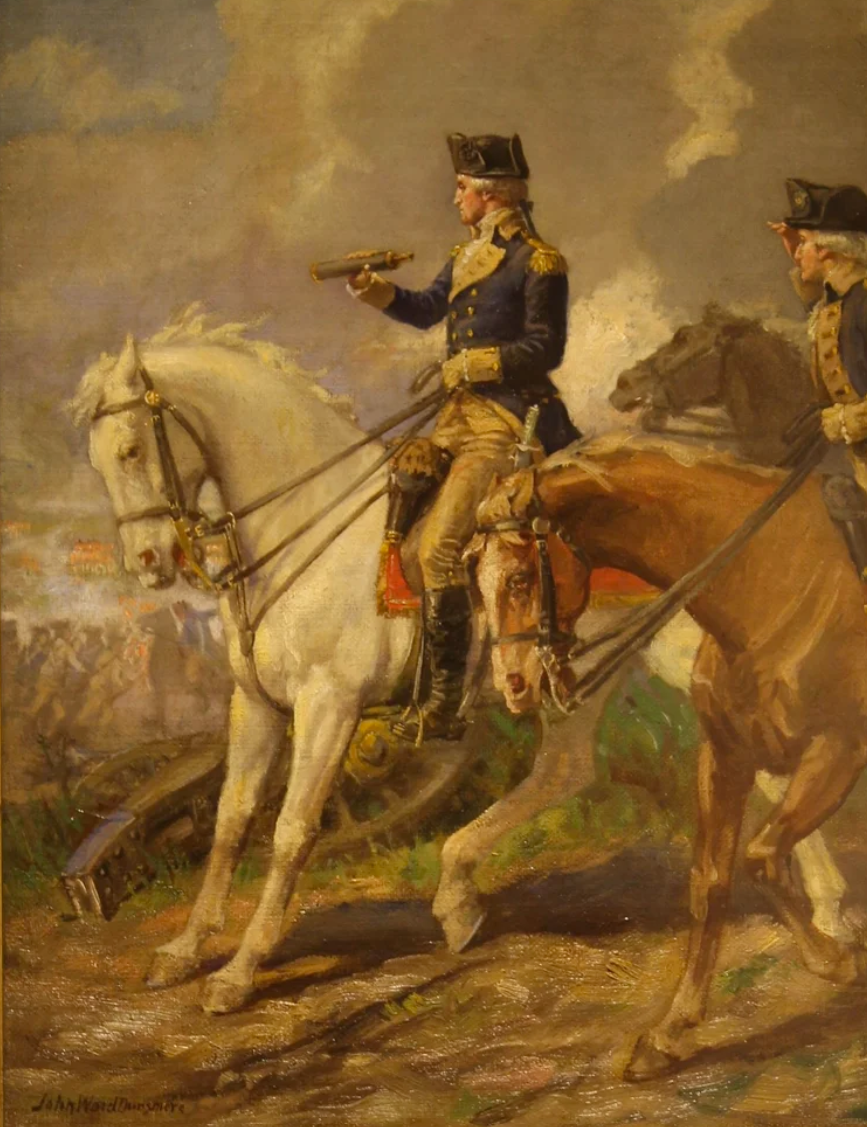 brave fellows I must this day lose!”
Washington’s words, as if echoing through time, still adorn the 27-foot Stanford White memorial column that stands in Prospect Park today.
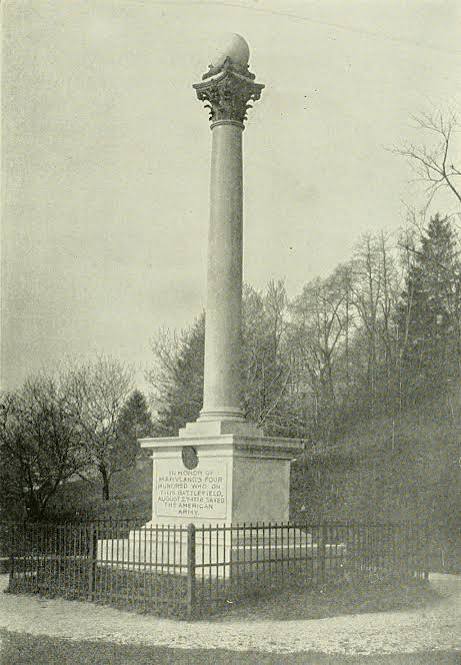 city, which in the 19th century was quickly on its way to becoming an industrial powerhouse and a haven for immigrants from around the world. In the process, much of the field of battle had been wiped clean, including not only the natural geography and local landmarks but also any evidence of the burial sites of the fallen. That included the area surrounding Old Stone House, which had been among the first neighborhoods to industrialize with the creation of the Gowanus Canal; this might explain why the 1895 memorial was placed in Prospect Park, over a mile and a half from the site of the fighting.
The truth is that the Maryland 400’s final resting place remains unknown, just as their exact number remains unknown.
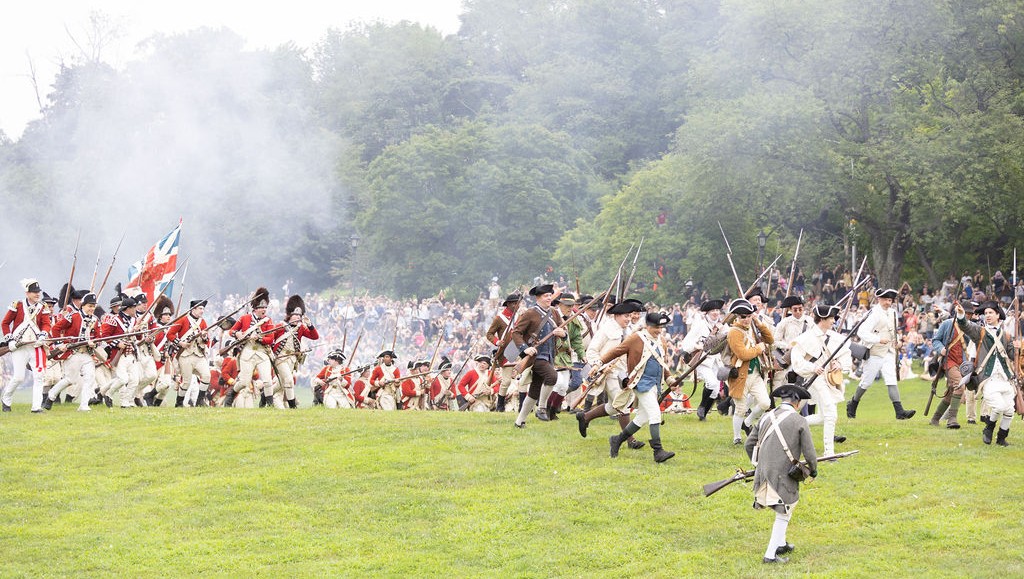 morning of August 27. The only true burial site today dedicated at least in part to the Battle of Brooklyn is the Prison Ship Martyrs' Monument in Fort Greene Park, which contains the remains of over 11,000 prisoners who died aboard British ships from starvation and disease over the course of the war.
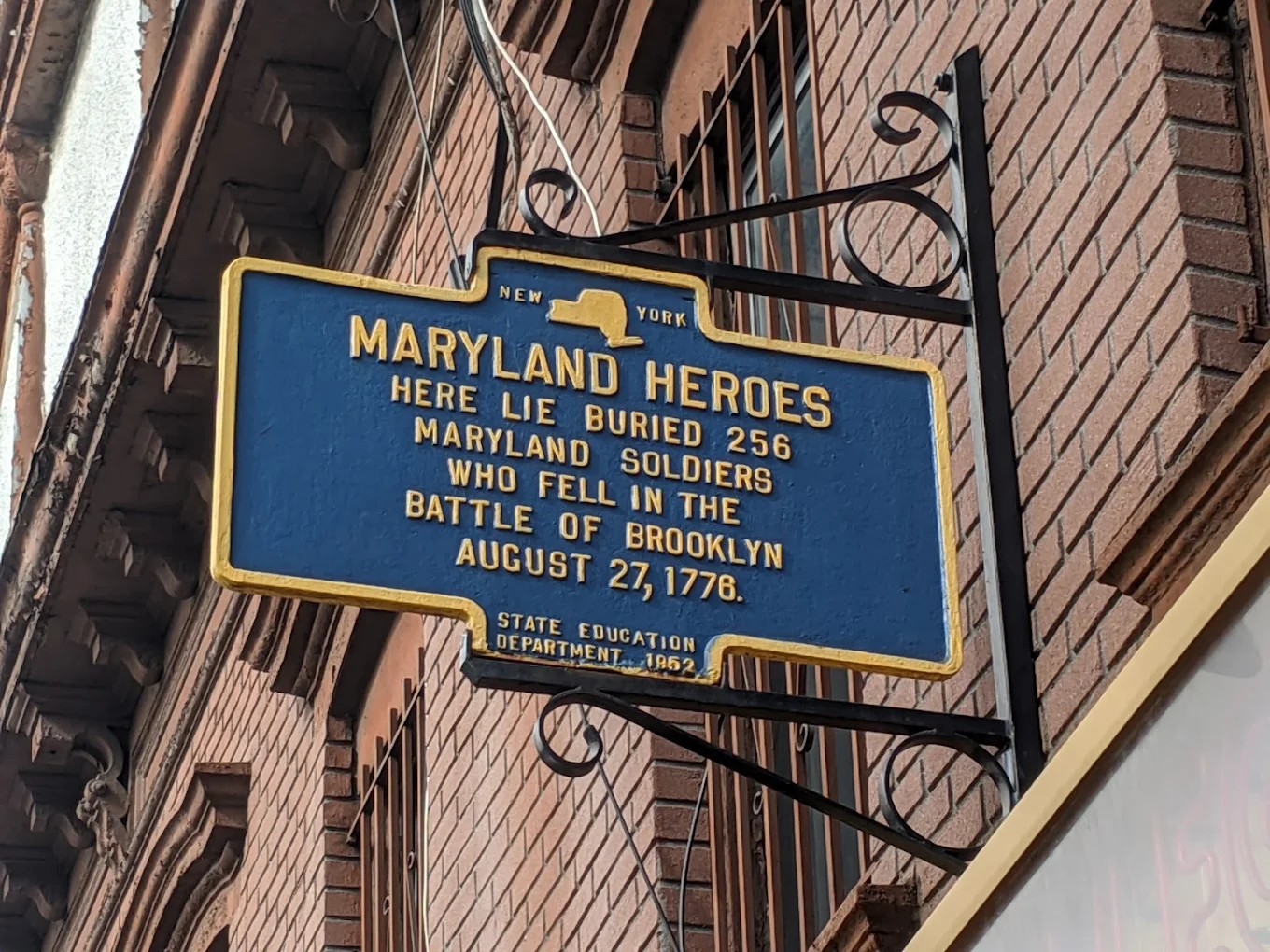 Today, the Old Stone House flies the Maryland flag in honor of the group’s sacrifice.
alt="old stone house" data-entity-type="file" data-entity-uuid="4821495b-9867-40e7-a29b-d6db8dbc6e12" height="447" src="https://www.americanheritage.com/sites/default/files/inline-images/Old%20Stone%20House.JPG" width="795" loading="lazy">
At the Old Stone House, the history of the Battle of Brooklyn is also a history of how to best remember the past in a constantly changing America. 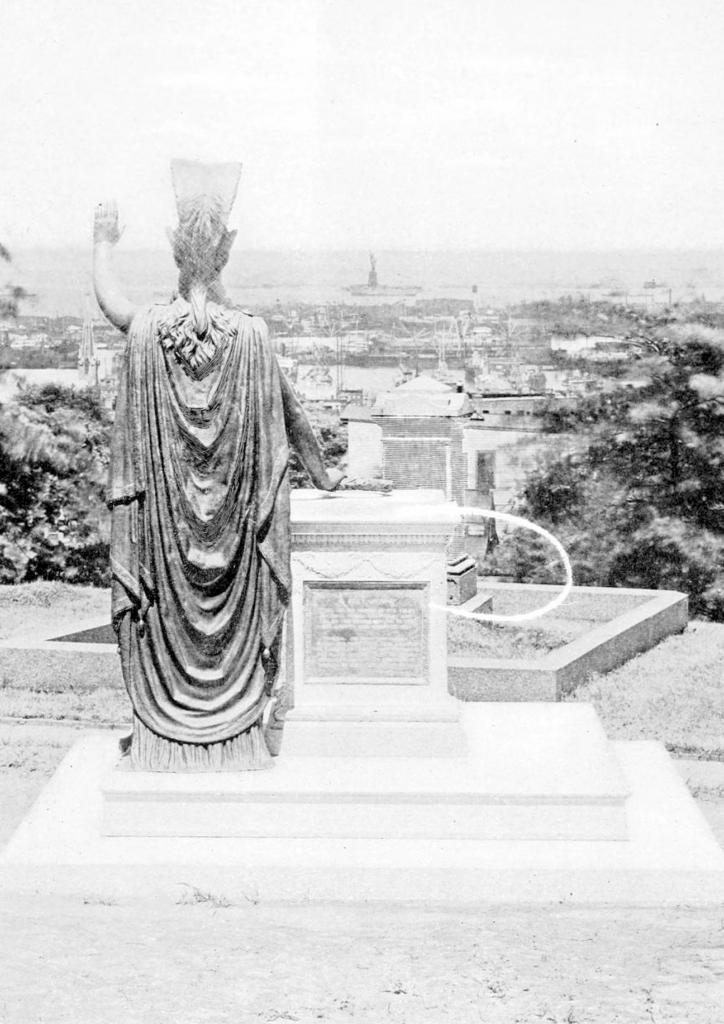 visiting for the curious student of the Revolutionary War. It is the Altar to Liberty, constructed in 1919 by Charles Higgins on the top of Battle Hill in Greenwood Cemetery, not far from the plaque dedicated to Huntington’s 17th Regiment. Higgins was an immigrant himself, from Ireland, and after the city rejected his "Battlefield Park" proposal, he took matters into his own hands and funded the Altar to Liberty monument personally. Part of the memorial includes a bronze statue of Minerva, the Roman goddess of war, who stands gazing out over the sprawl of modern Brooklyn to the New York Harbor, one hand touching a wreath on the altar and the other raised in a kind of salute. At first glance she seems to be signaling to no one in particular, except maybe to the graves of some anonymous soldiers buried beneath her, who sacrificed their lives in a battle at the start of a war for independence that history has long since forgotten. But far across the harbor, some three and a half miles away, another famous statue of a female figure stares back. It is the Statue of Liberty, who has not forgotten. She returns Minerva’s salute, her torch of freedom—still calling on the world to give her "your tired, your poor, your huddled masses yearning to breathe free"—raised high.