Authors:
Historic Era: Era 6: The Development of the Industrial United States (1870-1900)
Historic Theme:
Subject:
Fall 2026 | Volume 71, Issue 4



Authors:
Historic Era: Era 6: The Development of the Industrial United States (1870-1900)
Historic Theme:
Subject:
Fall 2026 | Volume 71, Issue 4


Some writers ignore a mountain of evidence contrary to their theories about the telephone's development.
Fall 2026 | Volume 71, Issue 4
Editor's Note: Edwin S. Grosvenor is the Editor-in-Chief of American Heritage and author of Alexander Graham Bell: The Life and Times of the Inventor of the Telephone and numerous articles about Bell. He has been interviewed about the telephone by CBS Sunday Morning, Discovery, PBS, NPR, CBC, AP Radio, and other media, and given talks at the Smithsonian, Boston Museum of Science, Museum of Natural History, and numerous other venues. He is a Bell descendant.
We like to think that facts matter – that evidence, testimony under oath, and written opinions of judges mean something. Sadly, for some writers it seems more important to advance a new theory to sell books than it is to do the hard work of digging for facts in the historical record.
The first intelligible sentence spoken over a telephone, “Mr. Watson, Come here, I want to see you,” is one of the most famous lines in history. But in a book out this month, The Telephone: A New History, author James Gleick claims that Alexander Graham Bell and Thomas Watson stole the design of the telephone they used to make that first call. The apparatus “was not theirs but rather Elisha Gray’s liquid transmitter, as described to Bell by a corrupt patent examiner,” declares Gleick.
Gleick, a New York Times science writer, has written a charming and comprehensive book about the history of the telephone and its impact on society. But the book is blighted by repetition of an old allegation made by ill-informed writers who don’t understand the principle that made Bell’s innovation different, and who haven’t dug into the mountain of testimony and evidence in the courtroom dramas surrounding history’s most litigated patent.
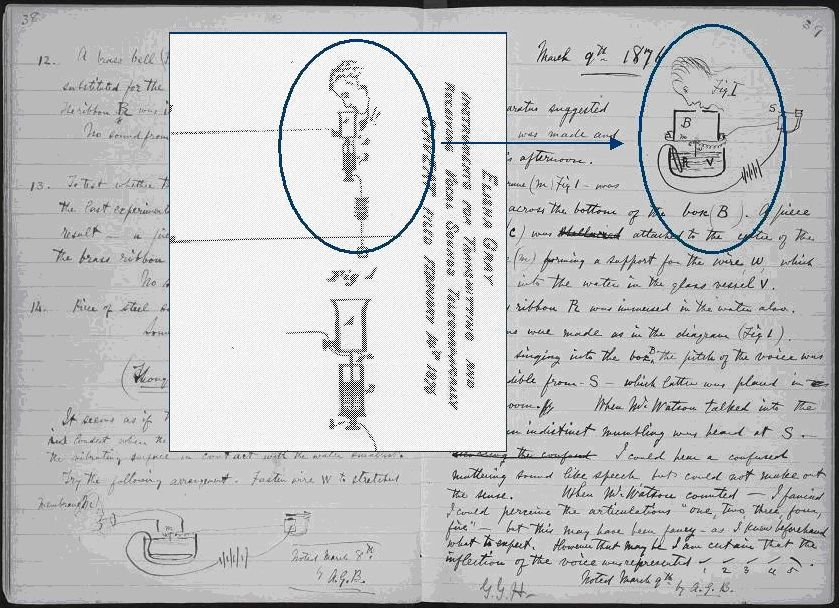
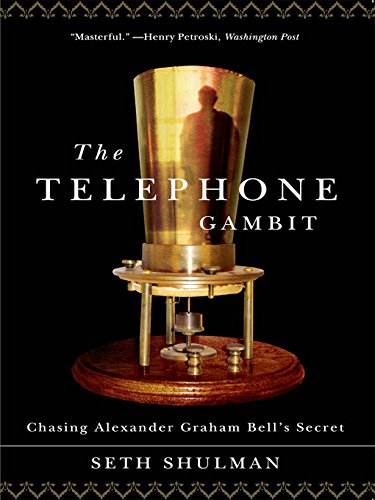
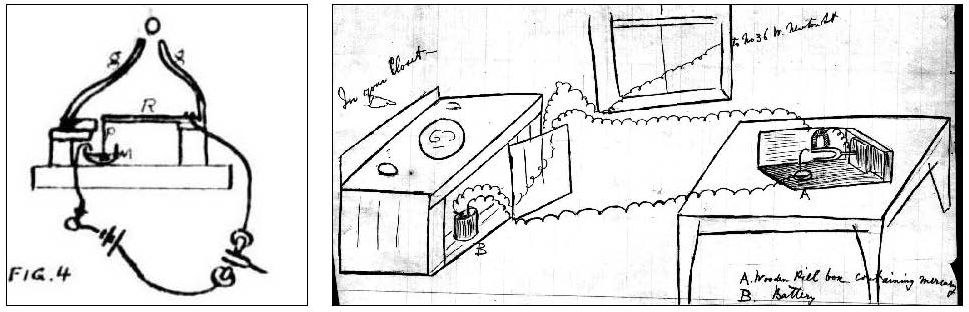
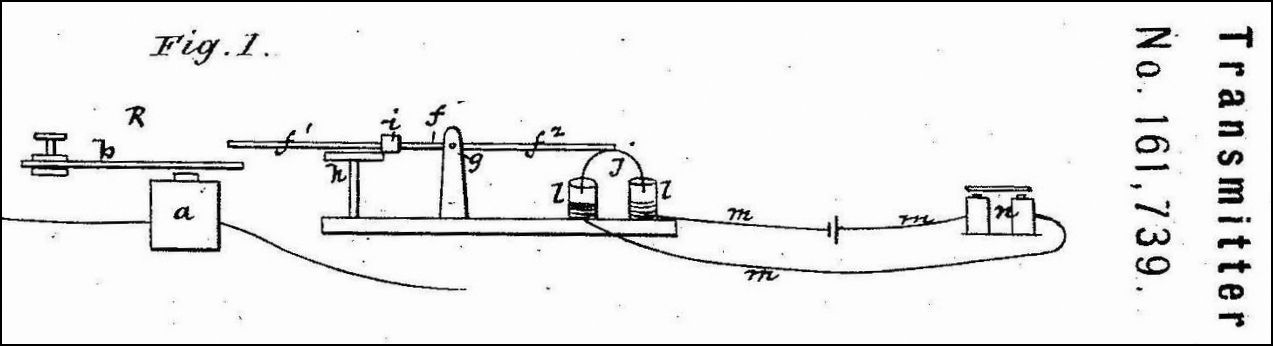
In claiming that Bell stole the idea of the telephone transmitter from Gray, Gleick echoes the central theory of a previous book, The Telephone Gambit. Its author, Seth Shulman, believed he had found a “smoking gun” in a similarity between the drawing of the transmitter in Gray’s patent caveat filed on February 12, 1876, and a drawing in Bell’s notebook done a couple of weeks later, on March 10.