Authors:
Historic Era: Era 3: Revolution and the New Nation (1754-1820s)
Historic Theme:
Subject:
| Volume 71, Issue 5



Authors:
Historic Era: Era 3: Revolution and the New Nation (1754-1820s)
Historic Theme:
Subject:
| Volume 71, Issue 5


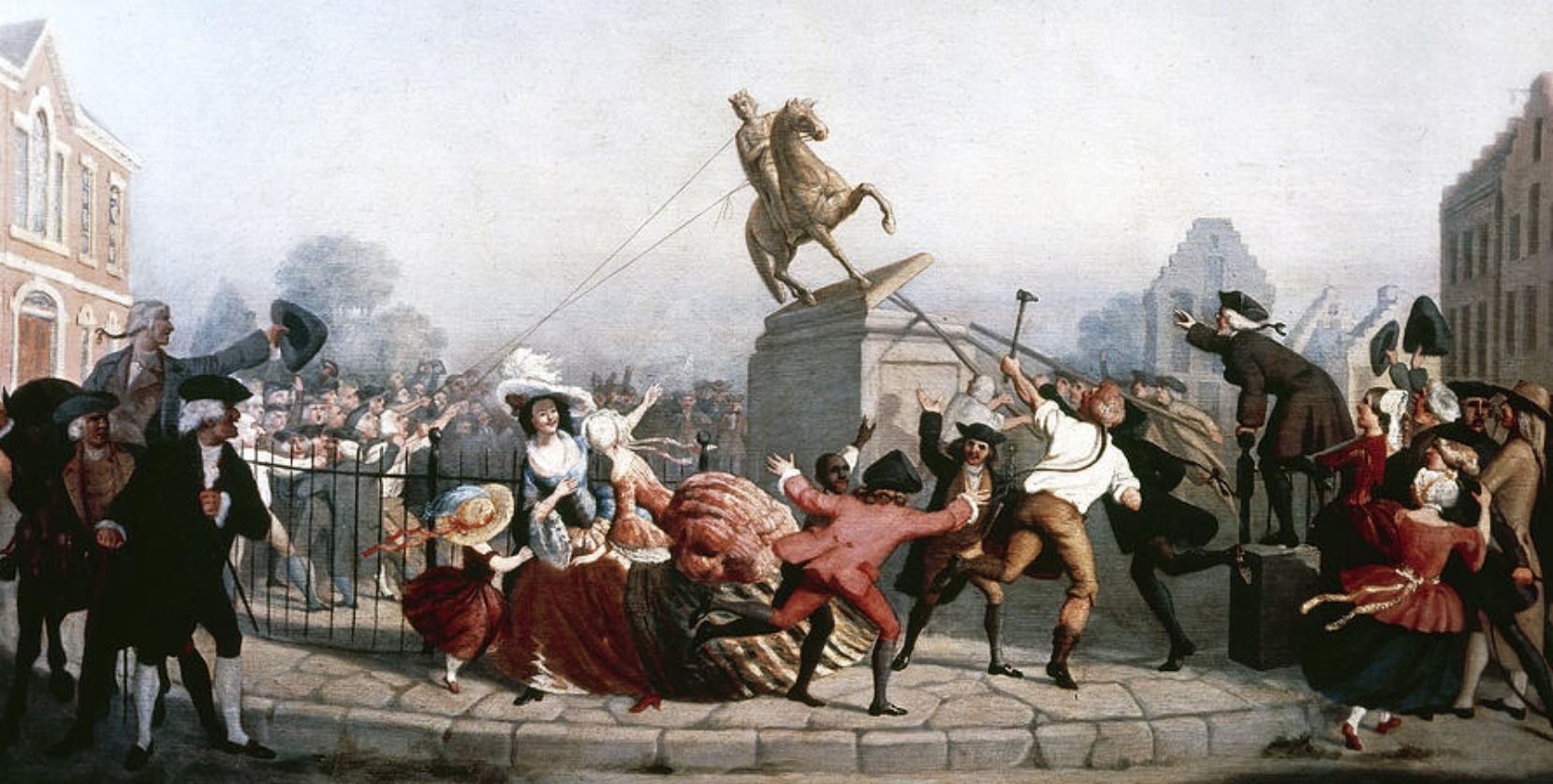
Patriots tore down the statue of King George III in Manhattan just as thousands of British troops were landing for the attack on New York.
| Volume 71, Issue 5
Editor’s Note: Robert Parkinson is a professor at Binghamton University and author of four books including Tyrants and Rogues: Understanding the Declaration of Independence.
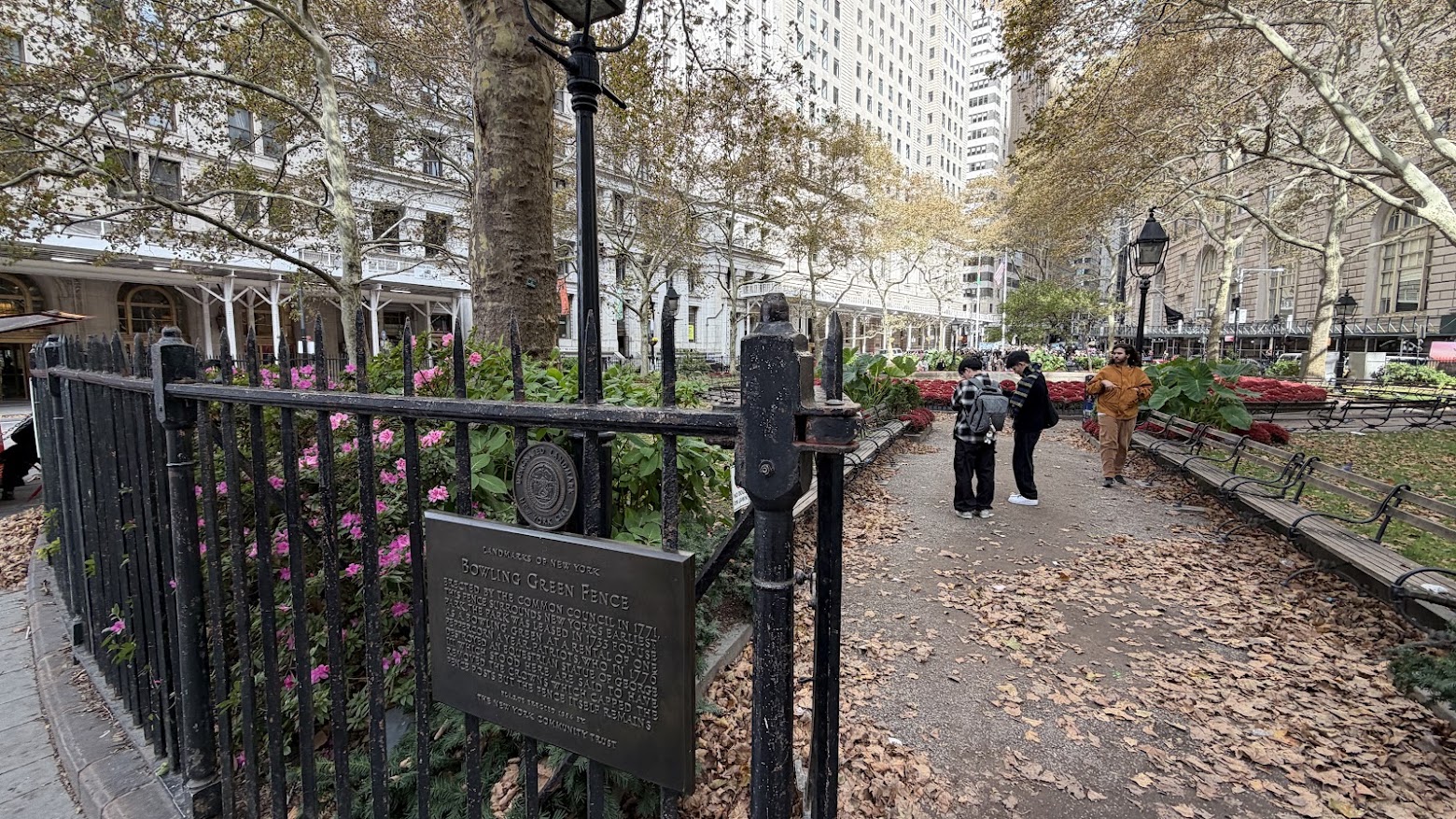
On August 16, 1770, the leaders of New York’s Colonial government gathered at Fort George, the fortification on the southern tip of Manhattan originally built by the Dutch a century and a half before. They were there to dedicate a statue of King George III on Bowling Green, the park adjoining the fort’s north grounds. To mark the occasion, at noon the “principal Gentlemen in the City, both Civil and Military” drank several toasts and fired off thirty-two pieces of cannon from the Battery.
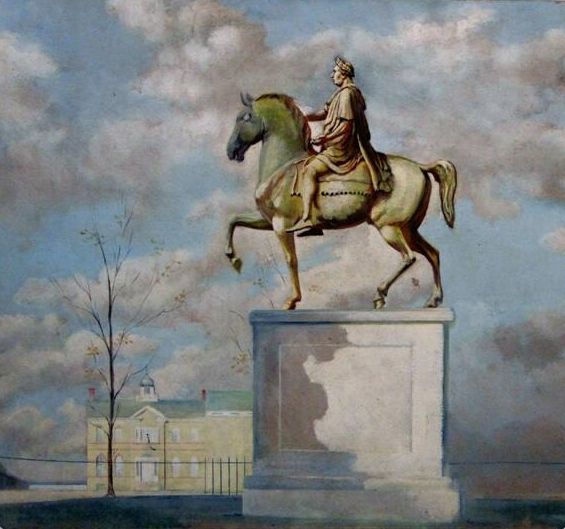
The statue of the king, wrapped in classical garb to resemble the Roman emperor Marcus Aurelius, faced Fort George and, beyond it, New York Harbor. From a height of fifteen feet, it kept vigil while the real king’s American subjects grew increasingly upset with how his administration was treating them.
Not long after the statue reached its fourth anniversary, late in the summer of 1774, John Adams paid it a visit. He was there as part of the Massachusetts delegation traveling to the First Continental Congress in Philadelphia, a development that did not bode well for the future of the British Empire in America. Adams remarked on the beauty of Bowling Green, “railed in with solid Iron, in the Center of which is a Statue of his Majesty on Horseback, very large, of solid Lead, gilted with Gold standing on a Pedastal of Marble very high.”
The golden king sat on his horse for nearly six years — until, on July 9, 1776, General Washington assembled his troops to listen to the announcement that the bonds of empire in the thirteen colonies had finally snapped. As soon as they finished hearing the Declaration of Independence, one group of excited soldiers decided to take out their feelings of betrayal over how King George had abandoned them.
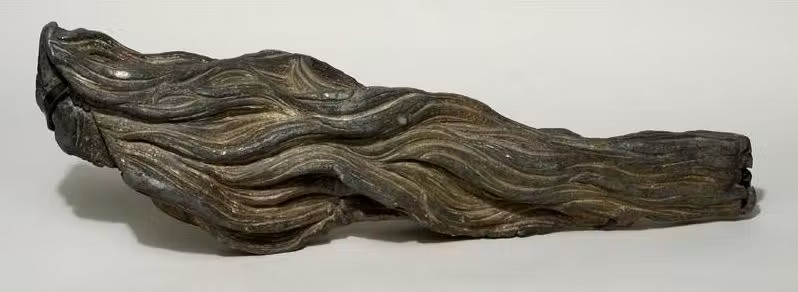
They hurried down Broadway and surrounded their former monarch. Using ropes and bars, the soldiers labored for several minutes to pry George down off his pedestal, and the two-ton king and horse clattered to the ground. They hacked at George’s head, eventually severing it, then knocked off its nose and the laurels surrounding the monarch’s brow. The pedestal remained, but the headless king and horse ended up in a cart and were